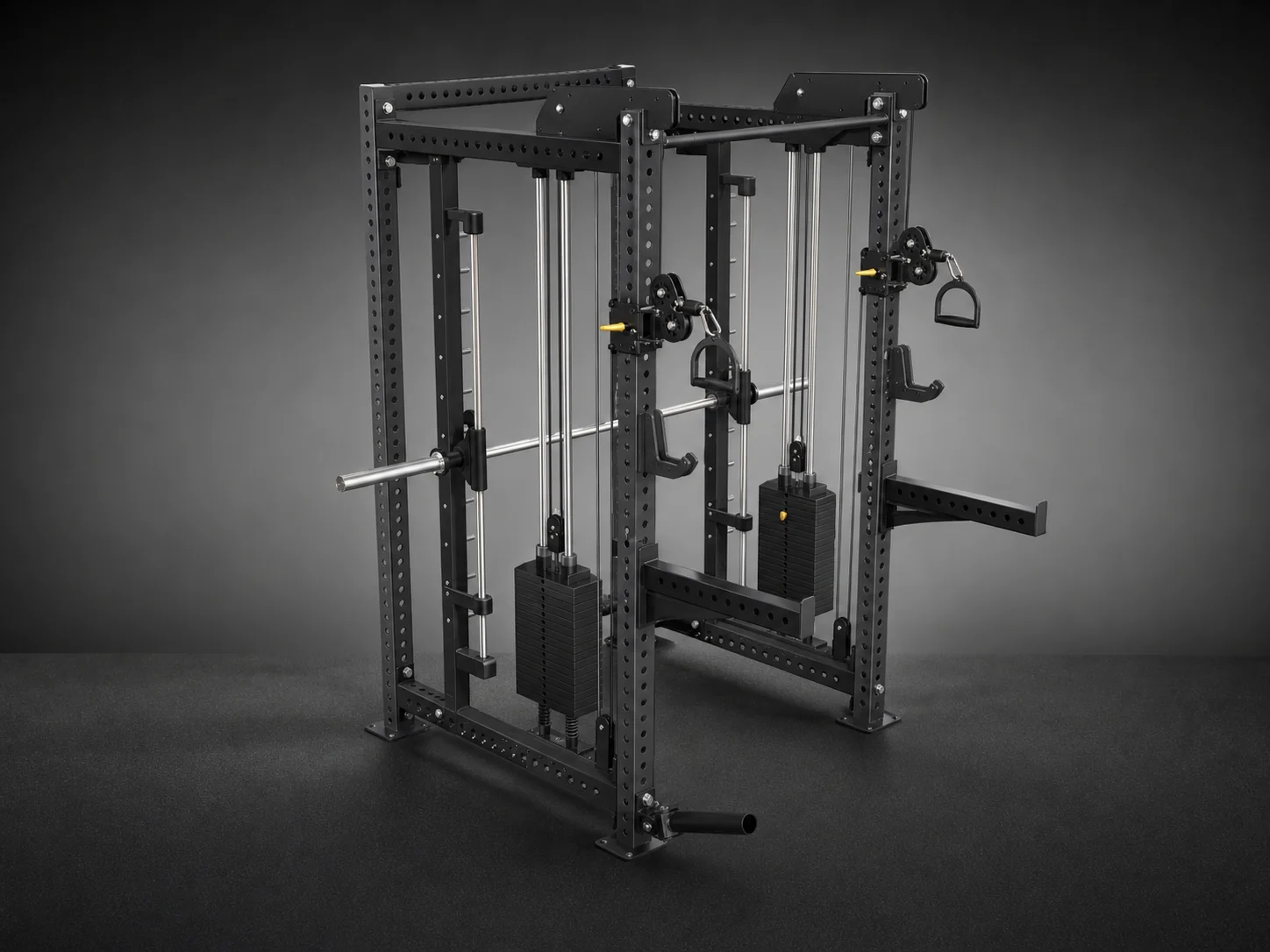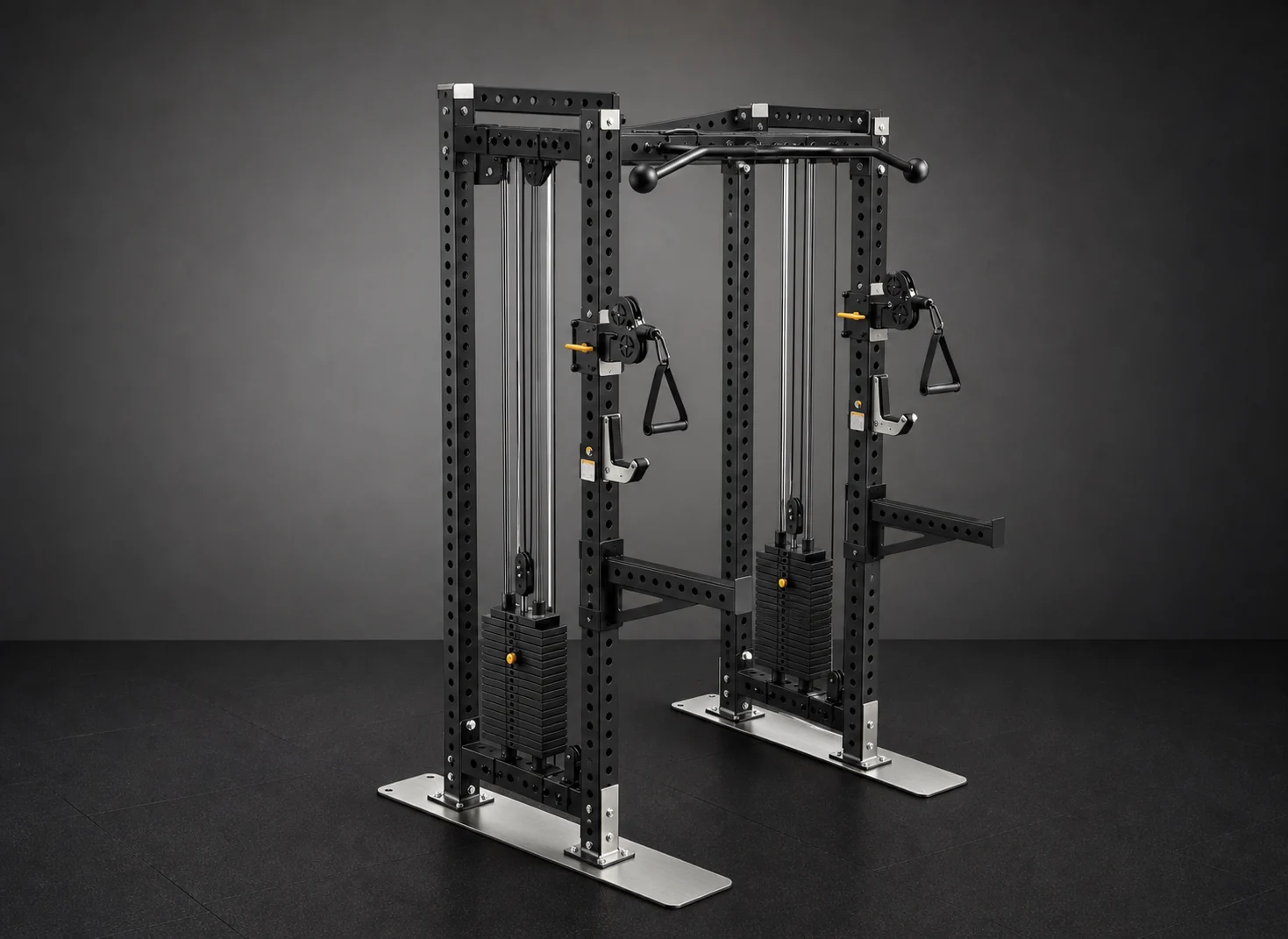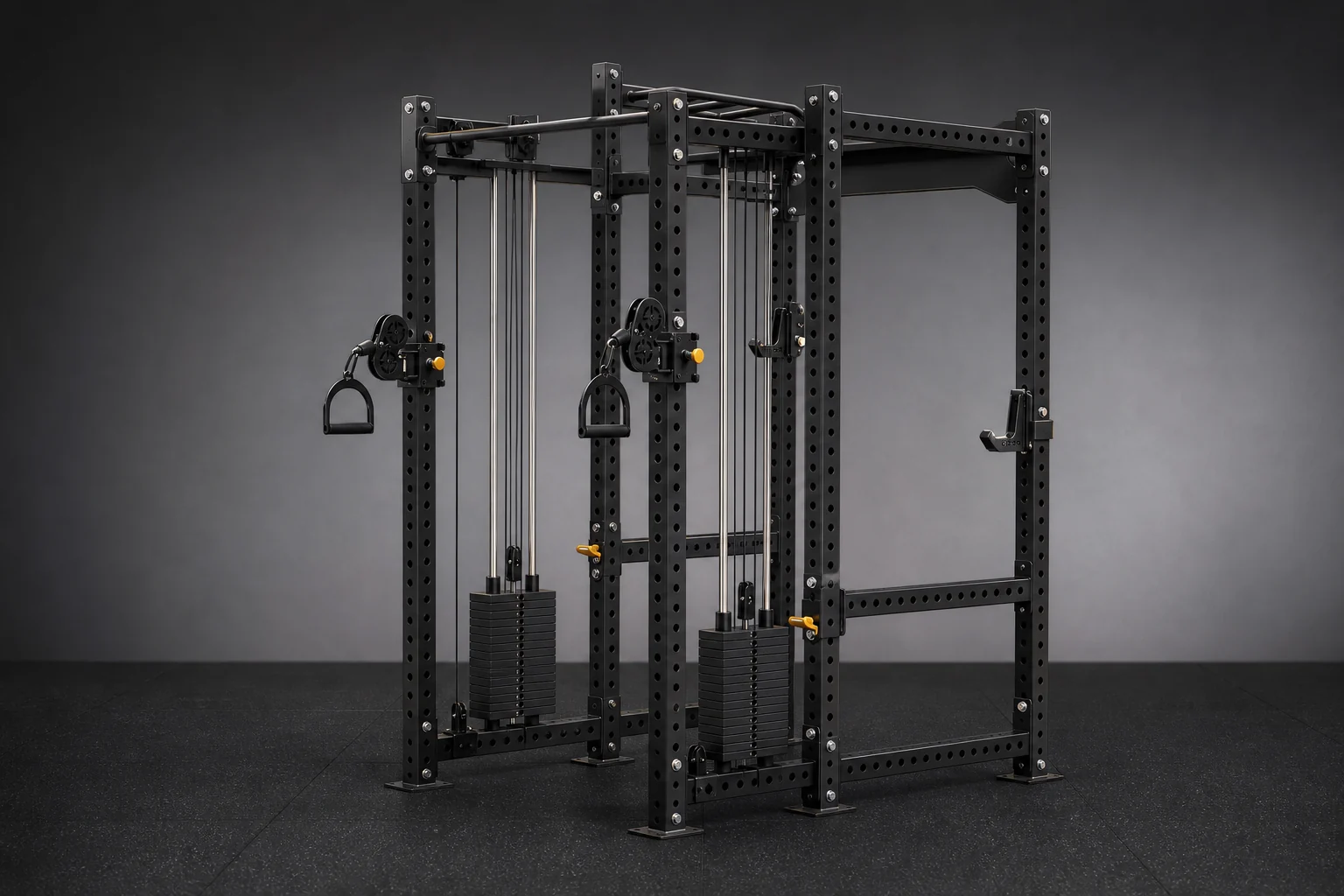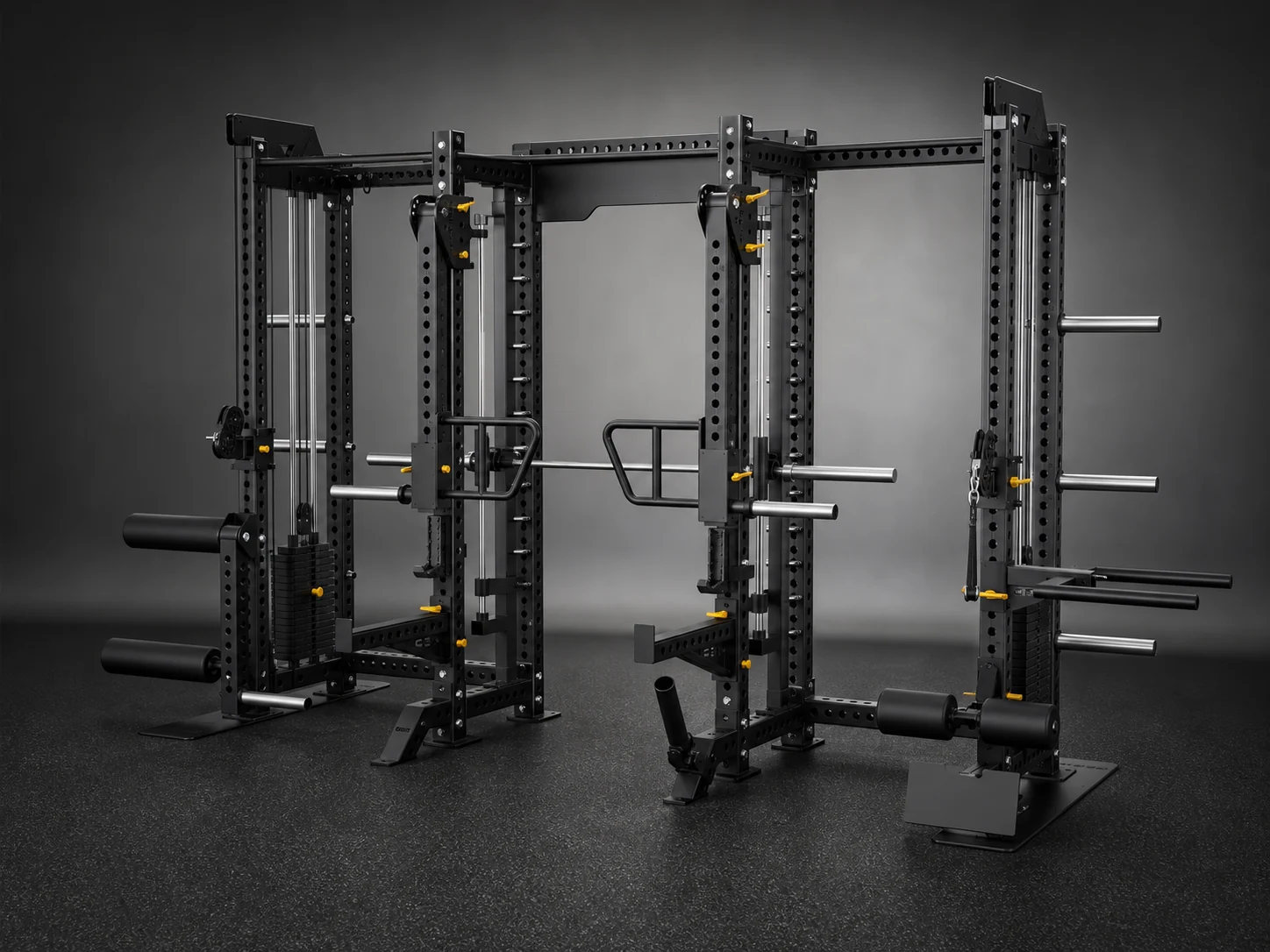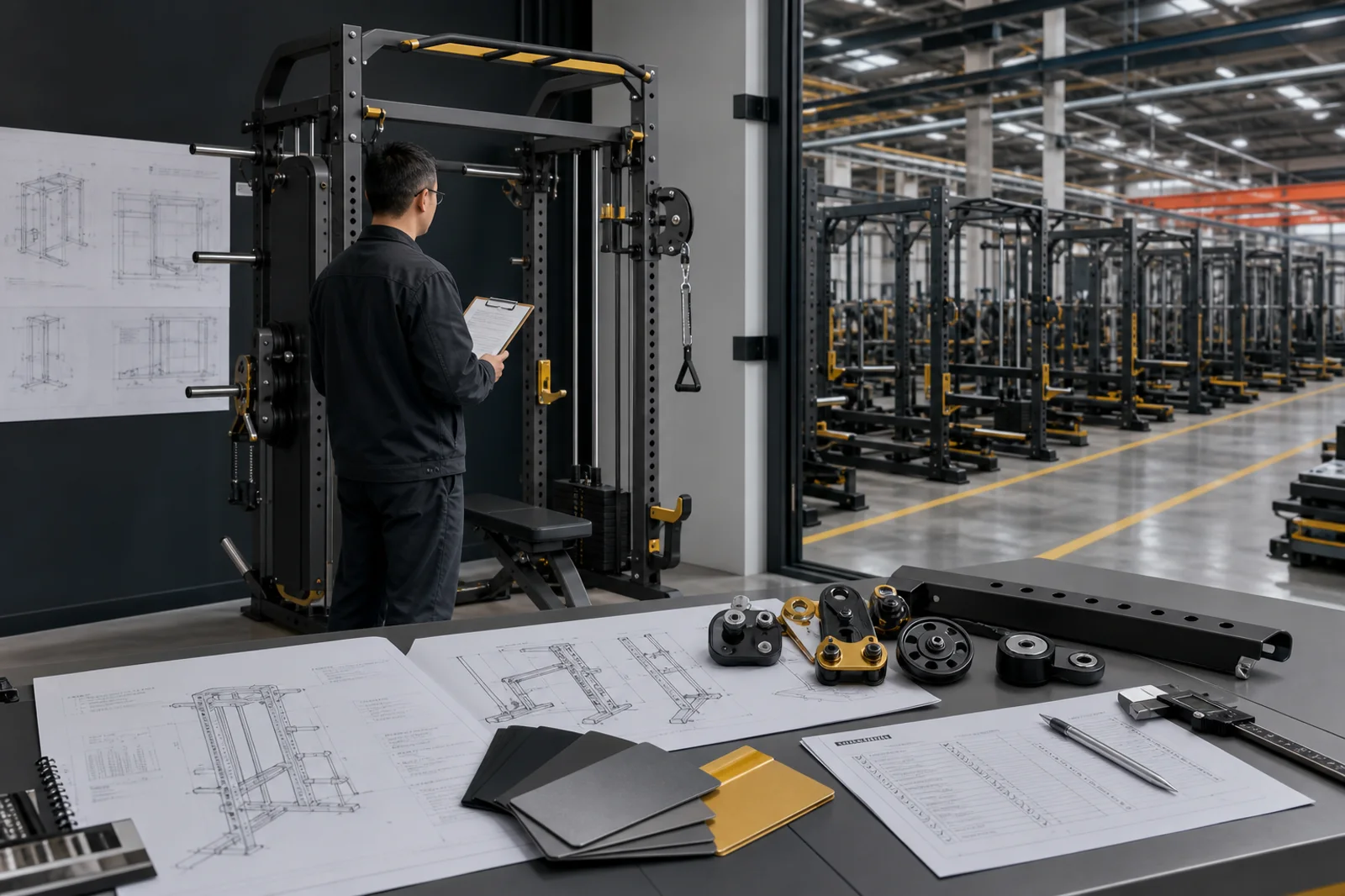
1. Convert the market request into a product brief
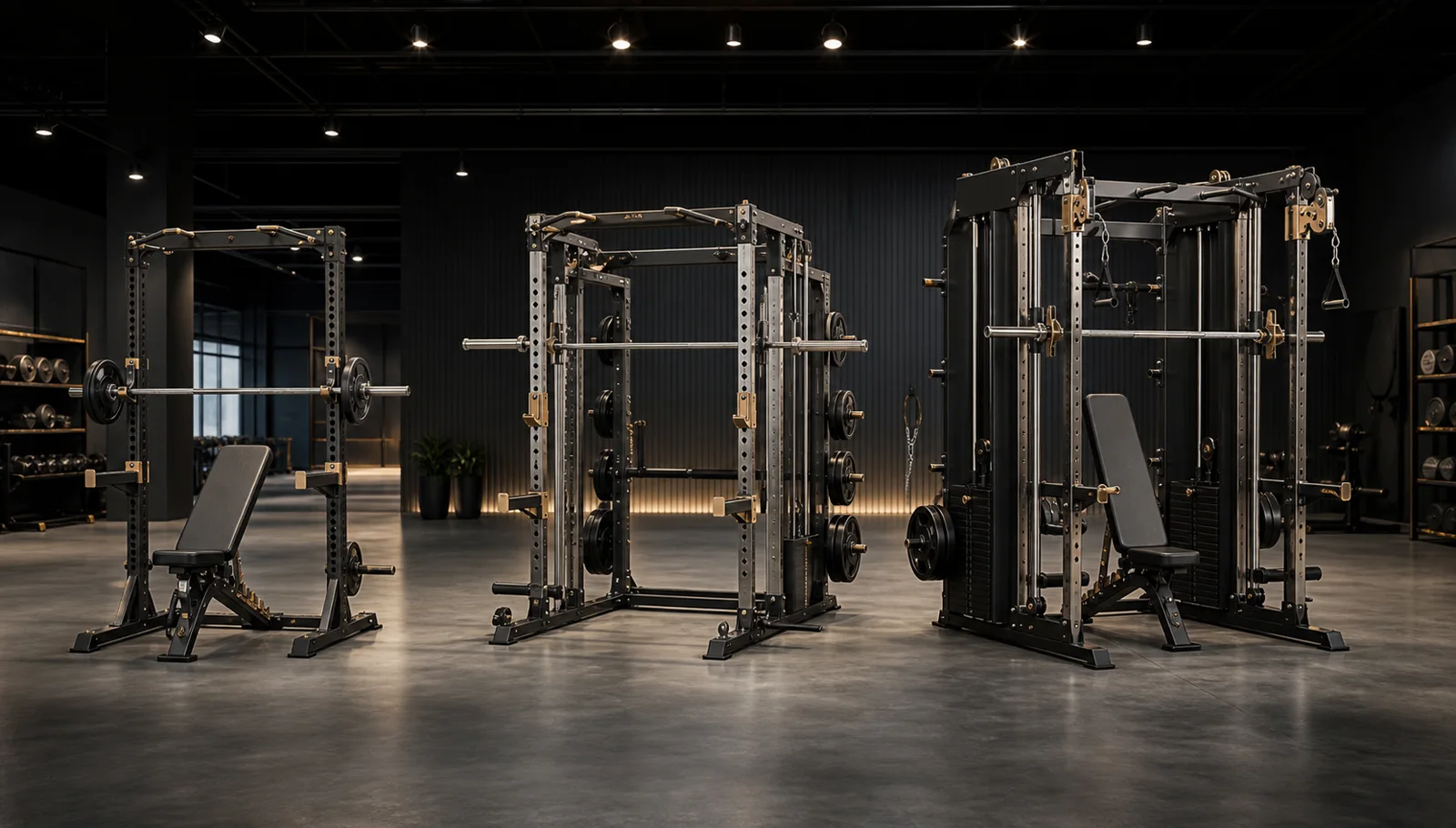
Explain who will buy or use the equipment, which movements are essential, the available room, target product position, order quantity and delivery market. The factory can then recommend an existing platform or identify where custom engineering is required.
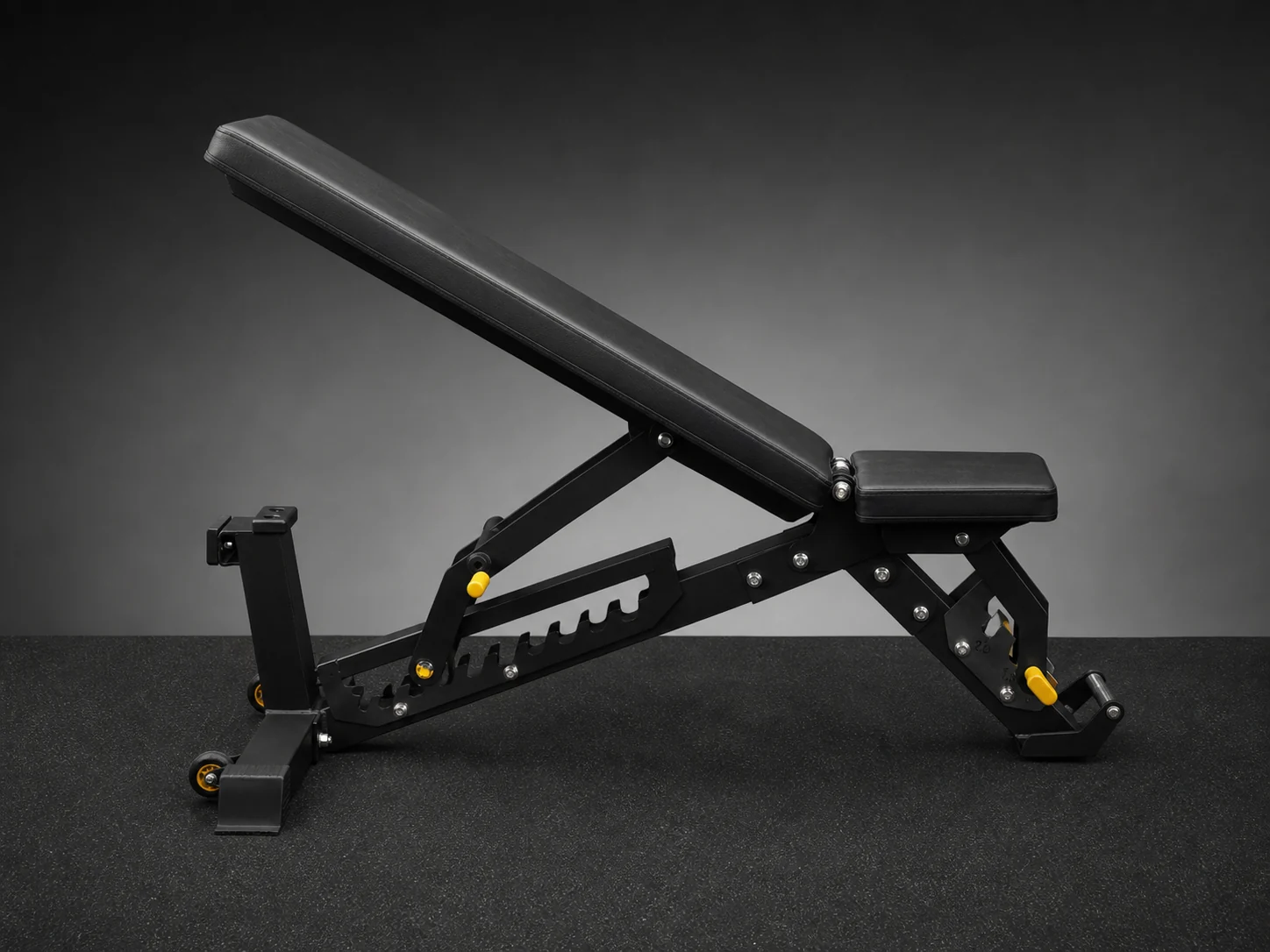
Customization can cover function, material, color, stainless-steel details, attachments, storage, upholstery, visible branding and packaging.
2. Review and approve the drawing
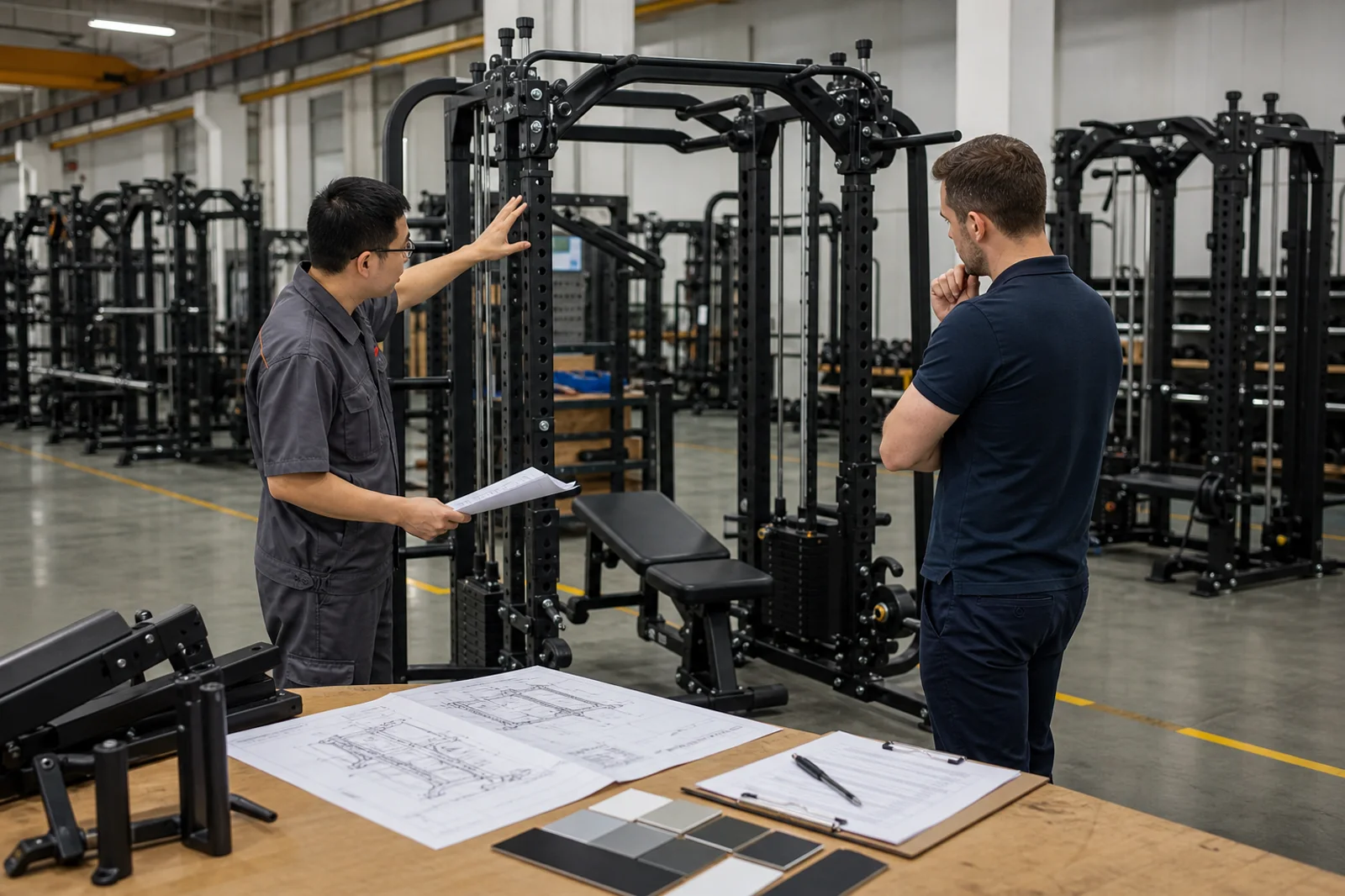
Technical communication should resolve dimensions, training positions, attachment interfaces, cable routing, weight stacks, storage and room constraints. Production begins only after the relevant drawing and configuration are approved.
The approved revision becomes the reference for material preparation, fabrication, assembly and final inspection.
3. Confirm appearance and service details
Electrostatic powder coating supports custom colors with a low-odor finished surface, strong adhesion and corrosion resistance. Stainless-steel material or visible stainless details can be specified for selected premium directions.
For cable models, confirm aluminum-alloy or high-strength nylon pulleys, 7 × 19 steel wire rope, attachment set and expected wear parts.
- Frame and upholstery color
- Nameplate or logo position
- Pulley and cable specification
- Attachment and storage package
- Packing and documentation
4. Repeat the approved setup in production
The production plan ties quantity and timing to the approved version. Standard production is completed within 20 days after order details and drawing approval. The custom-product schedule is set from the approved drawing, order quantity and production scope.
Batch control keeps material, hole positions, finish, functions, attachment quantities and packing groups consistent across the order.
5. Release only after detailed checks
The final checklist covers frame alignment, weld areas, every screw and fastening point, pulley size and movement, cable routing, complete function travel, accessories, finish and visible condition.
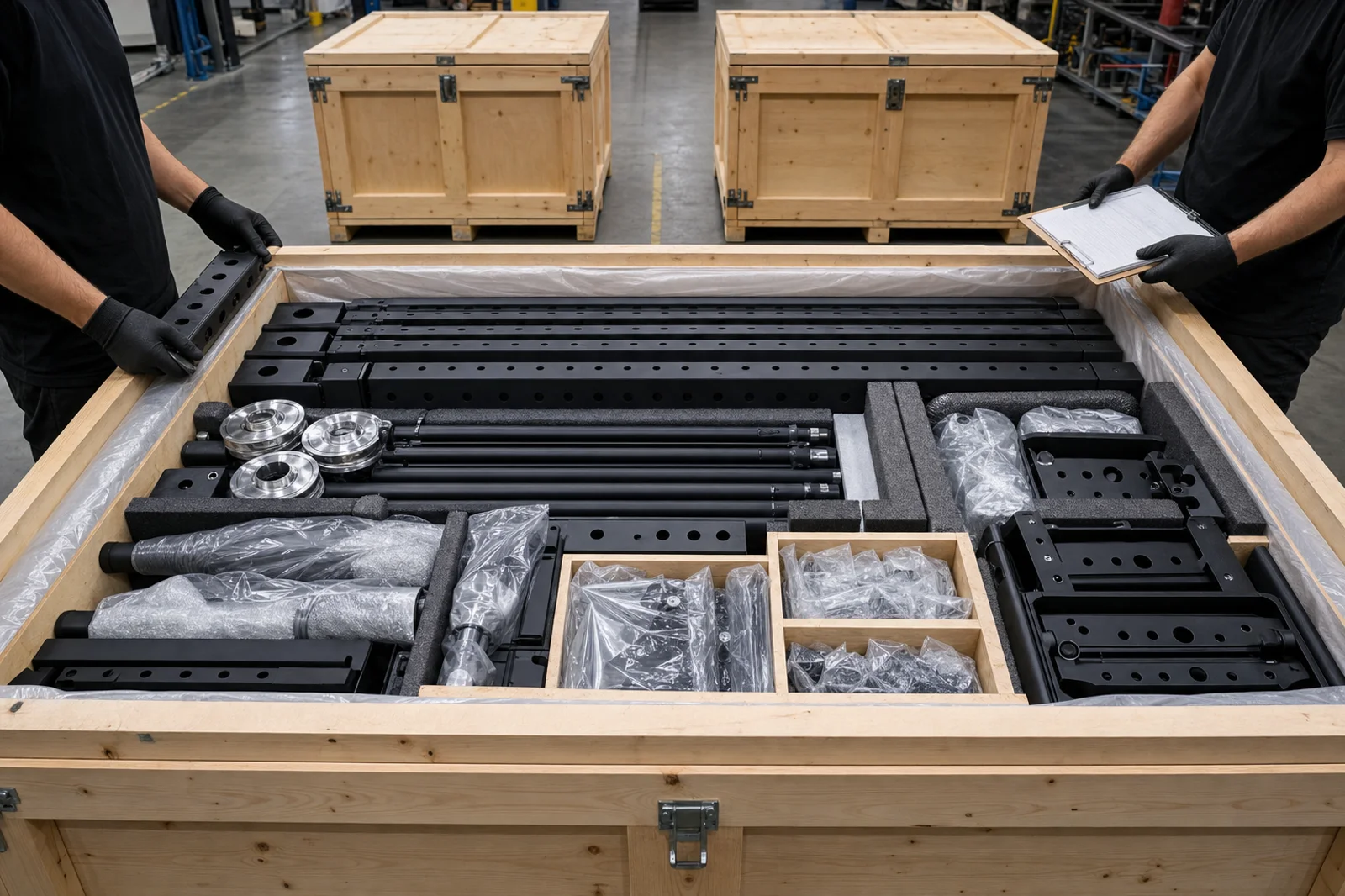
Wooden crates contain protected component groups, required hardware, wear-part spares and the wear-part list. The customer receives a configuration that can be assembled, serviced and reordered from a clear production record.