Why a wooden crate is used
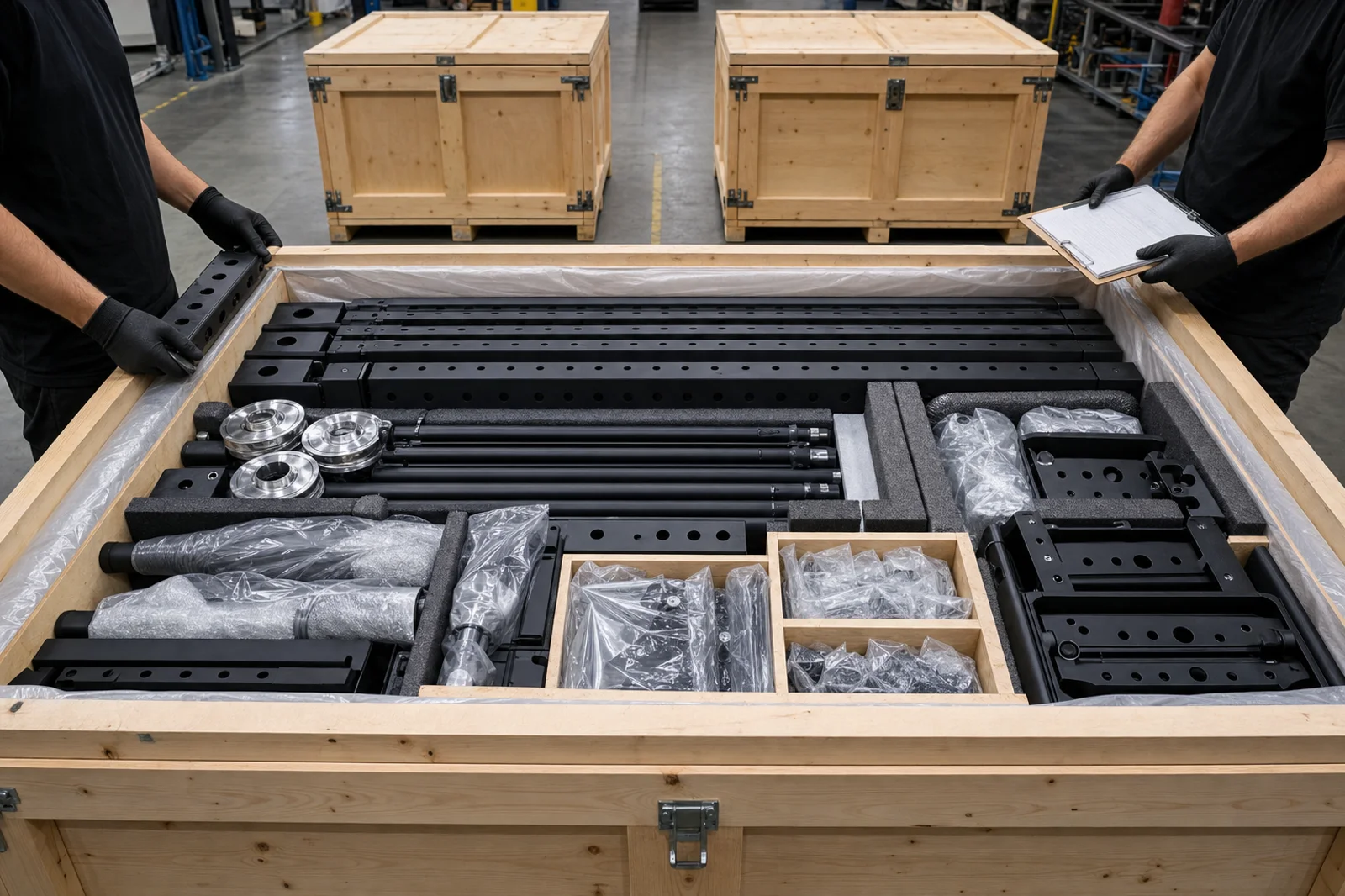
Multifunctional racks combine long heavy tubes, finished surfaces, moving cable parts and many smaller accessories. A wooden crate creates a rigid outer structure that can hold separated internal packing groups through handling and transport.
The packing design should match the actual product. A cable trainer needs different internal protection from a simple half rack or adjustable bench.
Control movement inside the crate
Finished uprights should not rub against one another. Crossmembers and sharp edges should not contact cable sheaths, pulleys or upholstery. Heavy parts need blocking or restraint so they cannot shift into smaller components.
Moisture protection and surface wrapping should be applied without trapping loose hardware against the finish.
Make the accessory count easy
Hardware should be grouped in a logical assembly order. Attachments, handles, bars, ropes and straps should be checked against the approved accessory list before the crate closes.
PBF Fitness also supplies wear-part spares and a wear-part list with the shipment so the customer can organize future maintenance.
- Fastener group count
- Accessory and attachment count
- Pulley and cable component check
- Wear-part spares and reference list
What the buyer checks at receipt
Before unpacking, record crate condition and identification. During unpacking, follow the component list rather than spreading all parts across the floor. Report transport damage with crate and component photographs before assembly.
Keep the packing list, specification sheet and assembly information with the receiving record for future repeat orders.