Measure the operating space, not only the machine
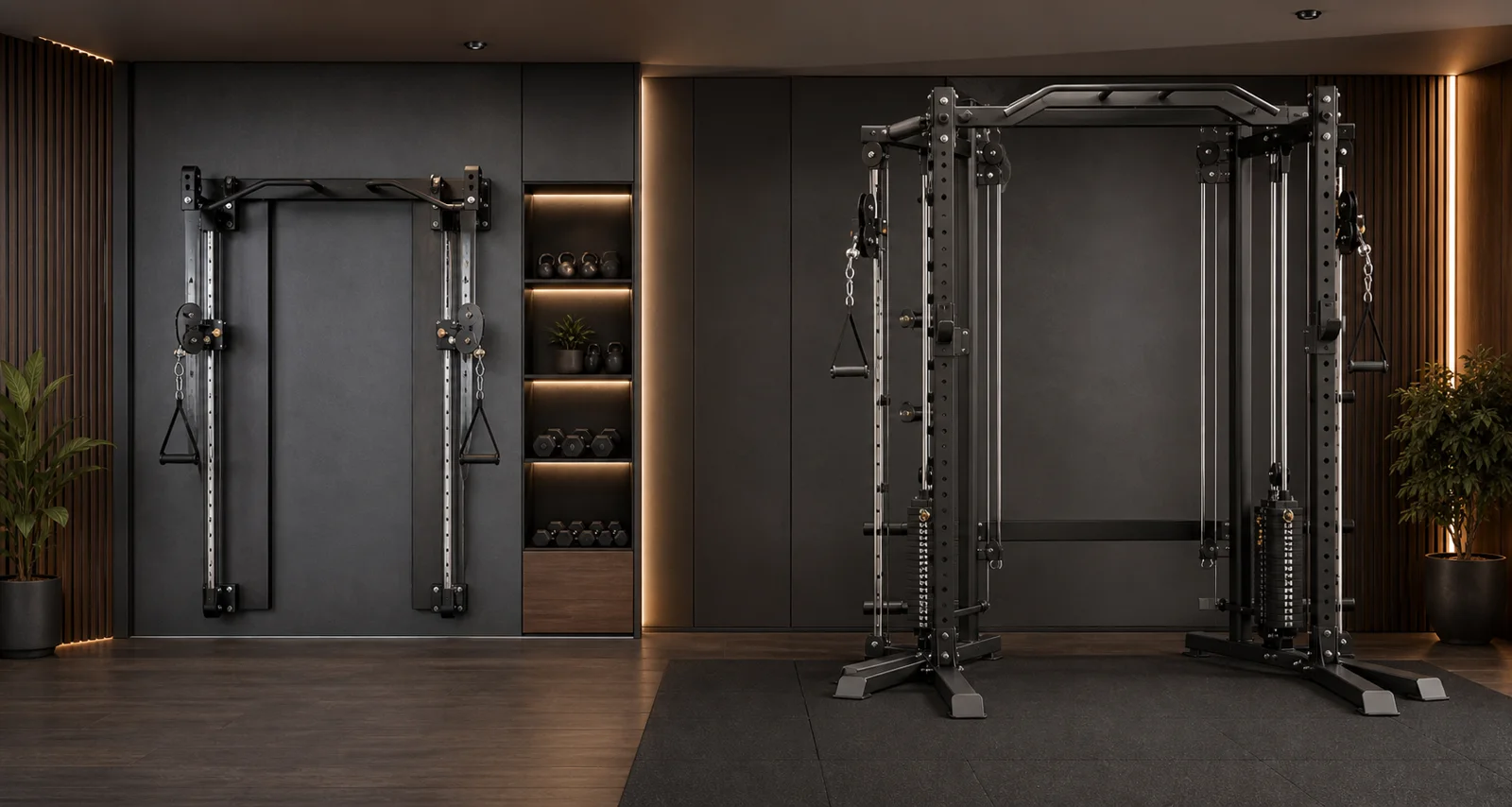
A wall-mounted trainer has a shallow stored depth, while the active exercise zone still needs cable travel, body movement and bench clearance. A freestanding unit needs its full footprint plus access around handles, weight stacks and service points.
Draw the stored position, training position and maintenance position before approving either system.
Confirm the wall before selecting the product
Wall construction, anchor choice and fixing locations are part of the equipment decision. A visually suitable wall is not automatically a suitable structural wall. The project team should confirm the substrate and installation method locally.
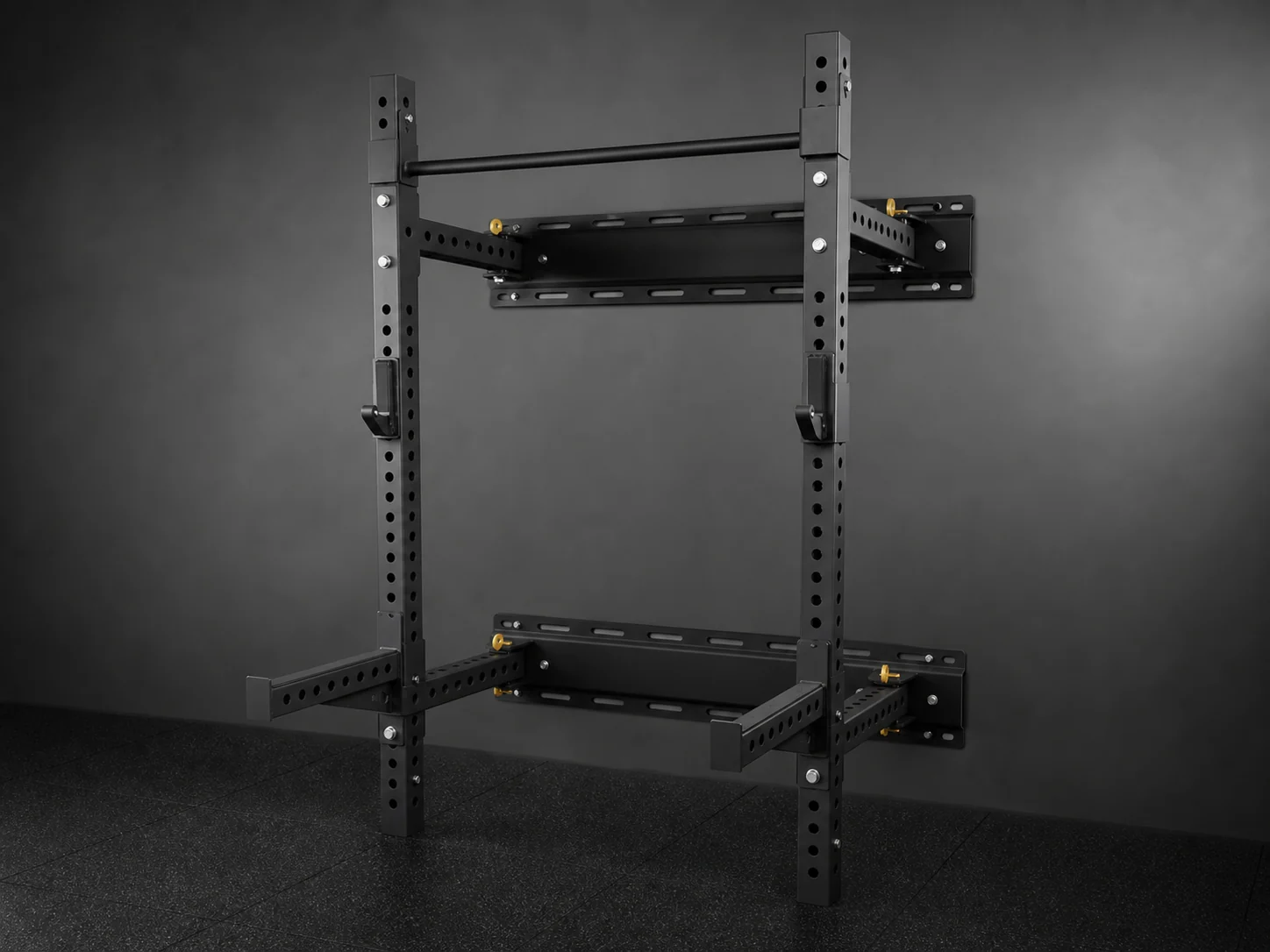
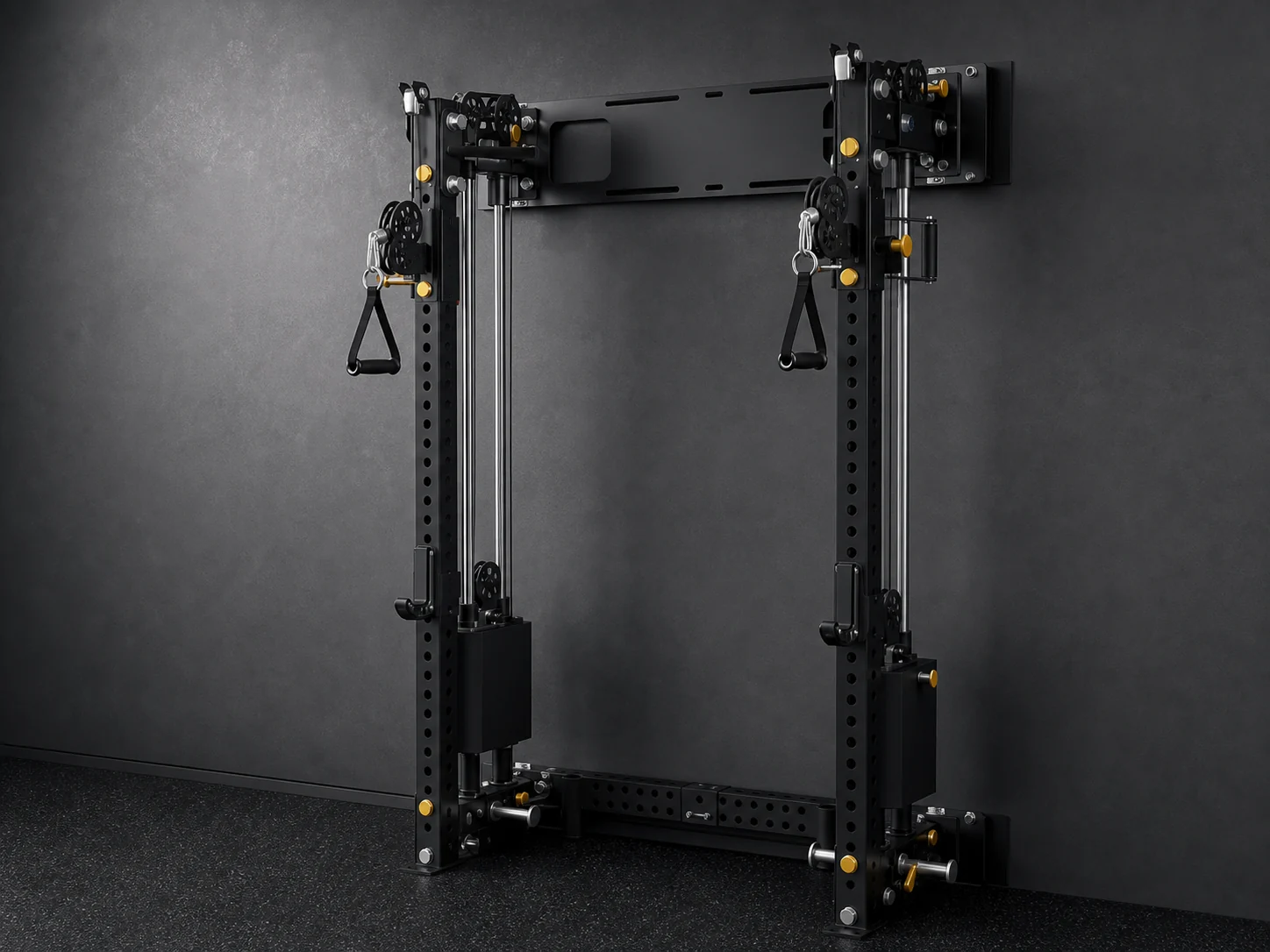
R12 is intended for a fold-away rack requirement. R13 is a fixed wall-mounted cable trainer. They should not be presented as interchangeable solutions.
- Wall material and structural approval
- Anchor type and installation responsibility
- Floor level and skirting interference
- Cable and user clearance
Choose freestanding for flexibility and access
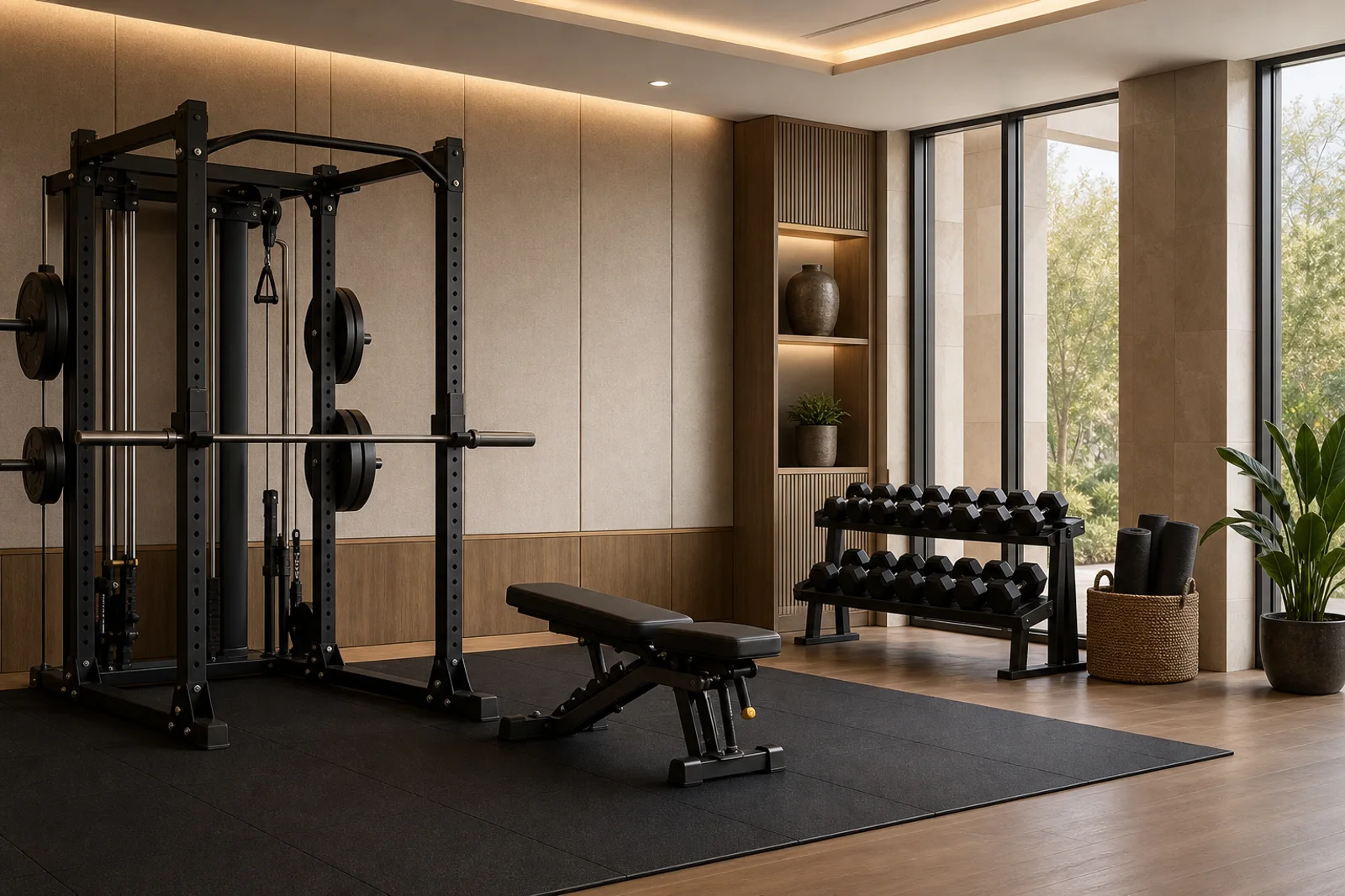
Freestanding systems simplify specification when the room cannot accept wall anchors or the layout is designed for future repositioning. They also support open access around rack, cable and bench positions.
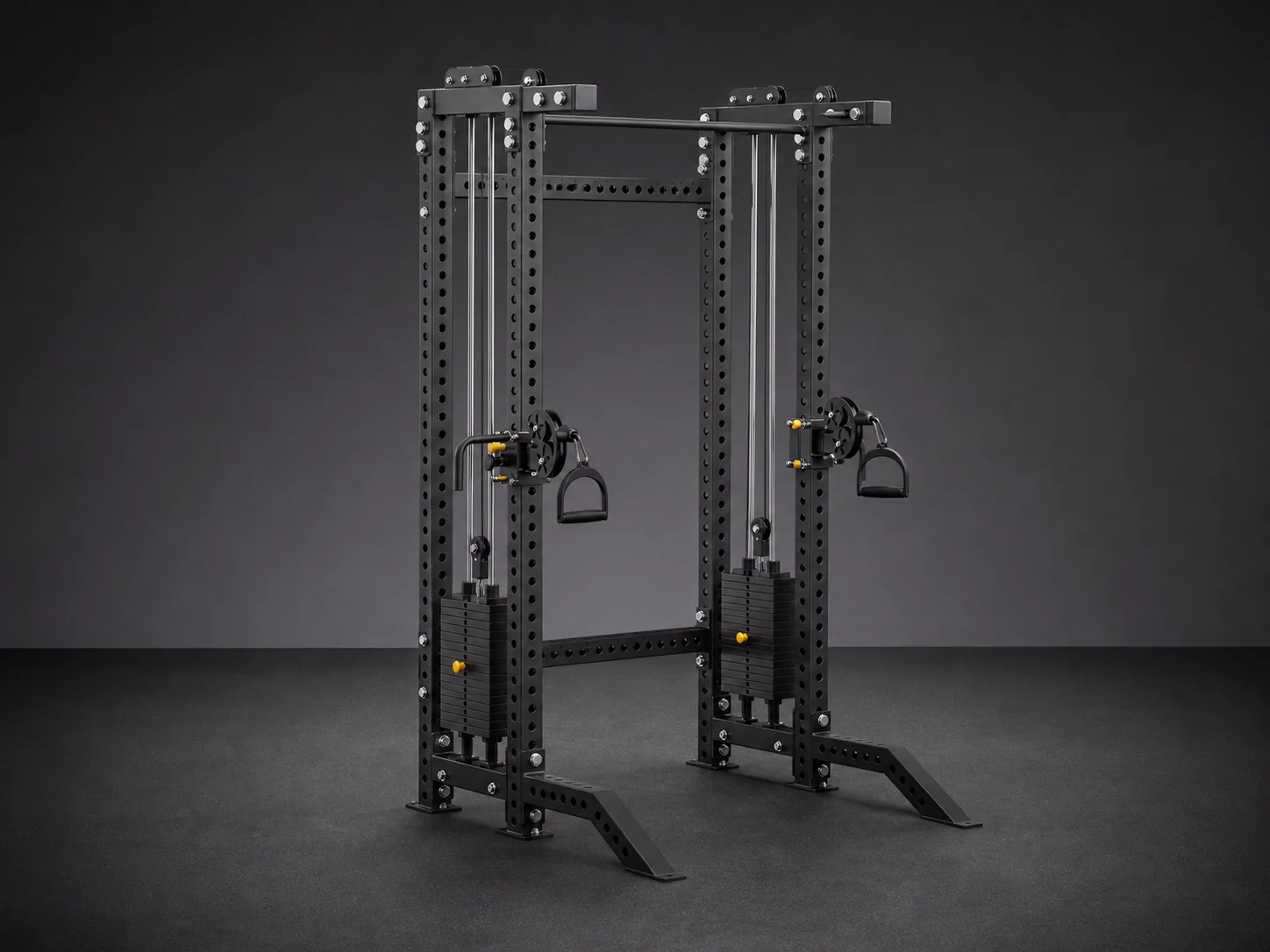
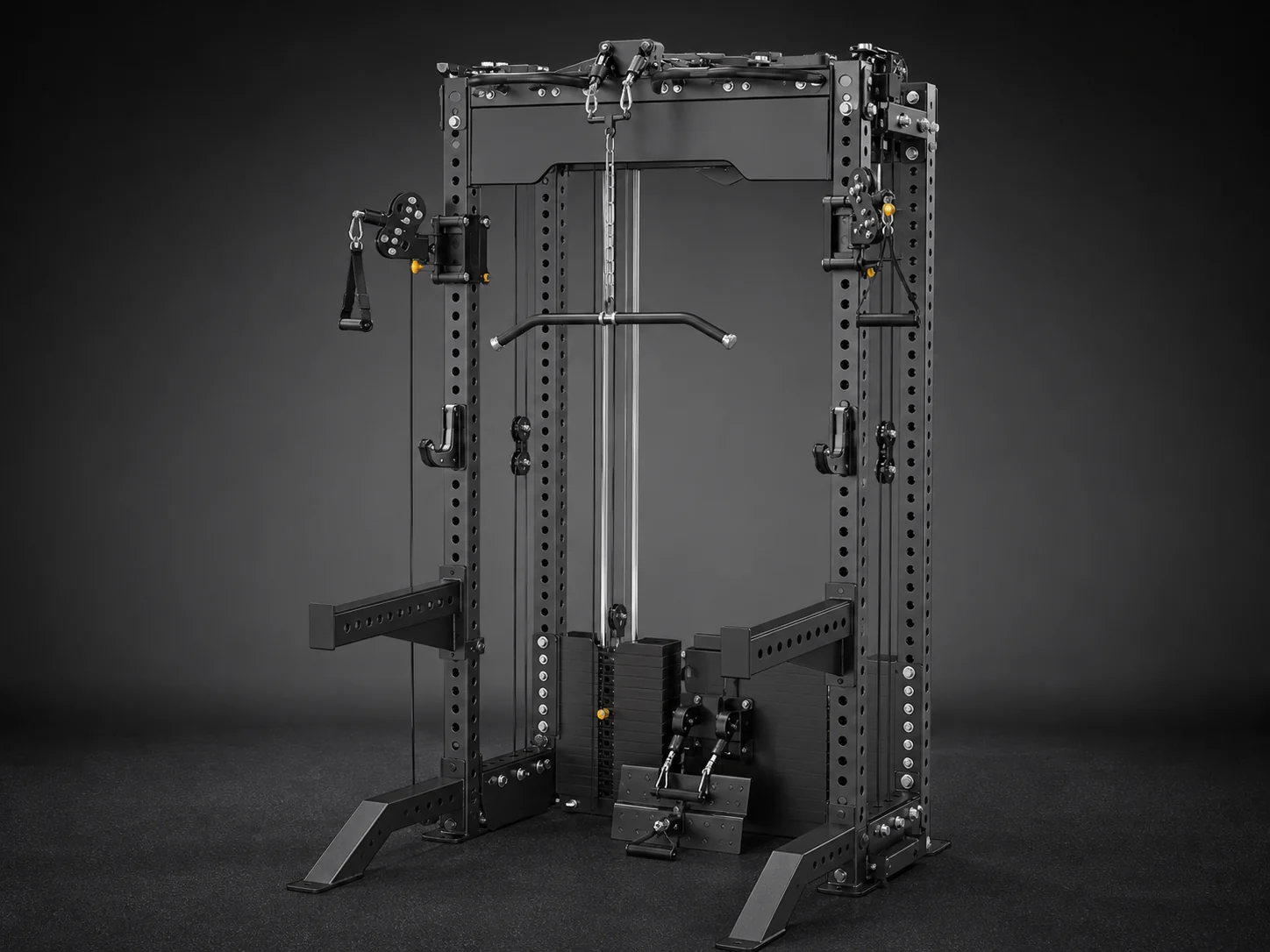
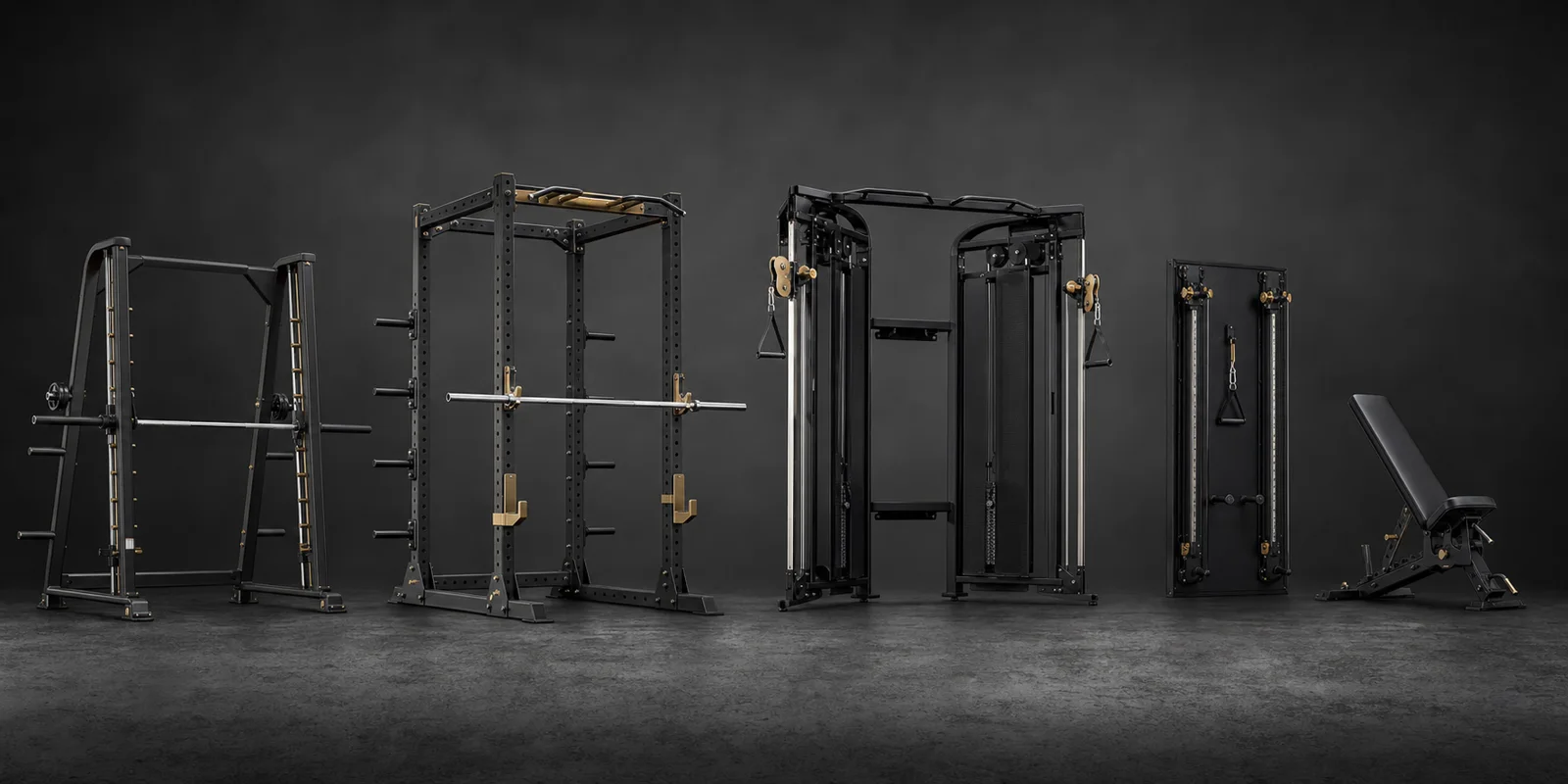
R03 and R08 focus on cable training. R05 adds Smith and free-rack work. R04 gives a dedicated free-weight cage when cables are not required.
A simple selection rule
Choose the smallest system that covers the required training modes without compromising safe clearance or service access. A compact product that blocks movement is not space-efficient, and a large multifunctional machine is not automatically better for a small professional room.