Start with the user, not the machine name
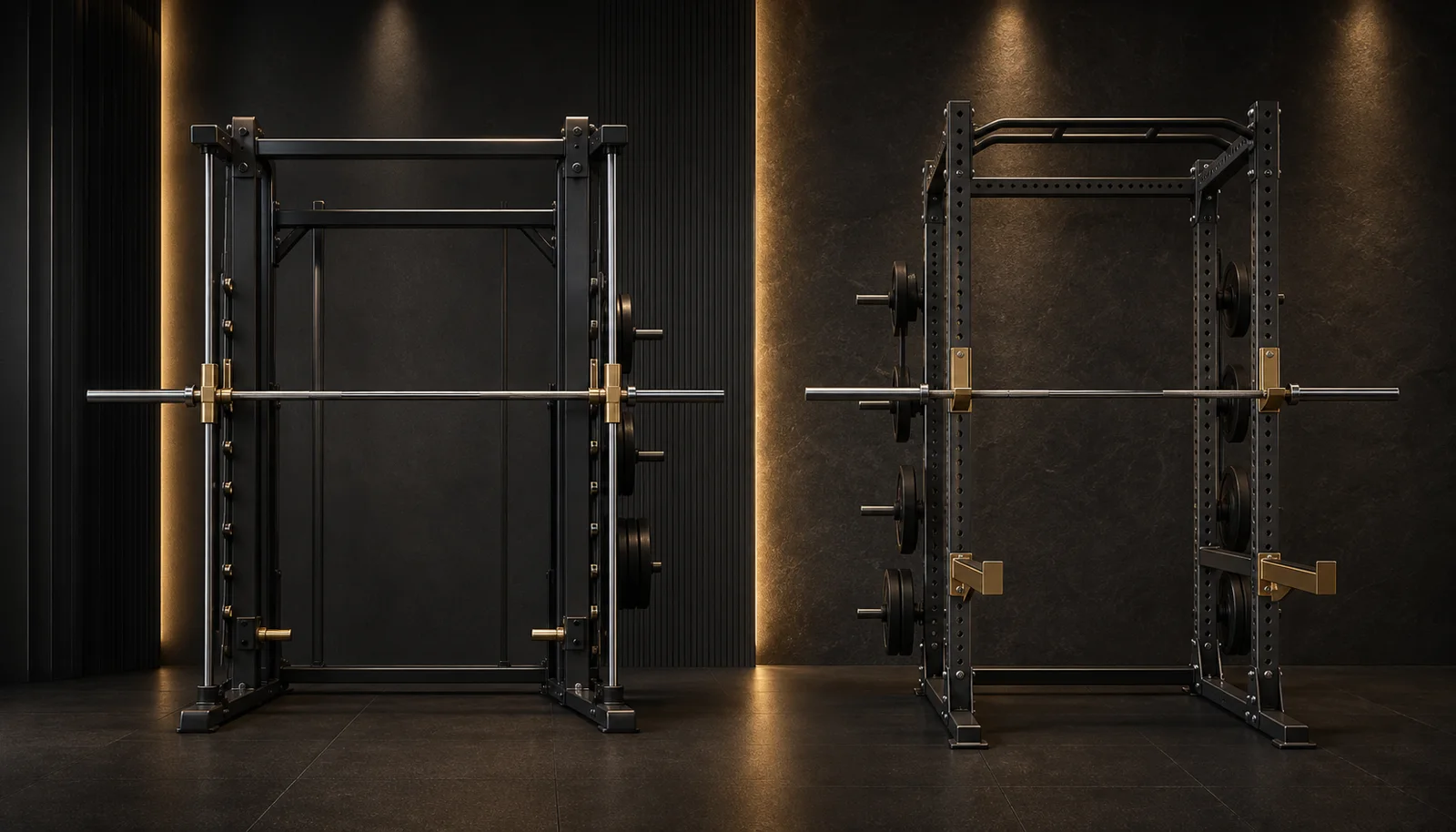
A hotel guest, a first-time home-gym buyer and a strength athlete do not evaluate equipment in the same way. The Smith machine offers a repeatable guided path and simple safety-stop logic. The power rack gives the user control of the full bar path and supports a wider accessory ecosystem.
For a distributor, the question is also commercial: which product is easier to explain to the intended buyer, and which model creates a clear next step in the range?
Where a Smith machine creates value
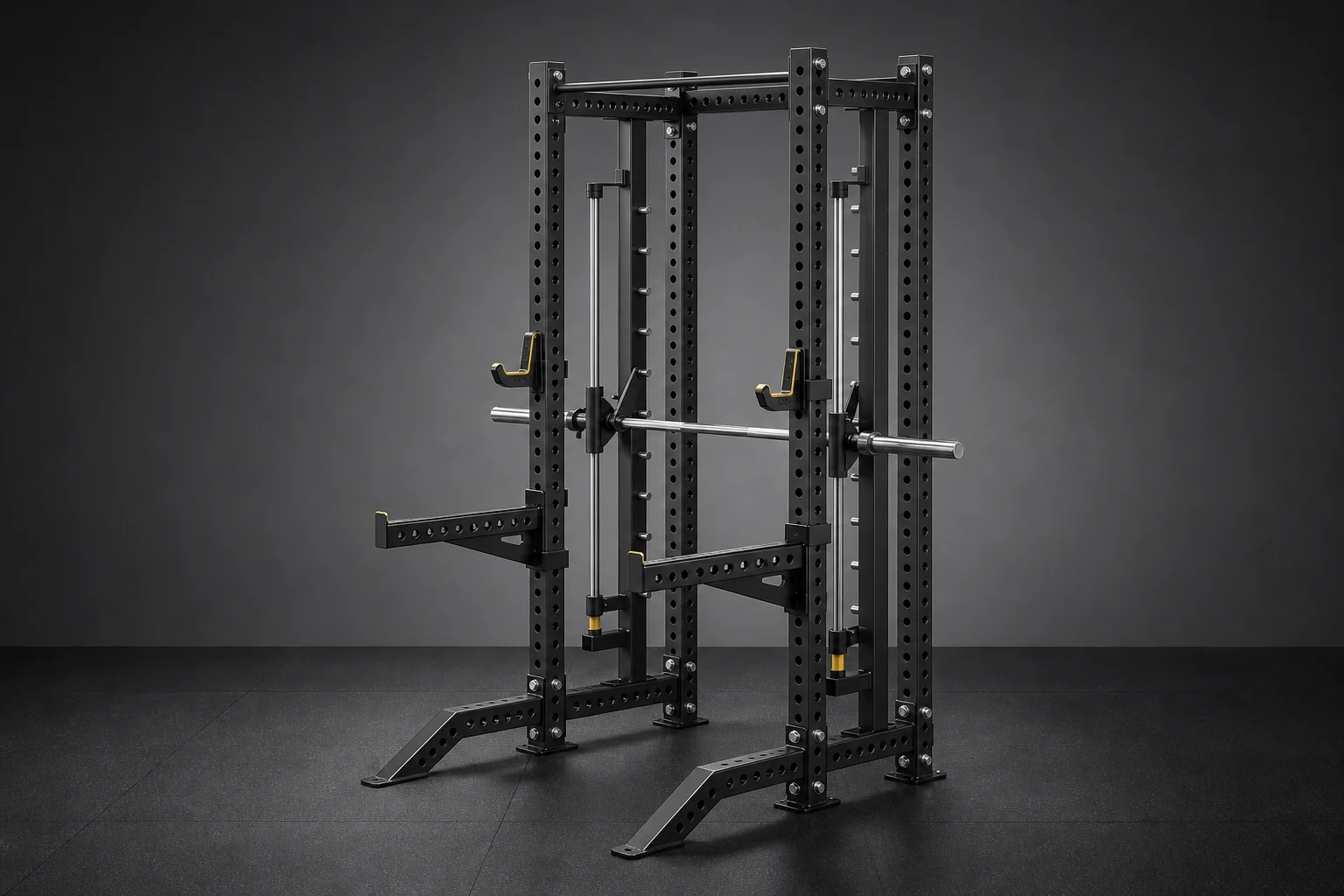
Guided-bar movement reduces the coordination demanded by a free bar. This can make squats, bench presses, shoulder presses and calf raises more approachable in premium homes and hospitality rooms where users train without a dedicated coach.
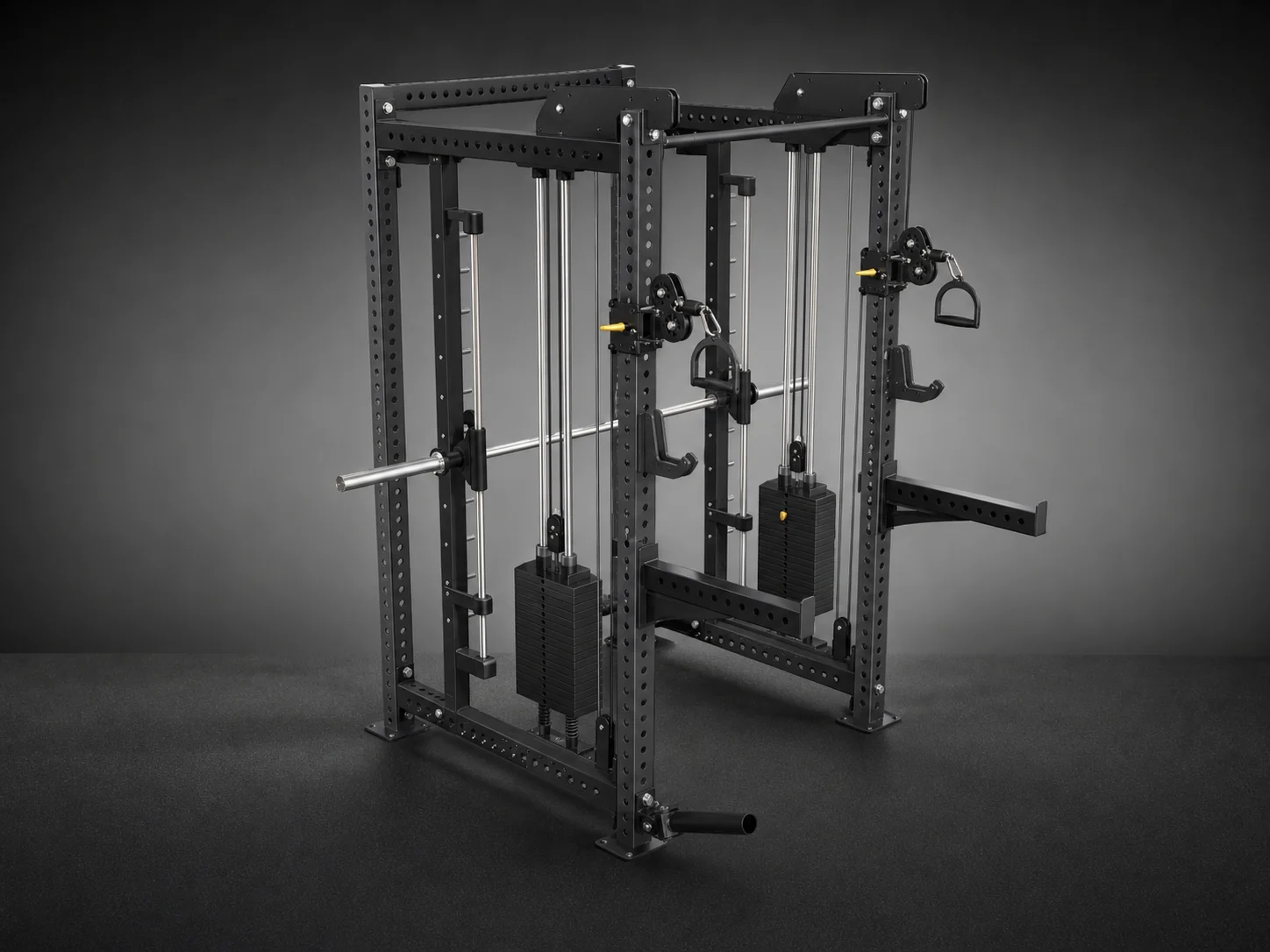
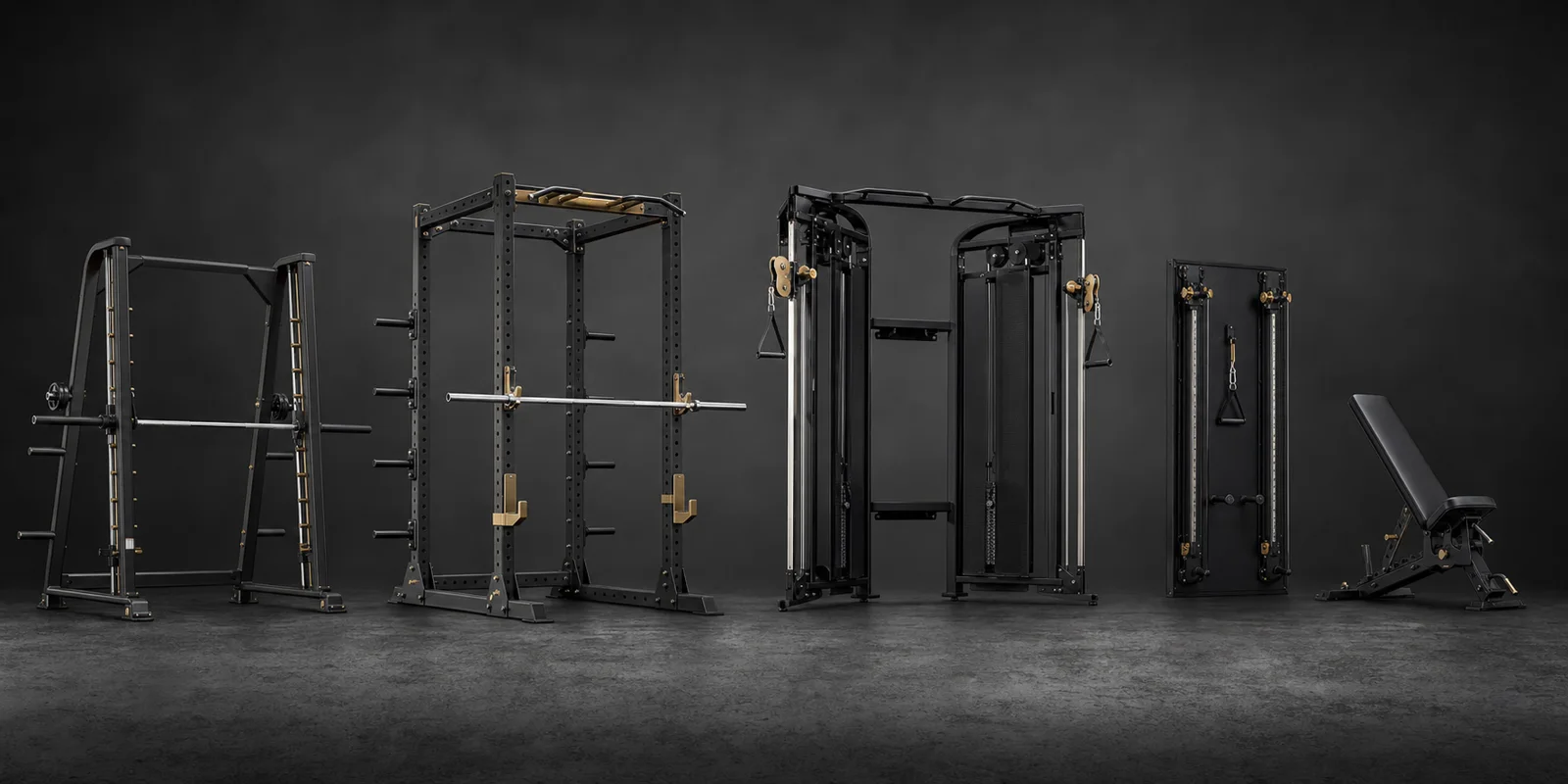
A dedicated Smith station such as R01 or R11 keeps the product proposition focused. R05 adds free-rack and dual-cable functions when the buyer wants one flagship system rather than several separate stations.
- Repeatable bar path and safety-stop positions
- Clear visual value for home-gym and hotel buyers
- Useful for controlled pressing, squatting and calf work
Where a power rack is the stronger choice
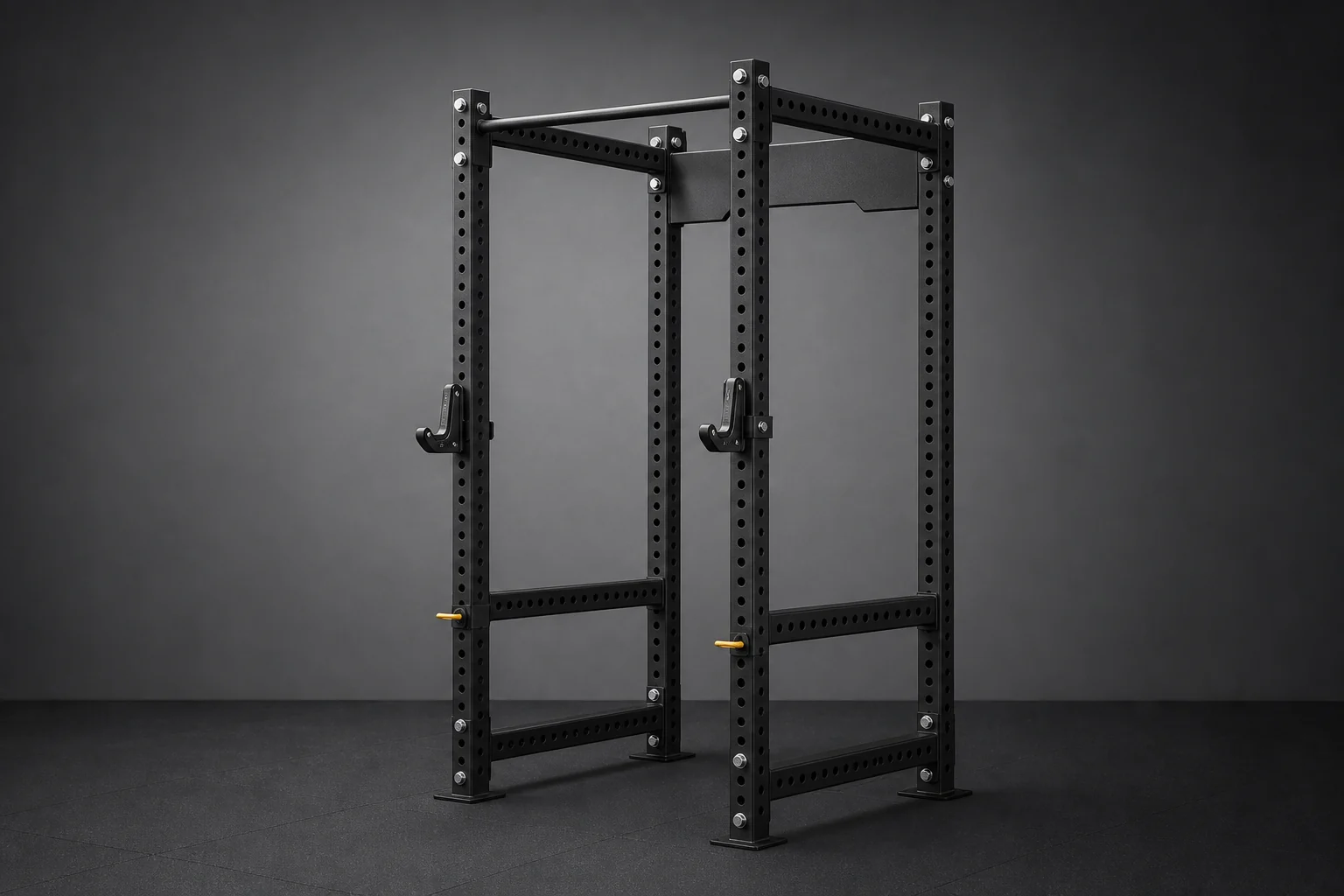
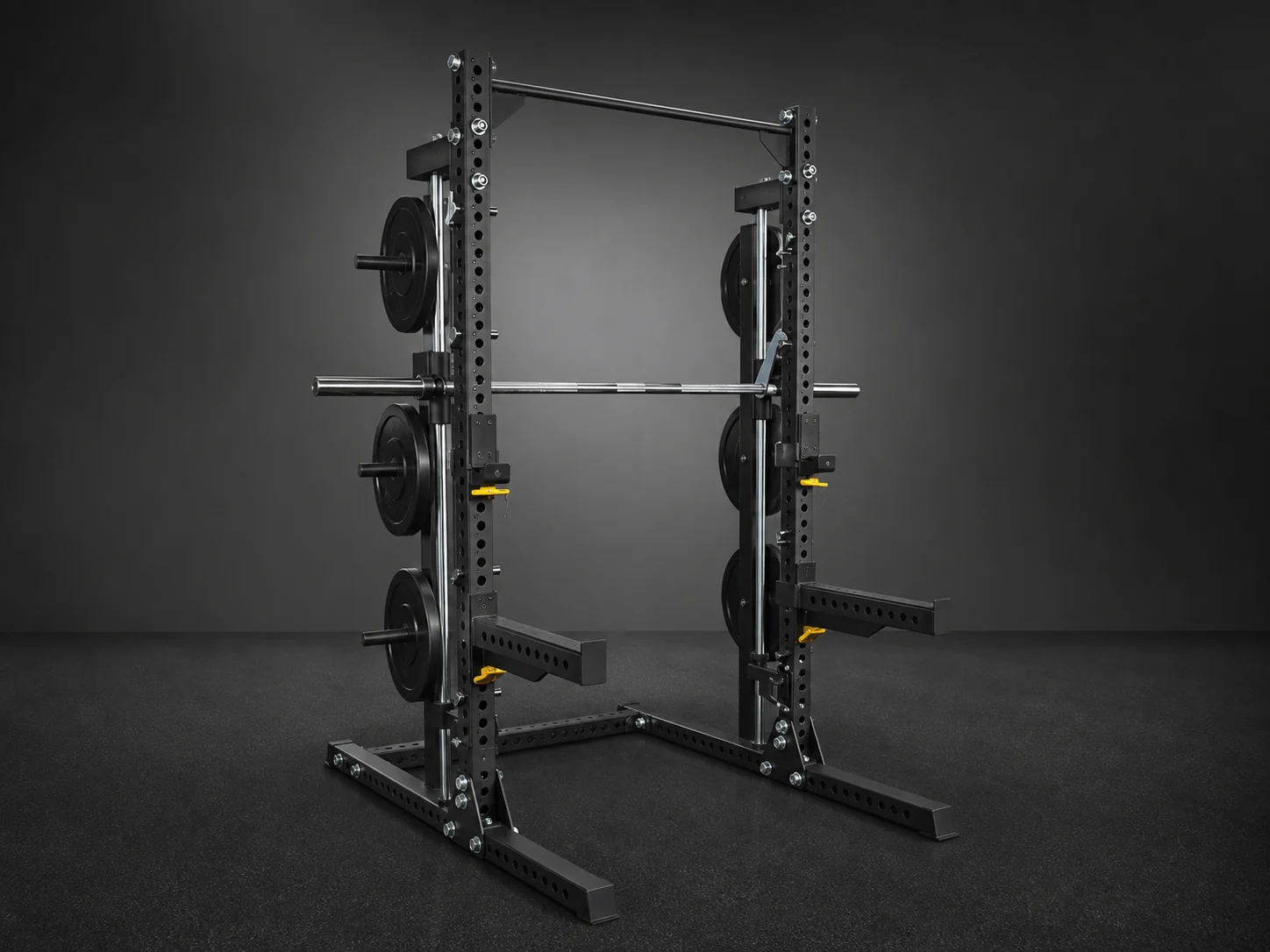
A power rack is built around free-bar training. J-cups, safety bars and open adjustment positions support squats, bench presses, rack pulls, overhead work and attachment-led training. The user controls the bar path, so correct setup and lifting experience matter.
R02 offers open half-rack access, while R04 creates a full cage. Larger R07, R09 and R10 systems add cable or multi-user functions for professional projects.
- Broader free-weight exercise choice
- Modular attachment and storage potential
- Natural fit for studios, clubs and strength-led product ranges
When a combined system is justified
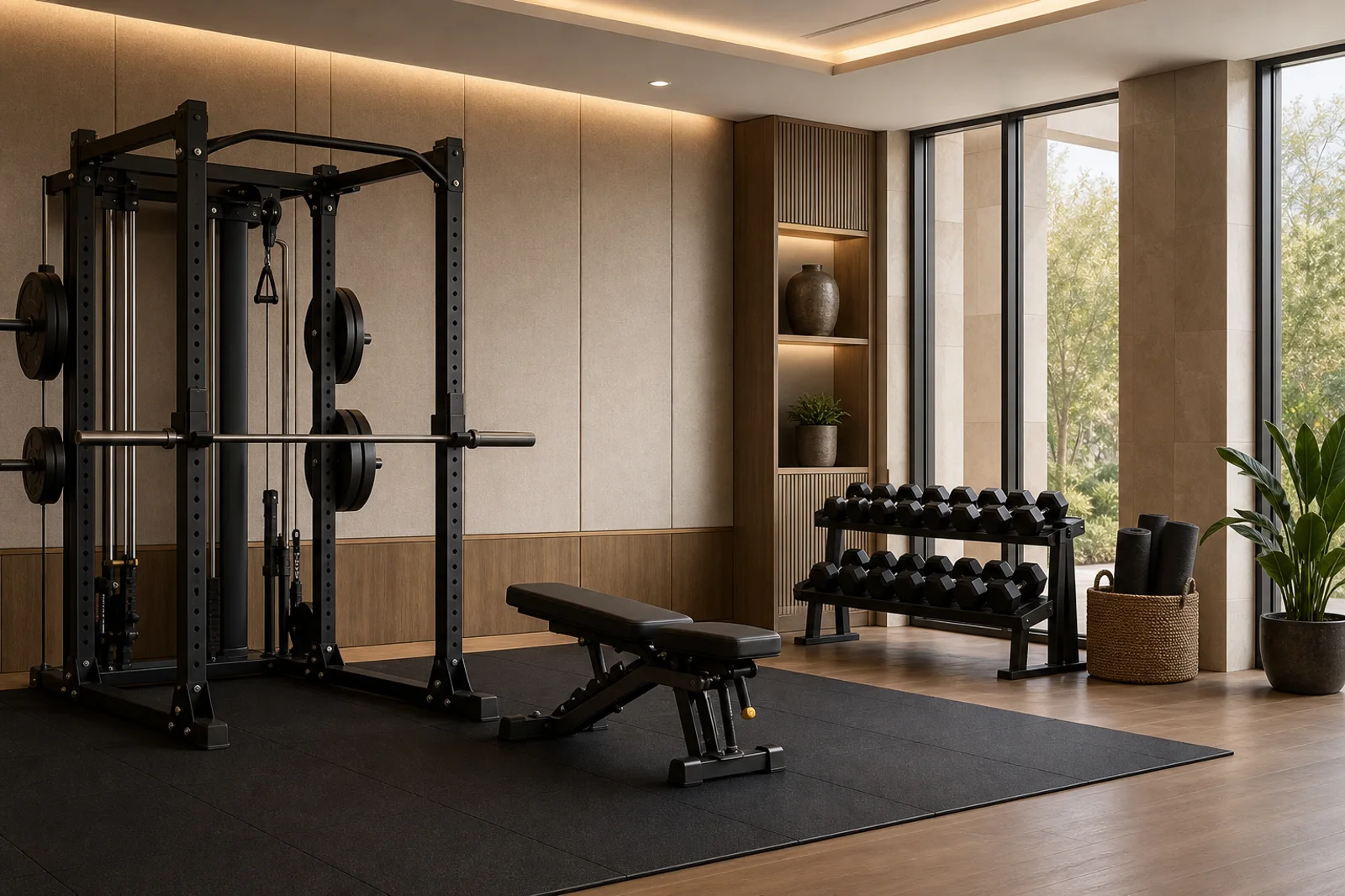
A combined Smith, rack and cable station can reduce the number of separate machines required, but it also increases weight, footprint, attachment count and specification work. The buyer should confirm which functions will genuinely be used before paying for the largest configuration.
For R05, confirm room access, bar clearance, cable travel, bench positions and service space around both weight stacks. The result should solve a room problem, not simply contain the longest feature list.