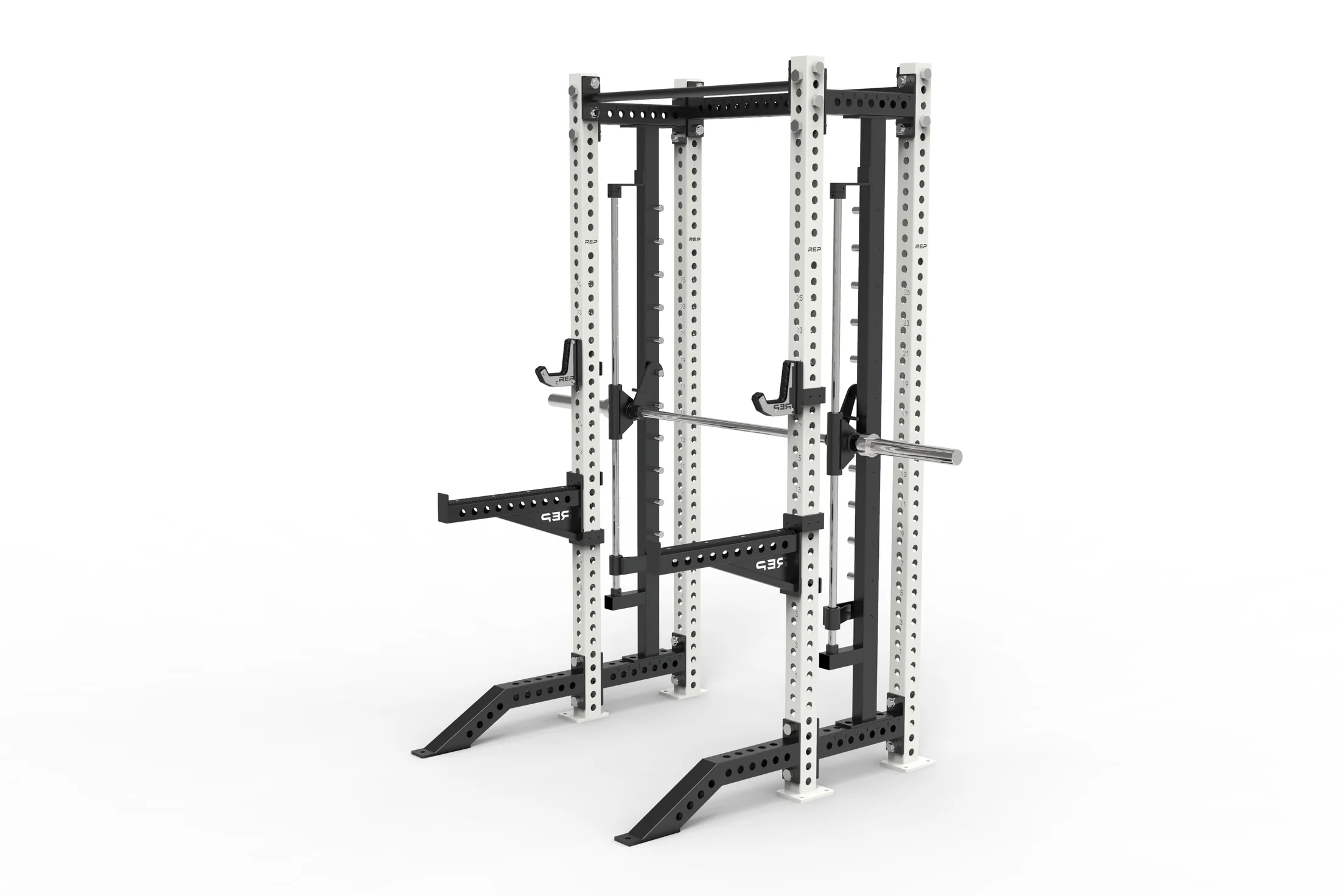
Smith machines and power racks can occupy similar floor areas but solve different training and merchandising needs. The useful comparison is not which is universally better, but which user experience the buyer expects.
| Decision | Smith system | Power rack |
|---|---|---|
| Bar path | Guided on fixed rails | Free-weight movement |
| Learning curve | More controlled starting point | Requires free-weight technique |
| Spotting setup | Integrated catches depend on model | J-cups and safeties define setup |
| Range role | Feature-led flagship | Core strength platform |
| Typical add-ons | Cable modules and storage | Benches, bars and rack attachments |
1. Compare the movement experience
A Smith bar follows a guided path. A power rack leaves the bar path to the user and uses adjustable supports and safeties. That difference affects the intended customer, sales explanation and training environment.
2. Match the format to supervision
Hotel, residential and mixed-experience rooms may value a controlled starting point. Strength-focused studios and experienced home users often prioritize open bar access. Neither format removes the need for correct setup and user instruction.
3. Audit the included system, not only the frame
Compare catch positions, cable stations, pull-up options, storage, included handles and bench access. Two machines with the same headline category can create very different usable exercise ranges.
4. Plan a distributor range without internal overlap
A simple power rack can anchor the entry level. A Smith and cable combination can serve as the flagship. Keep the price and function steps visible so each model has a reason to exist.
5. Ask for comparable specifications
Use model, machine dimensions, net weight, frame, rated load, functions, attachments and packing as the common quotation fields. Avoid deciding from product photos alone.