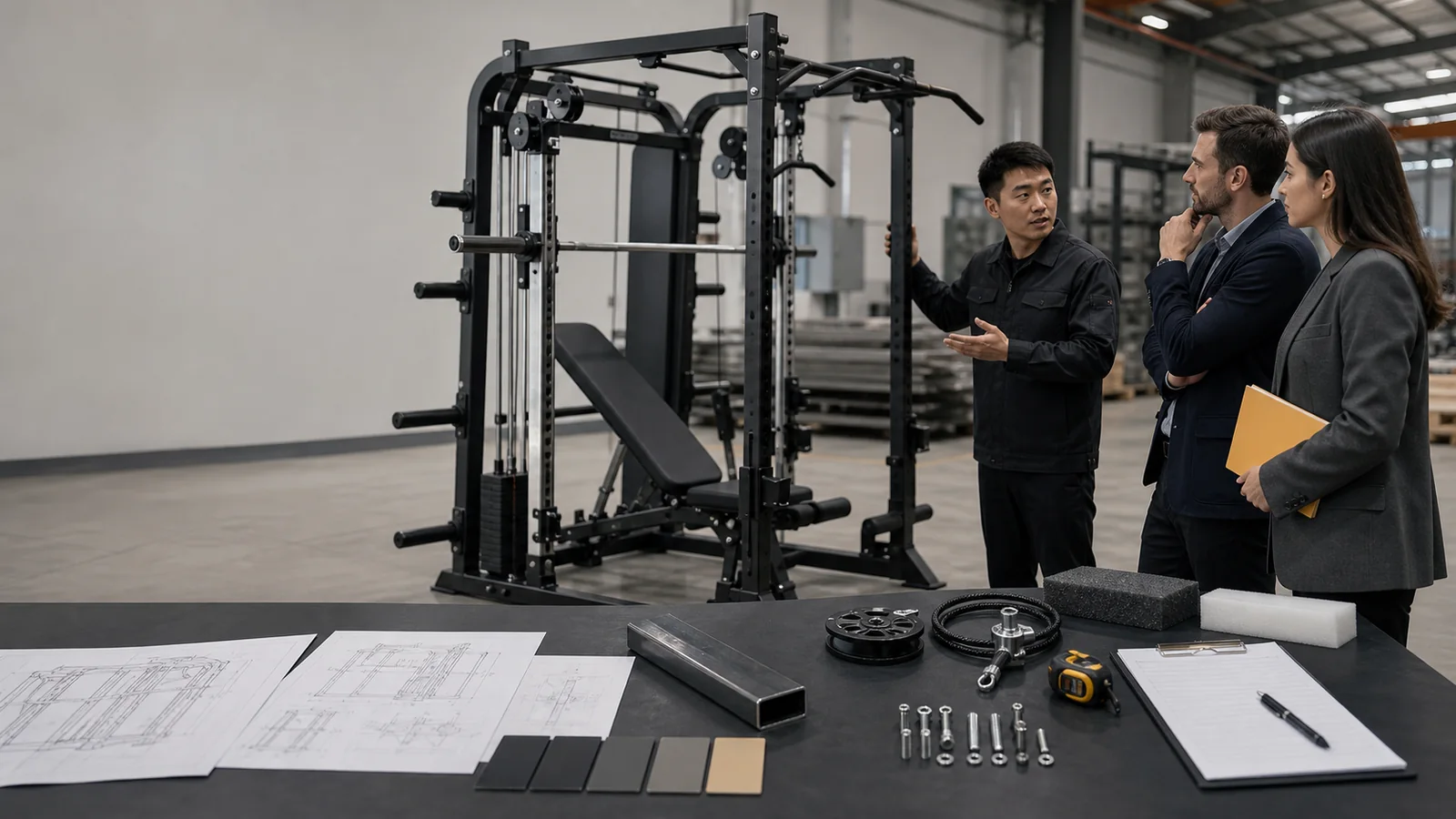
For a distributor, selecting a home gym equipment manufacturer is a range-building decision, not a one-product purchase. The right partner should help define who each model is for, confirm what will actually be produced, protect consistency across a batch and preserve the approved record for future orders. Use this framework to compare suppliers on evidence that can be checked before money, time and brand reputation are committed.
| Decision area | Evidence to request | Commercial reason |
|---|---|---|
| Product range | Models grouped by user, function and price position | Prevents internal overlap in your catalogue |
| Specification control | Dimensions, materials, functions and included parts in one approved record | Keeps quotation, production and delivery aligned |
| OEM capability | Drawing, finish, branding and packaging approval process | Protects your market positioning |
| Quality control | Named checks for structure, hardware, cables, functions and accessories | Reduces avoidable receiving problems |
| Packing | Component grouping, protection, crate and spare-parts list | Supports safer transport and faster receiving |
| Repeat orders | Retained configuration and revision history | Makes a successful model easier to reorder |
7-STEP SUPPLIER DECISION PATH
Move from market brief to controlled repeat order.
- 01Define
Buyer, price tier and required training functions
- 02Shortlist
Models with a distinct role in the range
- 03Verify
Dimensions, materials, components and attachments
- 04Approve
Drawing, finish, branding and packing details
- 05Inspect
Structure, hardware, movement and accessory list
- 06Receive
Crate condition, package count and components
- 07Repeat
Reuse the approved record with controlled revisions
1. Start with the market problem your product range must solve
Before comparing factories, define the buyer you intend to serve. A wholesale range for equipment dealers needs recognizable price steps and models that are easy to explain. A private-label collection may require a consistent frame language, finish and packaging experience. Premium home gyms, hotels and compact studios place different weight on footprint, appearance, adjustment speed and service access. A supplier cannot recommend a useful configuration if the commercial role of the product is unknown.
Write a one-page range brief that names the target buyer, expected retail position, room type, training modes and planned quantity. Separate essential functions from attractive extras. Guided Smith training, free-weight rack work and dual cable exercise may justify one 3-in-1 flagship model, while an entry product may need only a simpler rack and compatible adjustable bench. This prevents a catalogue filled with machines that look different but solve the same customer problem.
- Target buyer and sales channel
- Entry, core or premium position
- Required exercises and room limits
- Expected order and repeat-order pattern
2. Distinguish a manufacturer from a trading presentation
A professional website or quick quotation does not by itself show who controls fabrication, assembly and inspection. Ask the supplier to explain where material preparation, welding, powder coating or stainless-steel work, assembly, functional checks and packing take place. Useful evidence is specific: current workshop images, a process description, an inspection list and examples that connect a visible product to a manufacturing stage.
The practical test is whether the contact can answer production questions without changing the subject. They should explain how a custom requirement is recorded, who confirms a drawing, what is checked before release and how replacement or wear parts are identified. A capable factory may still use outside specialist processes, but responsibility for the approved result must remain clear. The goal is not to collect dramatic claims; it is to understand who controls the decisions that affect the delivered product.
3. Compare structure, materials and components on the same basis
Product photos hide many differences. Request machine dimensions, net weight, main frame tube, material, rated load or resistance system, adjustment positions, included functions, attachments and packing. Put every shortlisted supplier into the same table. If one quotation says only heavy duty while another names the tube and components, the offers are not yet comparable.
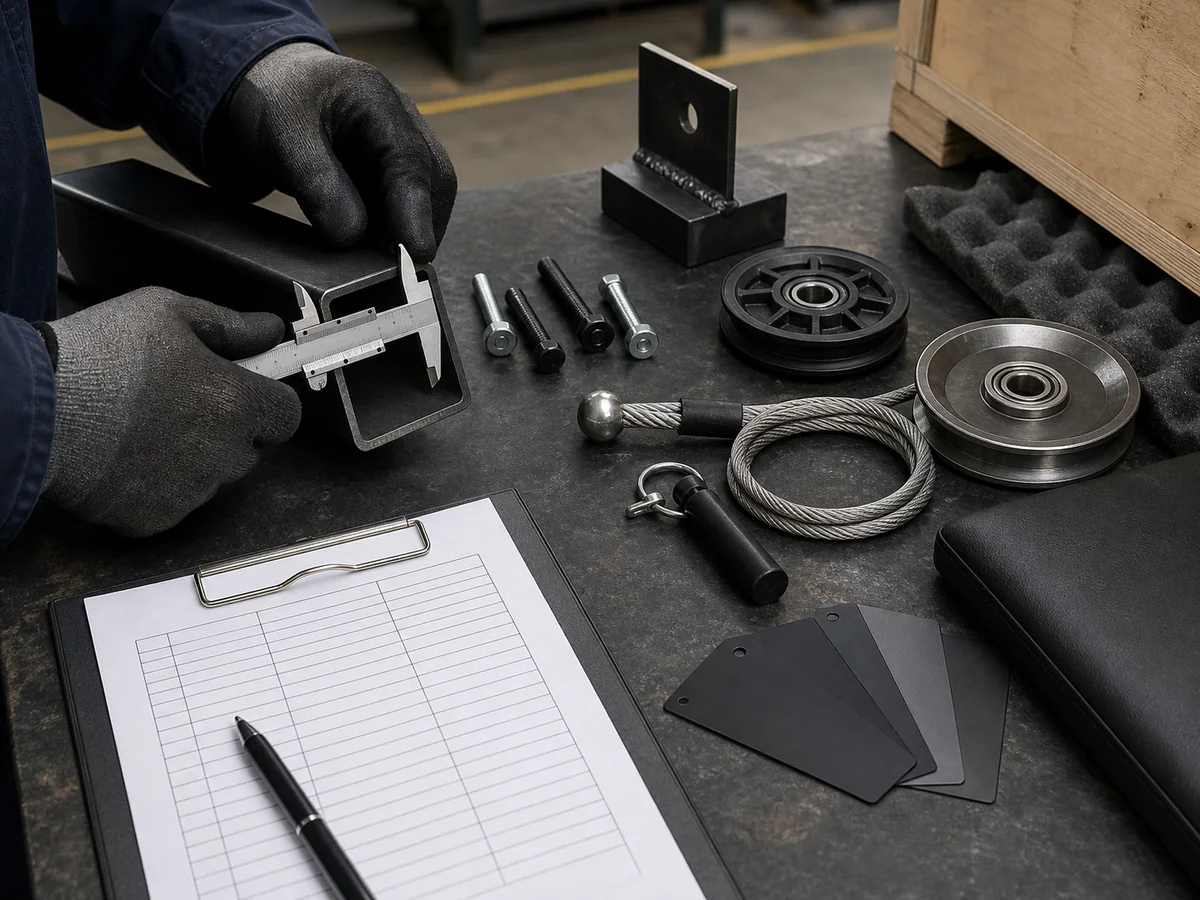
PBF Fitness uses different approved frame platforms for different equipment families, including dedicated rack structures and selectorized home-gym systems. The exact tube and material should therefore be tied to the selected model rather than assumed across a catalogue. Check weld areas, plates, bolts, washers, pulleys, cable construction, guide rods, adjustment pins, pads and transport points. For cable equipment, routing and service access matter as much as the number of handles. For benches, inspect stability and engagement in every intended position.
Ask which details can change during customization and which are fixed by the base design. A color change is not the same engineering task as moving a pulley, widening a frame or adding a training function. This distinction helps compare realistic OEM work instead of treating every request as a cosmetic option.
4. Evaluate OEM and private-label capability as an approval system
Reliable OEM production begins with a controlled requirement record. The manufacturer should confirm the base model, dimensions, functions, material, frame and upholstery color, visible branding, attachments, packing and any documentation needed by the buyer. When geometry or functions change, a drawing should show the agreed configuration before production starts. Both sides need one current revision so an older instruction cannot return to the workshop.
Private label is broader than putting a logo on steel. The color split, nameplate position, adjustment markings, accessory presentation, manual, crate marks and spare-parts information all influence how a brand is received. Ask to approve these elements together. Also ask how a sample or first unit will be compared with the batch. A factory with strong customization capability should describe what is confirmed, what can be measured and what must be visually approved.
Do not approve a custom product from chat messages scattered across weeks. Consolidate the decisions into a signed quotation, specification, drawing where required, color reference and packing list. This record becomes the foundation for inspection and future repeat orders.
5. Inspect batch quality through named checkpoints
Quality control becomes useful when it names the product features that must be checked. For a multifunctional home gym, the list can cover frame alignment, weld areas, coating condition, every main fastener, Smith bar travel, safety positions, cable routing, pulley rotation, trolley engagement, adjustment pins, bench movement, attachments and accessory quantities. The inspector should compare finished equipment with the approved configuration—not with memory or a similar model on the floor.
Ask how the factory handles the first assembled unit and the remaining batch. The first unit is a chance to confirm function and presentation before the same issue is repeated. Batch inspection should then check both consistency and completeness. Photos are most useful when they identify the stage and item being checked; a general workshop image cannot replace a release list.
Testing language also needs precision. A supplier should distinguish a component durability test, an in-process functional check and a certified report. Request a report when it is relevant to the market, and verify that its product or component scope matches the item being bought. A generic certificate image is not proof for every model.
6. Confirm MOQ, production timing and repeat-order control
MOQ affects how safely a distributor can test a new model. PBF Fitness accepts orders from one unit and provides better pricing for larger quantities, allowing buyers to evaluate a configuration before planning a broader range. The commercial decision should include unit price, customization work, packing, inland handling and the cost of holding inventory—not just the factory price.
Production timing should be linked to an approved specification, quantity and customization scope. Standard orders are generally completed within 20 days after order details are confirmed, while custom products can require an adjusted schedule. Ask for the milestones that control the date: drawing approval, material preparation, finish approval, assembly, inspection and packing. A realistic schedule with named dependencies is more useful than an unsupported fastest-delivery promise.
For repeat orders, confirm which records the manufacturer retains. The final drawing, color direction, component list, inspection result, packing arrangement and revision history should stay associated with the model and order. If a component changes, the revision should be visible before the next batch begins. This discipline protects consistent retail photography, manuals, spare parts and customer expectations.
7. Treat export packing and wear parts as part of the product
A multifunctional machine includes long coated frames, guide rods, pulleys, cables, pads, attachments and many small fasteners. The packing plan should separate finished surfaces, protect upholstery from sharp hardware, prevent tight cable bends and group bolts by assembly stage. Wooden crates provide a controlled outer structure, but internal blocking, wrapping and component layout determine whether equipment arrives ready for efficient receiving.
Request a packing list that matches the inspected configuration. It should help the receiver count packages, identify main assemblies, locate hardware and confirm attachments. PBF Fitness supplies agreed vulnerable spare parts with the shipment and provides a wear-parts list. For a distributor, this supports after-sales service and reduces the time spent identifying a small component after the order has arrived.
Before accepting the packing plan, consider the destination warehouse and installer. Ask whether the crate can be moved with the available equipment, whether parts are grouped logically and whether the assembly sequence is supported. Good export packing protects both the machine and the buyer's first experience with the brand.
8. Use a supplier comparison checklist before committing
Score each shortlisted manufacturer using evidence that can be kept. Record whether the range has clear product roles; whether specifications are complete; whether workshop and inspection evidence connects to the offered product; whether customization has a documented approval path; and whether packing, spare parts and repeat orders are controlled. Add response quality: does the supplier answer the actual question, identify limits and return a revised record after a change?
A low price can remain attractive when the offer is genuinely comparable. The risk appears when missing functions, unclear materials, incomplete accessories or weak packing are discovered only after production. Normalize the quotation first, then compare price. If a supplier cannot provide the minimum technical and commercial record before an order, do not assume the missing control will appear during production.
- Clear product role and complete specification
- Current factory and inspection evidence
- Documented OEM approval and revision path
- Named batch checks and accessory count
- Export packing and wear-part support
- Repeat-order record and responsive communication
9. Send a first inquiry that makes a useful quotation possible
A focused inquiry helps the manufacturer respond with a relevant model and fewer assumptions. Include the company and market, buyer type, product category, required exercises, available room if relevant, preferred model or reference image, quantity, destination, material or finish direction, branding needs and target timing. State which decisions are still open. If several price tiers are needed, ask the supplier to explain the difference between them instead of requesting one machine with every possible feature.
For a distributor range, share the models already sold and the gap to fill. For a private-label product, include brand presentation requirements and approval contacts. For a project, send room dimensions, access constraints and expected users. PBF Fitness can then connect the brief to a base configuration, identify customization work and prepare the next confirmation step. The objective of the first conversation is not a generic catalogue—it is a comparable, documented sourcing path.