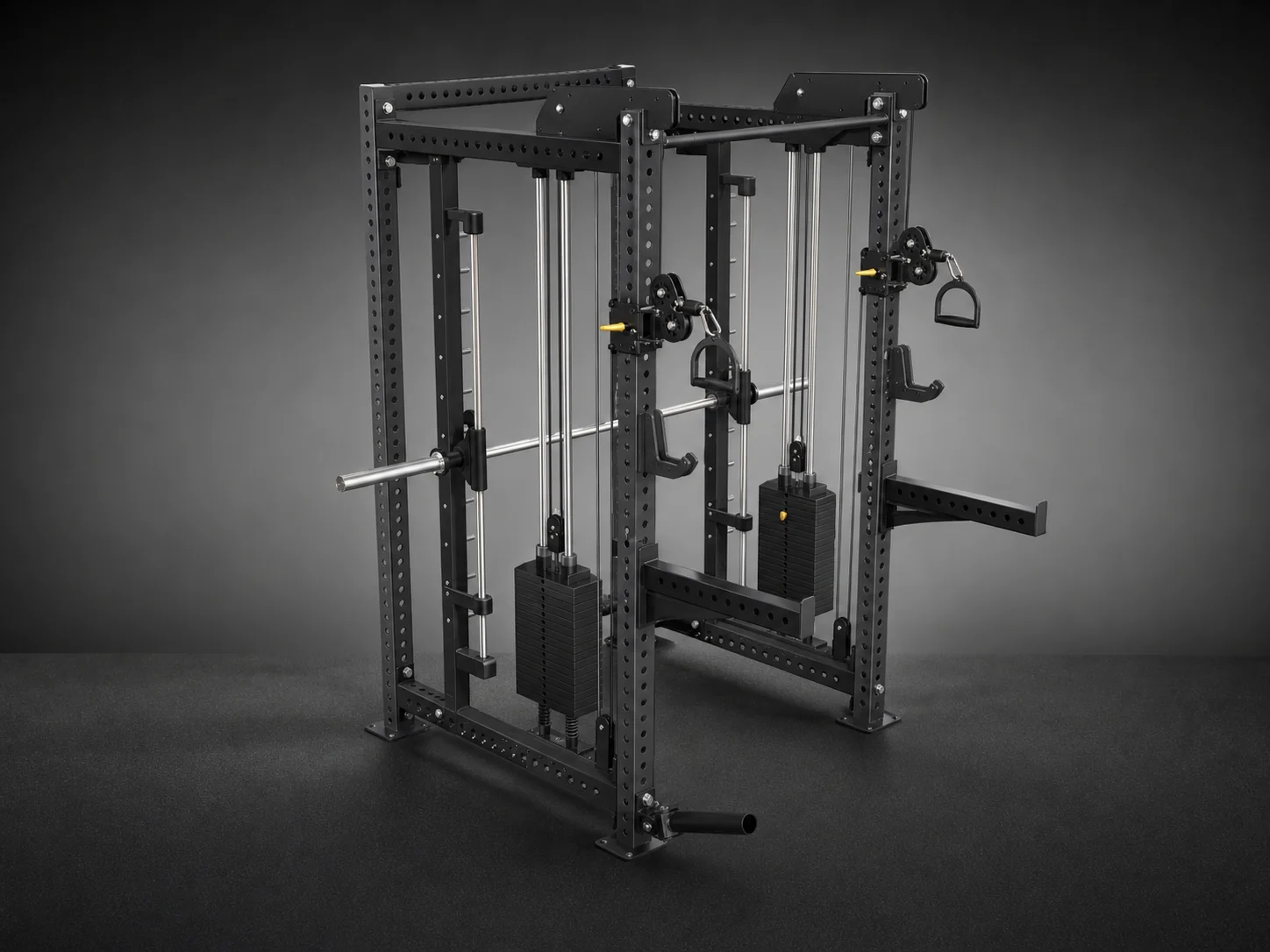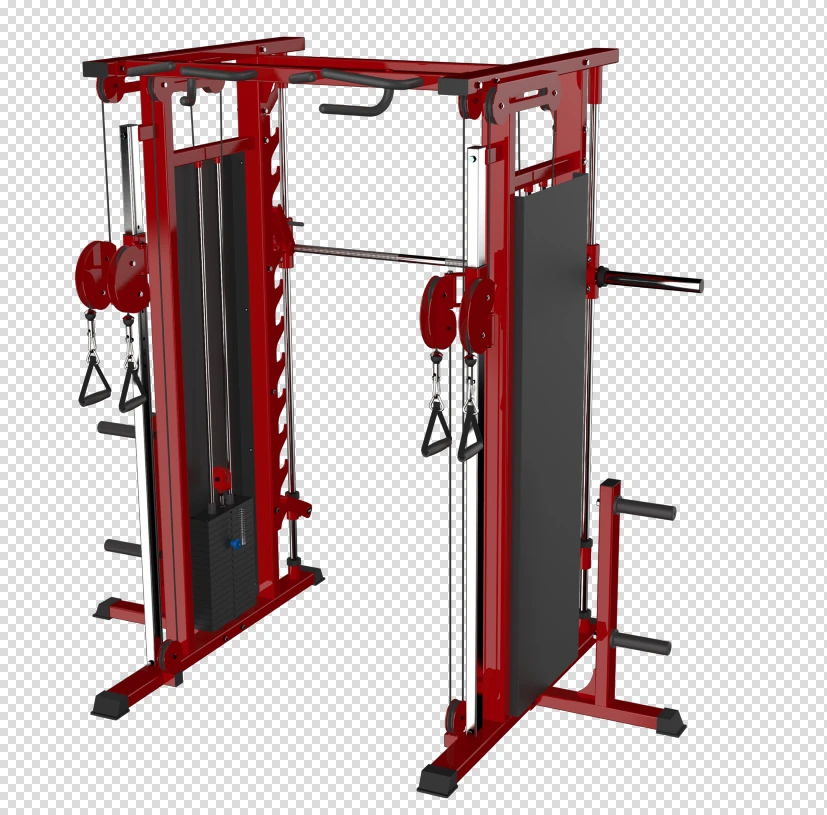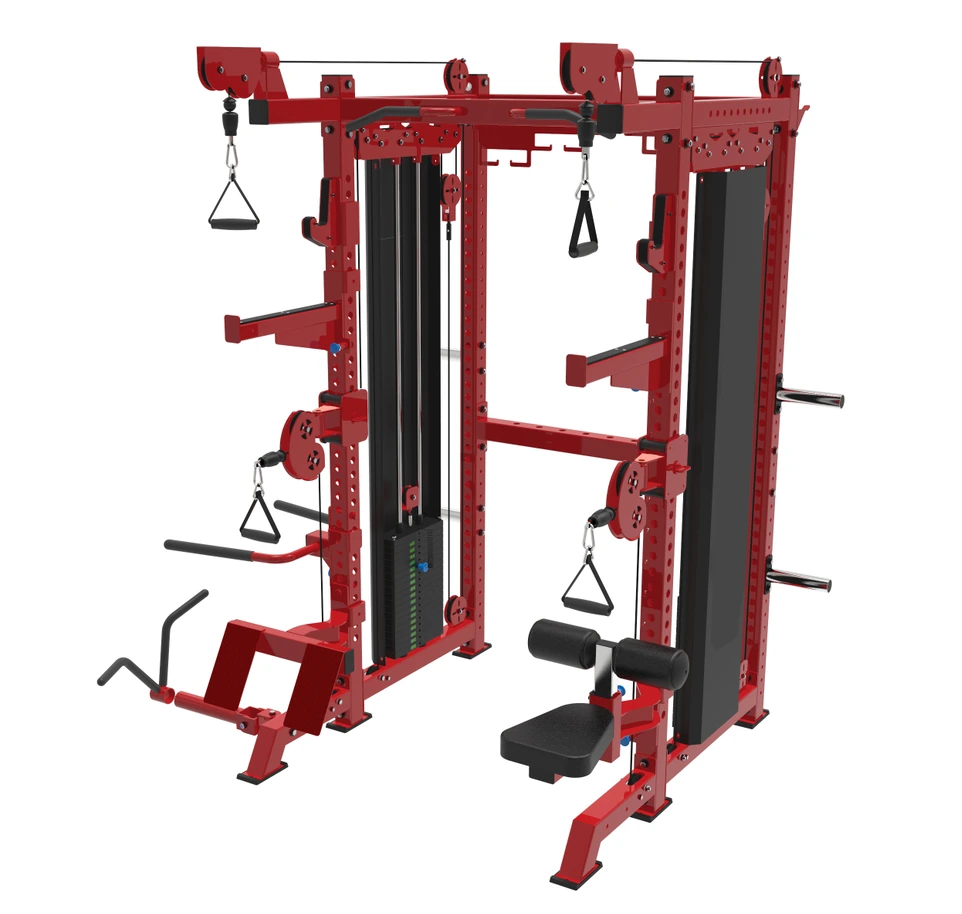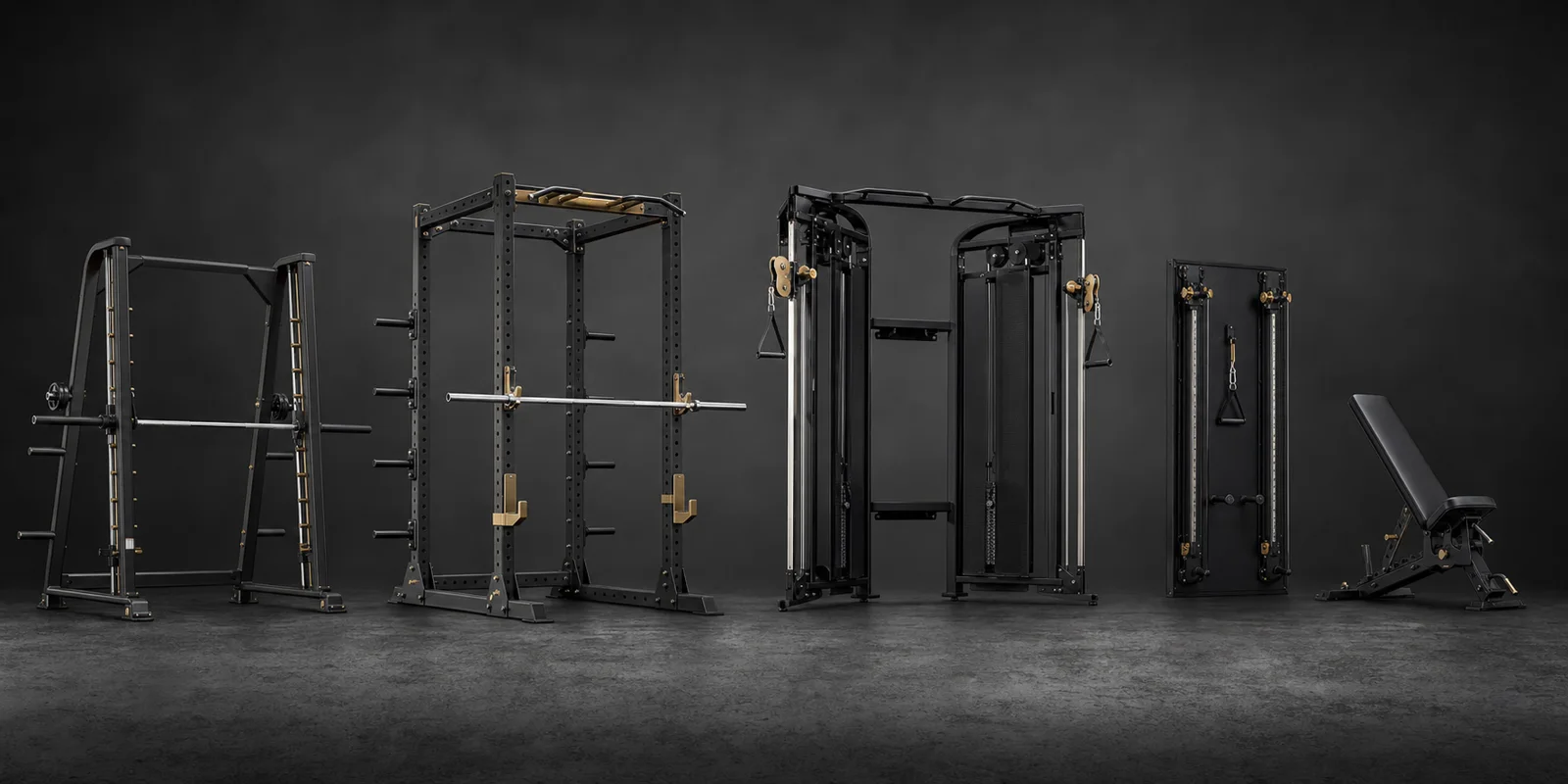
Start at the handle, not the weight-stack label
Two machines can display the same number on a stack and deliver different resistance at the handle. The pulley arrangement changes how far the stack moves relative to the cable and therefore changes both effective resistance and available handle travel. A brand that compares only total stack mass is comparing inventory, not the training output.
Treat every user outlet as a separate line item. A functional trolley, lat-pulldown bar, low-row point and connected Smith accessory may not share the same route. Ask the supplier to state the ratio and effective increment for each outlet in the exact offered configuration.
Trace the force path through the offered configuration
Begin with the selected plate, follow the cable through each moving and fixed pulley, and end at the connection used by the customer. Record whether two handles share one stack, whether combining handles changes the route, and whether a connector is required to use both sides for one exercise.
The drawing, parts list and sample should agree. An extra pulley, revised trolley or different joining strap can change travel or resistance without changing the product name. The approval record therefore needs a configuration revision, not a statement that the machine is generally a two-to-one or one-to-one system.
Normalize the quote before comparing suppliers
A normalized schedule makes commercial differences visible. It should separate actual stack mass from effective resistance, state the smallest usable increment, and name the measurement point. It should also state whether the quoted maximum applies to one handle, two handles joined, or a dedicated pulldown route.
Do not turn manufacturer examples into assumptions about a different model. Published products from Life Fitness, Precor, REP and Inspire show that reputable systems use different ratios and travel lengths. Their specifications demonstrate why the field matters; they are not substitute data for the model you are buying.
| Quote field | Required entry | Decision affected |
|---|---|---|
| Outlet identity | Trolley, pulldown, low row or joined handles | Which exercises the value applies to |
| Ratio and effective range | Supplier-stated ratio plus minimum and maximum at the handle | Resistance progression and product-page accuracy |
| Usable travel | Measured handle movement before the route stops | Fit for long-range and bench-based movements |
| Shared components | Stack, cable, connector and included attachments | Simultaneous use and delivered completeness |
Test usable travel against the buyer's exercise list
Travel should be checked with the intended handle, trolley position and user setup. A cable may move freely in an empty demonstration yet reach its limit when a bench changes the start point or when two arms are opened for a bilateral movement. Record the start position, end position and any contact or loss of tension.
Use a short, approved exercise set rather than claiming that the system performs every cable movement. Include at least one high start, one low start, one movement away from the frame and any bench-based exercise central to the product promise. The result is evidence for the intended offer, not a universal performance claim.
Freeze the evidence that follows the production order
The released record should connect the model and revision to the routing drawing, stack option, pulley arrangement, trolley, cable ends, connectors and attachment pack. Photographs can help identify the configuration, but the measured values and part identities carry the decision.
Before approving production, decide what must trigger re-checking. A change to pulley diameter, cable routing, stack option, connector or trolley geometry deserves a targeted review. Without that rule, the commercial description can remain unchanged while the user's resistance or travel changes.
BUYER QUESTIONS
Questions to resolve before approval
Does a 2:1 ratio always mean the handle resistance is exactly half the selected stack value?
Use the ratio as the supplier's declared mechanical relationship, then verify the effective range on the exact route and configuration. Do not infer one outlet from another or ignore add-on weights, connectors and friction.
Can cable travel be approved from the overall machine dimensions?
No. Overall dimensions define the frame envelope. Usable travel must be checked at the intended outlet, trolley position and handle setup because routing and stops determine the movement available to the user.