Separate spacing from hole and hardware size
Hole spacing is the centre-to-centre distance between adjustment positions. It is not the hole diameter, pin diameter or proof that an attachment from another rack series will fit.
Confirm upright section, hole size, side-hole pattern, pin length and manufacturer-approved series before pairing J-cups, safeties or a cable trolley.
Map the bench position before choosing a hole
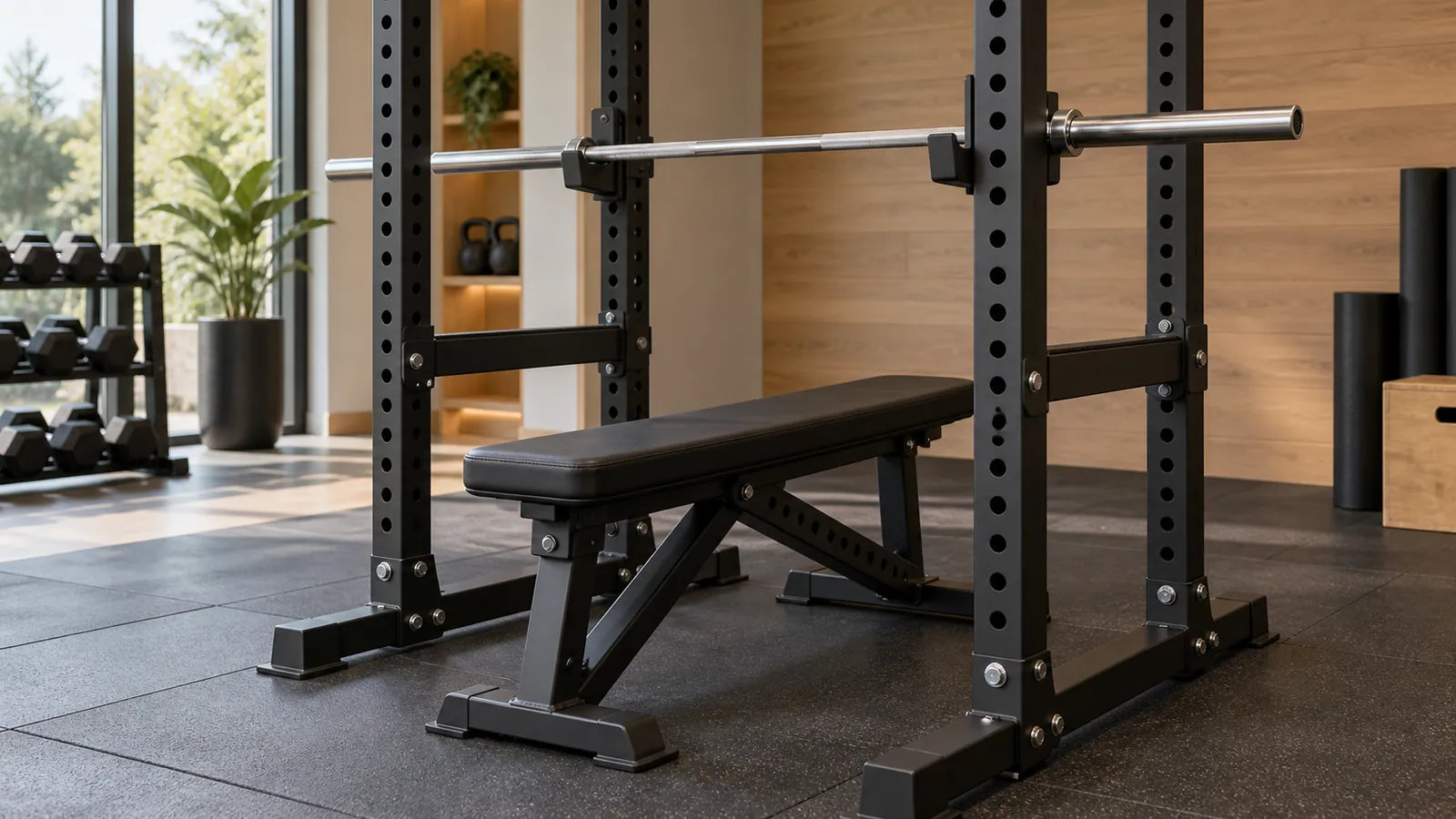
Place the exact bench and user in the intended press position. Set J-cups for a controlled unrack, then set safeties below the normal bar path but high enough to protect the user when the press position changes.
Test flat and planned incline settings without load first. Bench height, pad compression, arch and safety type can change which hole is usable.
Decide when finer increments add value
Closer spacing matters most where a rigid safety has only one acceptable height. Strap safeties can offer different adjustment behaviour, but they still need approved mounting and equal, repeatable setup.
For squats, pull-ups or attachments outside the close-spacing zone, another feature may matter more. Do not pay for a label without locating the dense section on the actual upright drawing.
Approve the rack as a complete system
Check numbering, finish around holes, burr-free edges, weld and bolt access, rack stability and the manual. Never alter holes or use undersized pins to create an unofficial position.
For a project review, send the rack drawing, bench dimensions, planned lifts and user range. We can evaluate the adjustment map without claiming cross-brand compatibility from spacing alone.
- Compare multifunctional racks
- R04
- Does Your Power Rack Need a Rear Base Stabilizer?
- Check rack depth for your room