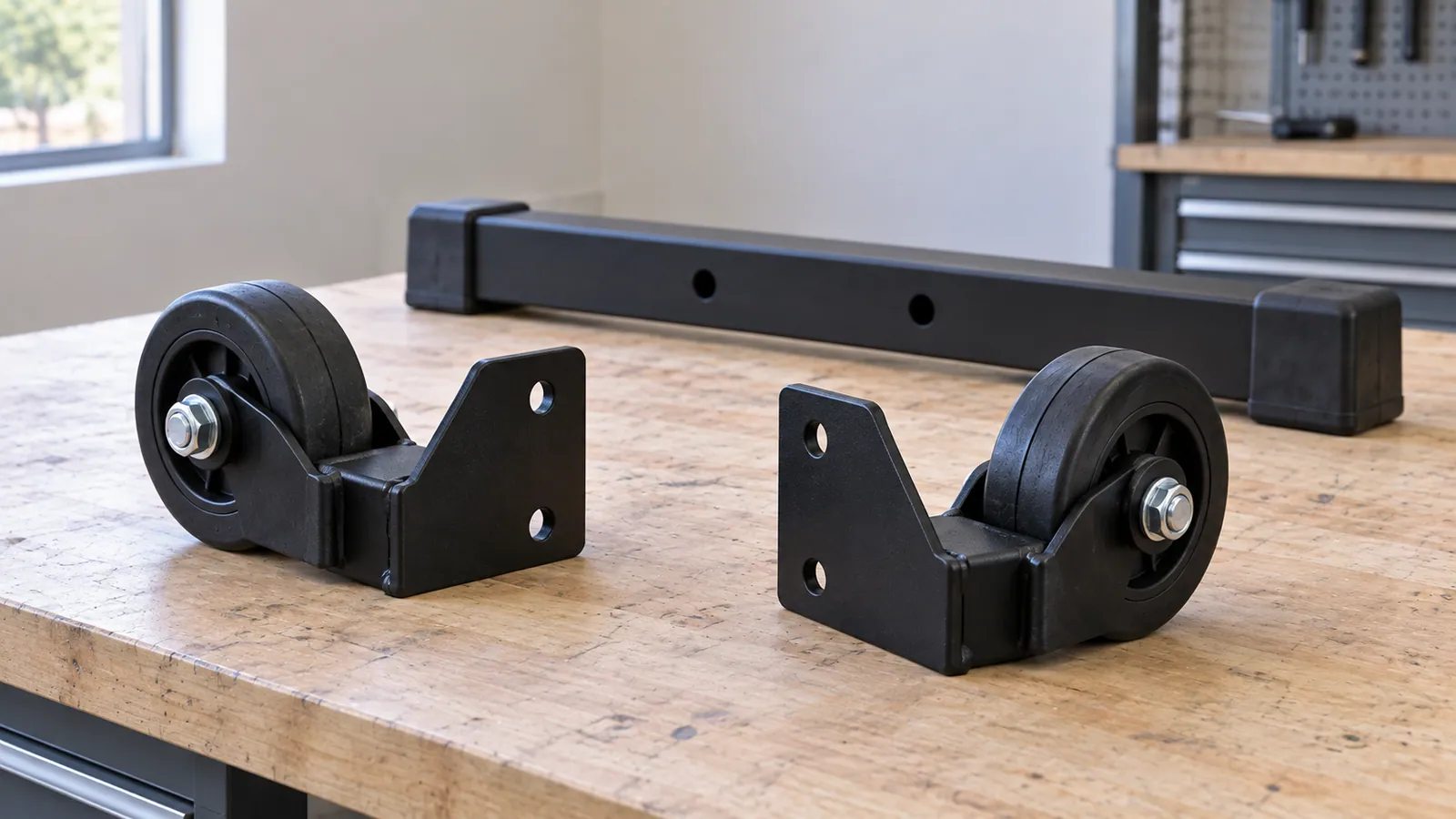
Identify the stand before buying wheels
A free-standing squat stand, a full power rack and an all-in-one cable machine are different structures. An accessory called a rack wheel kit does not establish that any of them can be rolled while assembled. Look for your model and revision in the manufacturer’s compatibility information, including exceptions.
Rogue’s squat-stand bracket page names SML and S-series applications while excluding S-4. Its SML-2 page lists the accessory for that stand. This is a bounded example, not approval for a Monster rack, a PBF model or a frame carrying cable stacks. If your combination is undocumented, ask for its relocation procedure first.
If regular relocation is part of your room plan, settle it before selecting the equipment. Compare the documented empty-moving routine with how often you intend to move it. A stand that suits one occasional room rearrangement may not suit a layout that changes between every session.
Separate the rolling state from the training state
Some transport wheels contact the floor only after a stand is tipped. The matching Rogue instructions show outward wheels slightly raised at rest. That geometry preserves a distinction between the supported training position and the moving position; it is not a general instruction to leave a rack resting on casters.
Fit only the specified kit using its own drawings and complete hardware arrangement. Do not transfer a washer-removal instruction from another bracket, enlarge holes or add a generic caster plate. Resolve missing instructions and incompatible parts before attempting movement.
Remove all bars, weights and attachments before moving where the applicable manual requires it. An unloaded sleeve is different from a bar left in the cups. Clear the equipment from the route as well, so unloading does not simply create obstacles in front of the stand.
Use the handling points the maker permits
The Rogue manual identifies base tubes or its specified optional pegs for engaging the wheels. Do not generalize those points to another stand, or lift by a pull-up member, cable handle or selector pin. Ask how many people are required for the exact model and configuration.
Plan a clear route within the procedure’s stated scope. Check the actual assembled height and turning space without treating wheel availability as permission for stairs, rough driveways or loaded transport. If the route lies outside the instructions, obtain another supported moving method rather than improvising.
Return the equipment to service deliberately
At the new position, restore the manufacturer’s intended floor contact, retainers and required fastening before exercise. Remove temporary moving handles when instructed. A stand arriving at its destination does not prove that its training installation is ready; check the setup against the model’s instructions.
Can wheels replace required anchors? No such substitution should be assumed. Send PBF Fitness your model, current installation, destination and route photographs. Ask whether the equipment can move assembled and which procedure applies. A request for a mobile layout should be resolved before purchase, not by adding wheels to an unsupported frame.
- Compare multifunctional racks
- R05
- Rack Storage Shelves: Check the Supports and the Space to Lift
- Check an approved rack relocation method