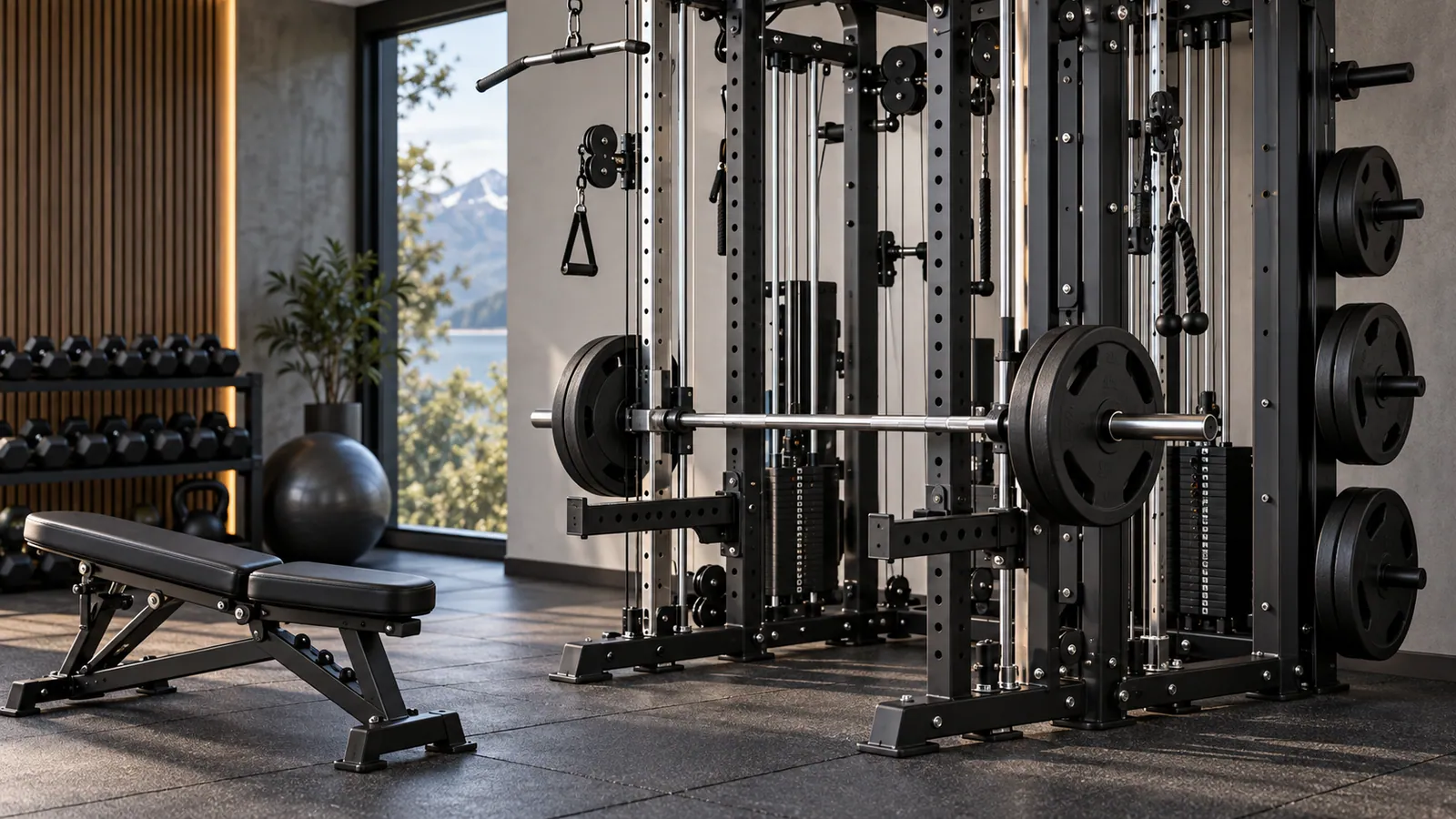
Define the lowest position by exercise
Hip thrusts, Romanian deadlifts, rows and calf work can require different starting heights. Record the lowest bar-centre position for each priority movement instead of asking only whether the rails reach the floor.
The sleeve and plates may contact the frame, stops or floor before the bar reaches its nominal minimum. Check the exact configuration with the intended plate diameter and any platform.
Separate bar travel from safety coverage
Hook positions are for racking the bar; adjustable stops are the backup limit. Confirm both stops can be set equally and just below the lowest controlled position, following the manufacturer’s instructions.
A long rail is not useful if the stop hardware or carriage creates a higher practical bottom point. Request minimum hook height, minimum stopped height and unloaded test procedure separately.
Mock up plates, bench and body position
Place the real bench and mark foot position, torso angle and plate envelope. For hip thrusts, verify entry and exit as carefully as the repetition itself.
For floor-starting pulls, compare the bar centre with a standard free bar setup. Do not remove or defeat safety parts to gain range; choose another setup if the protected position is too high.
Approve the Smith station from a side drawing
A side elevation should show floor, bar centre, sleeves, stops, hooks, bench and user zone. It reveals conflicts that a front product photo hides.
Send room dimensions, user height, exercises, plate diameter and bench model. The manufacturer can then verify the lowest usable and protected positions before production.
- Compare multifunctional racks
- R05
- Does a Rack Lat Pulldown Need a Thigh Pad?
- Check rack depth for your room