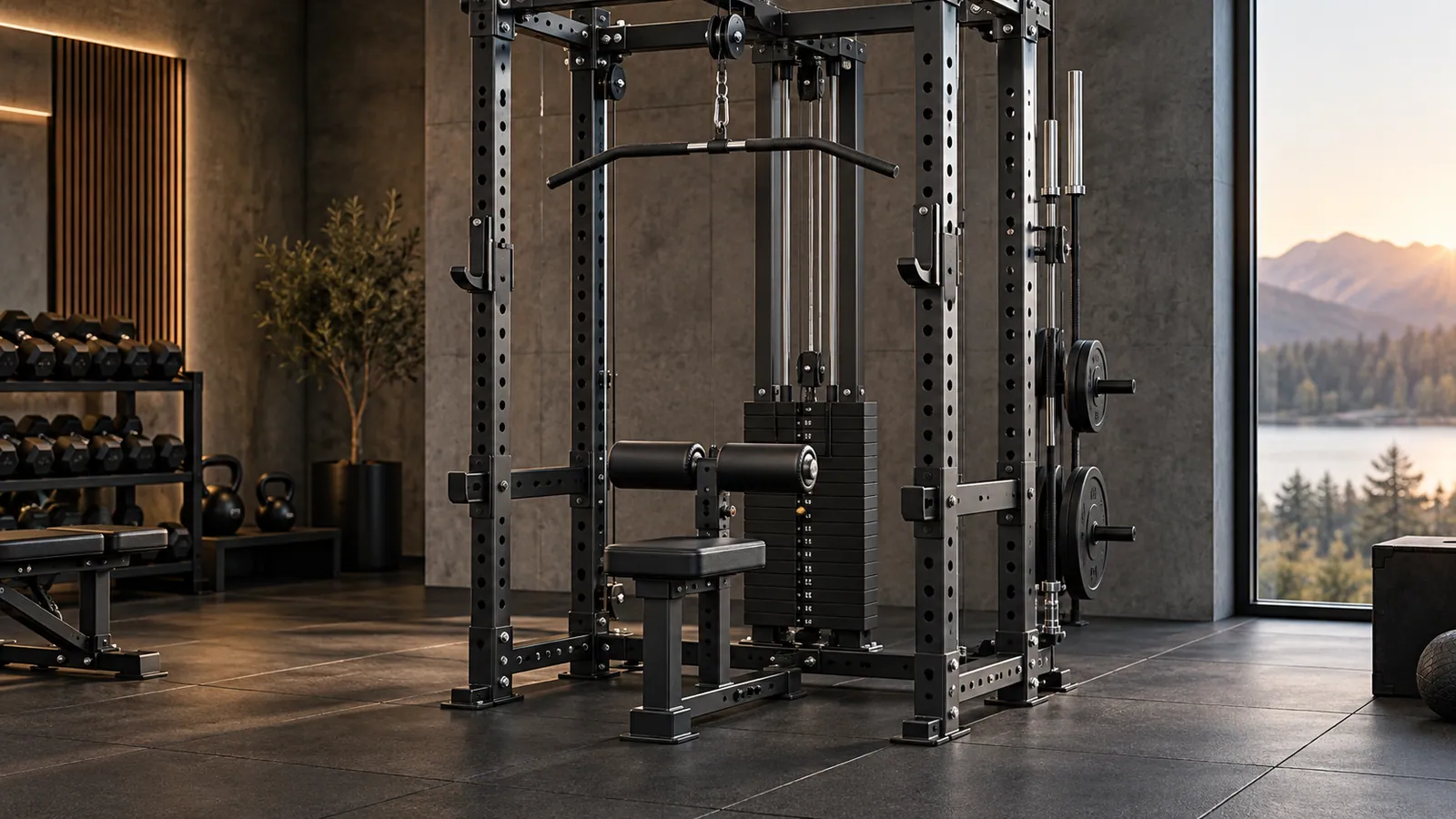
Decide when restraint becomes necessary
Light technique work may not lift the body, but heavier pulldowns often do. Treat unwanted seat lift as a setup problem, not a cue to brace harder with the feet.
A loose bar, improvised strap or mismatched pin can shift unexpectedly. Use a purpose-built compatible roller, seat-and-roller unit or manufacturer-approved arrangement.
Align the seat, thighs and high pulley
The roller should contact the upper thighs with enough adjustment for different users. The seat height must still allow a full overhead reach without the weight reaching the end of its travel.
Sit so the cable descends cleanly rather than pulling diagonally across an upright. Check head clearance, grip width and the route of the bar before adding load.
Check attachment fit and load path
Verify upright size, hole diameter, spacing, pin engagement and the permitted orientation. Compatibility requires more than a product fitting into one hole.
The rack and attachment carry the upward restraint force. Follow the rack maker’s anchoring, loading and inspection rules; do not infer capacity from tube size alone.
Keep the all-in-one rack usable
Store the hold-down without obstructing J-cups, safeties, Smith travel or adjustable cable trolleys. Time the changeover between pulldown and barbell work.
Provide user range, ceiling height, high-pulley position, seat or bench dimensions and target resistance. These inputs determine whether a simple roller or a dedicated seat module is appropriate.
- Compare multifunctional racks
- R05
- How Low Should a Smith Machine Bar Travel?
- Compare rack safety options