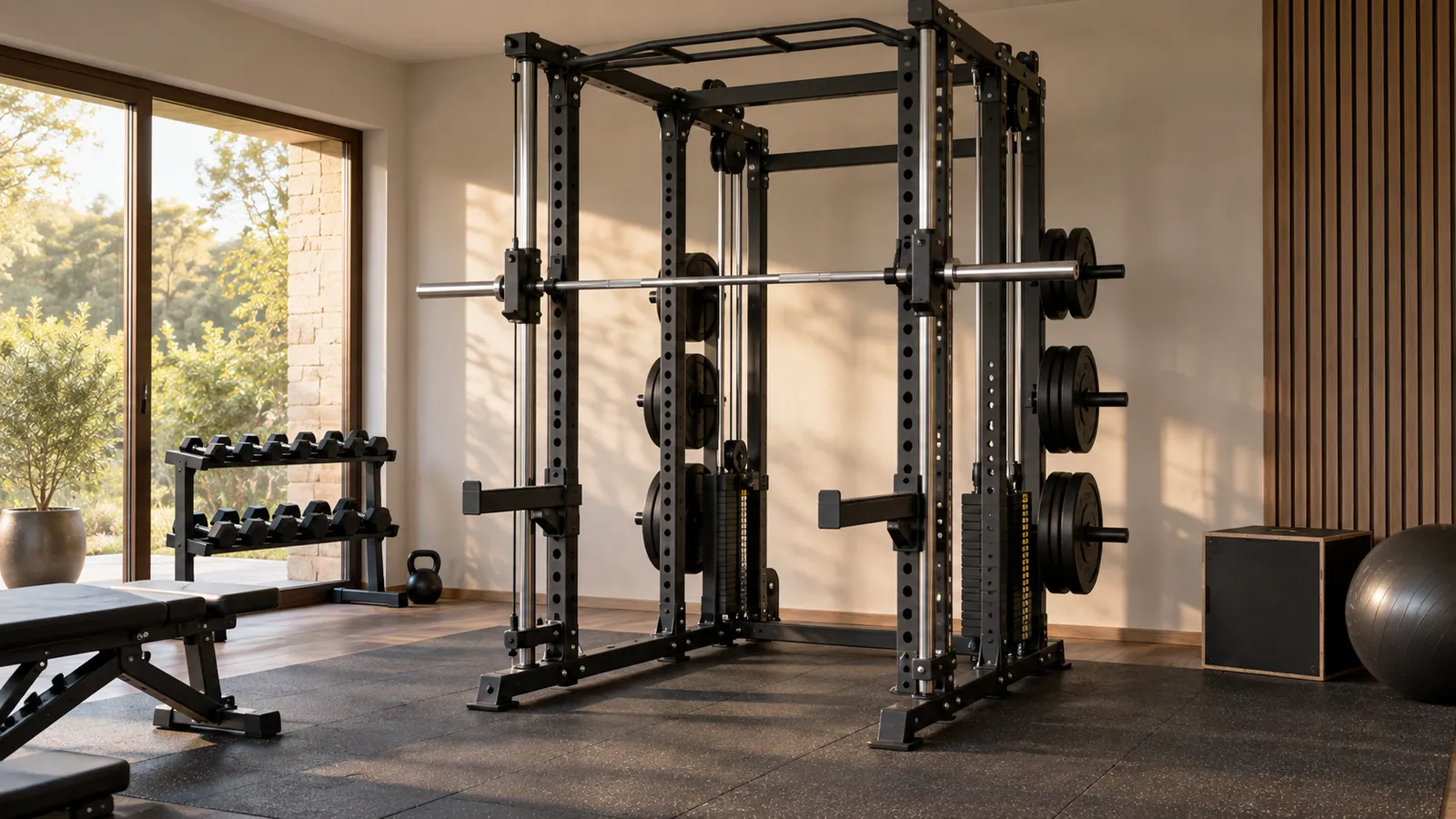
Two controls, two jobs
Rotate or otherwise operate the bar exactly as the manufacturer describes to verify that each hook seats fully. A hook that merely touches a catch is not a parked bar.
The independent stops should interrupt downward travel before the bar reaches the athlete or an obstruction. Do not treat a hook as a substitute for a correctly positioned stop.
A change from squat to bench changes the required lowest bar point; do not leave the stops where the previous athlete used them.
Find the usable bottom position
Set up the actual stance or bench position with the empty bar. Lower through the intended range and identify a stop position that preserves the movement while protecting its lower limit.
Both stops must match; asymmetric stops can tilt the guided bar. Confirm that plates, sleeves and bench do not contact the floor, frame or stops prematurely.
Verify the exact rack before loading
Check the maker’s manual for the specific hook release, stop adjustment and floor-fixing requirements. Some rack-integrated systems use different catch spacing and release motions.
Ask for a dimensioned setup showing your exercises, lowest bar positions and available catch levels. Share room height, user range and training plan if selecting a Smith-equipped rack.
A test with an empty bar should include deliberate re-hooking on both sides, not only lowering and raising.
- Compare multifunctional racks
- R05
- Roller vs Sandwich J-Cups for a Power Rack
- Check rack depth for your room