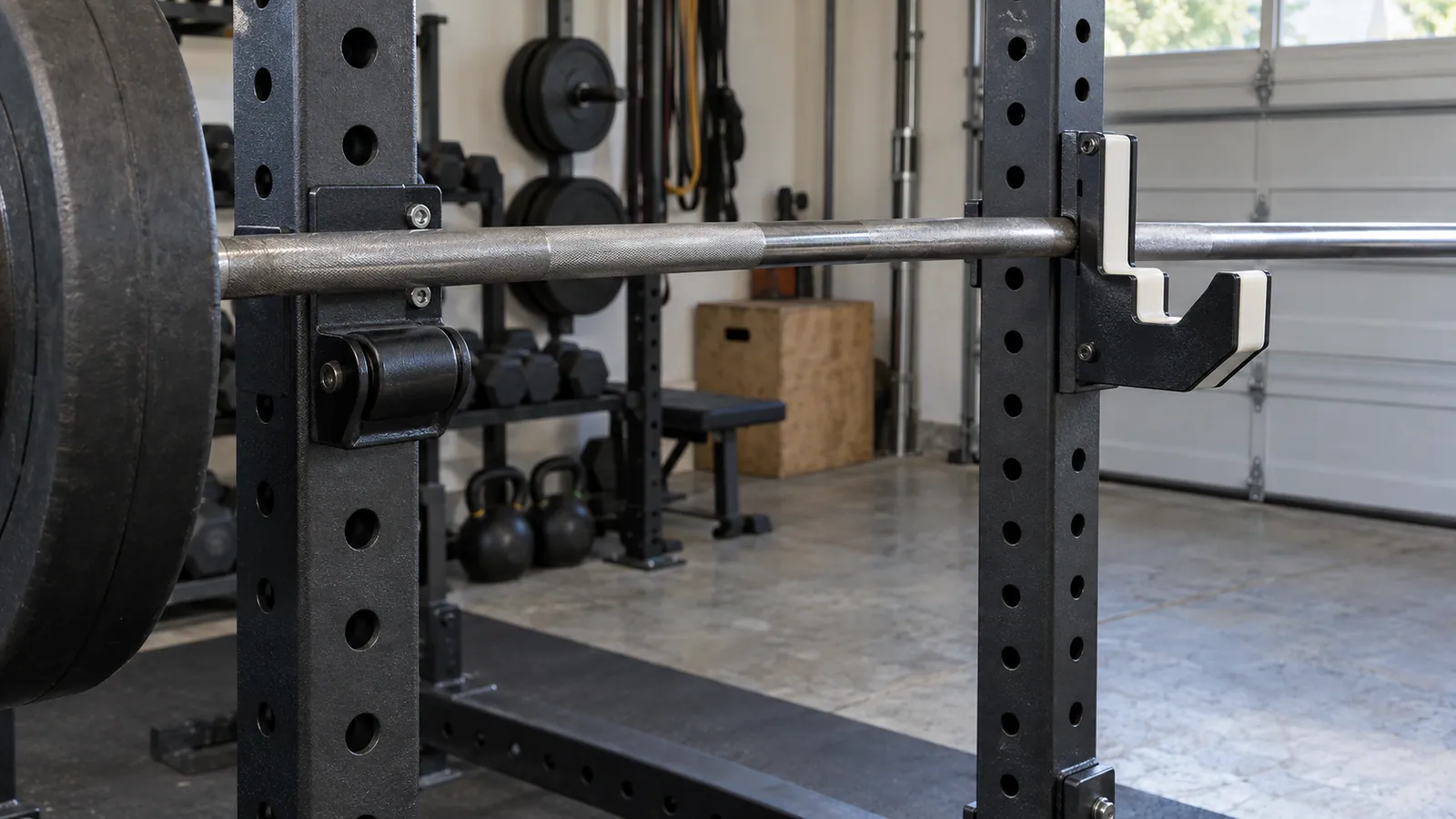
Start with the re-rack you actually perform
If you bench alone and repeatedly need to center the bar after loading, a roller may reduce the effort of lateral repositioning while the bar remains supported.
If sleeves or specialty bars crowd a wide steel cradle, a slim sandwich profile may give more side clearance. Try the bar and plates you own, not a bare display bar.
A roller does not correct cups mounted at different heights; level the pair before judging bar position.
Look past the marketing names
Inspect the lip, protective lining, roller material and how the pair locks on the upright. A shallow lip can feel different from a deep cradle during a hurried re-rack.
Measure pin diameter, upright size, hole spacing and front-to-back projection. Similar tube dimensions across brands do not establish a safe attachment fit.
Use cups with an independent safety plan
Position both cups at the same height, then set straps, pins or arms for the exercise. Cups are bar starting points, not a failed-lift catch system.
For a project purchase, request compatibility and replacement-part information for the exact rack series; share the bar type, plate diameter and primary lifts.
If a replacement part is unavailable, plan the service route before specifying that accessory for multiple stations.
- Compare multifunctional racks
- R05
- Smith Machine Hooks and Safety Stops: Set Both Before You Lift
- Compare rack safety options