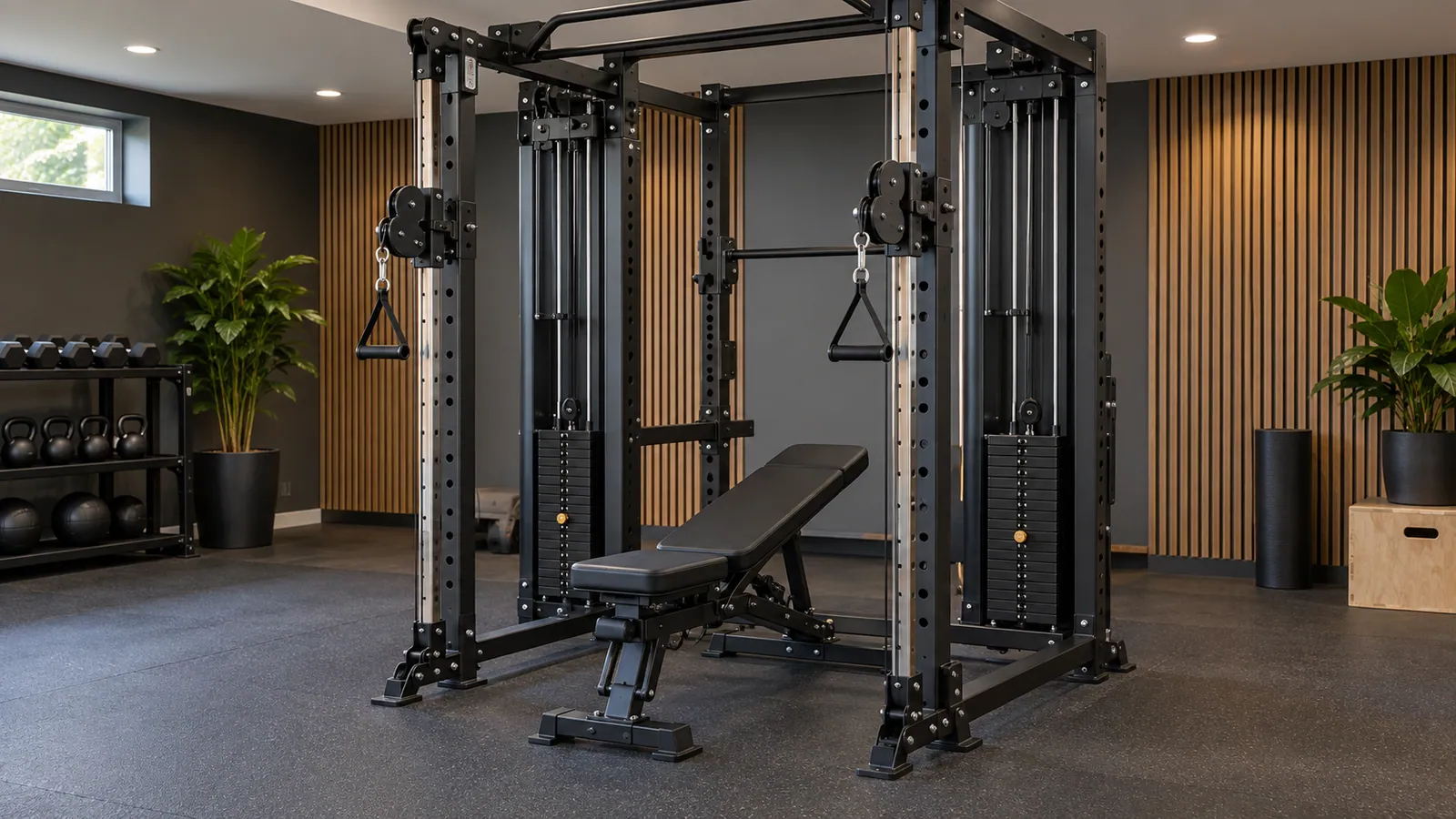
Confirm what each handle is connected to
On a true dual-stack trainer, the left and right cable outlets can select different loads and move without pulling the same stack. A single-stack design may offer two handles, yet their travel and resistance remain linked through one weight stack.
Ask for a routing diagram rather than counting towers in a product photo. Record the stack serving each adjustable trolley, the pulley ratio at that outlet and whether center lat or low-row points combine cables.
Test the exercises that expose the difference
Independent stacks matter most for cable crossovers, alternating work, asymmetric loading and two people training at once. A shared stack may be entirely adequate when one person mainly uses one outlet or a dedicated center pull.
For pulldowns and rows, check whether two sides can be joined safely and what effective load reaches the attachment. Never add the printed stack numbers unless the manufacturer documents how the cables combine.
Read effective load and travel together
Compare effective resistance after the pulley ratio, not total steel in the shrouds. Also compare the smallest felt increment, because a large selector jump can make shoulder rehabilitation and accessory work difficult.
Cable travel can be the limiting factor before stack weight. Test the tallest user at full extension, a two-handle fly, a kneeling pulldown and the farthest rotational position without allowing the stack to top out.
Approve the complete rack configuration
Inside an all-in-one rack, stack placement also affects bench clearance, Smith access, plate storage and service panels. Confirm that selectors, guide rods and cables remain reachable after the rack is positioned near a wall.
Choose dual independent stacks for frequent bilateral cable work, different left-right loads or simultaneous users. Choose a shared stack when the documented travel and outlets cover the exercise list and the simpler footprint matters more. Send your priority exercises and target effective loads for routing review.
- Compare multifunctional racks
- R05
- Half Rack vs Full Power Rack: Which Layout Fits Your Home Gym?
- Compare rack safety options