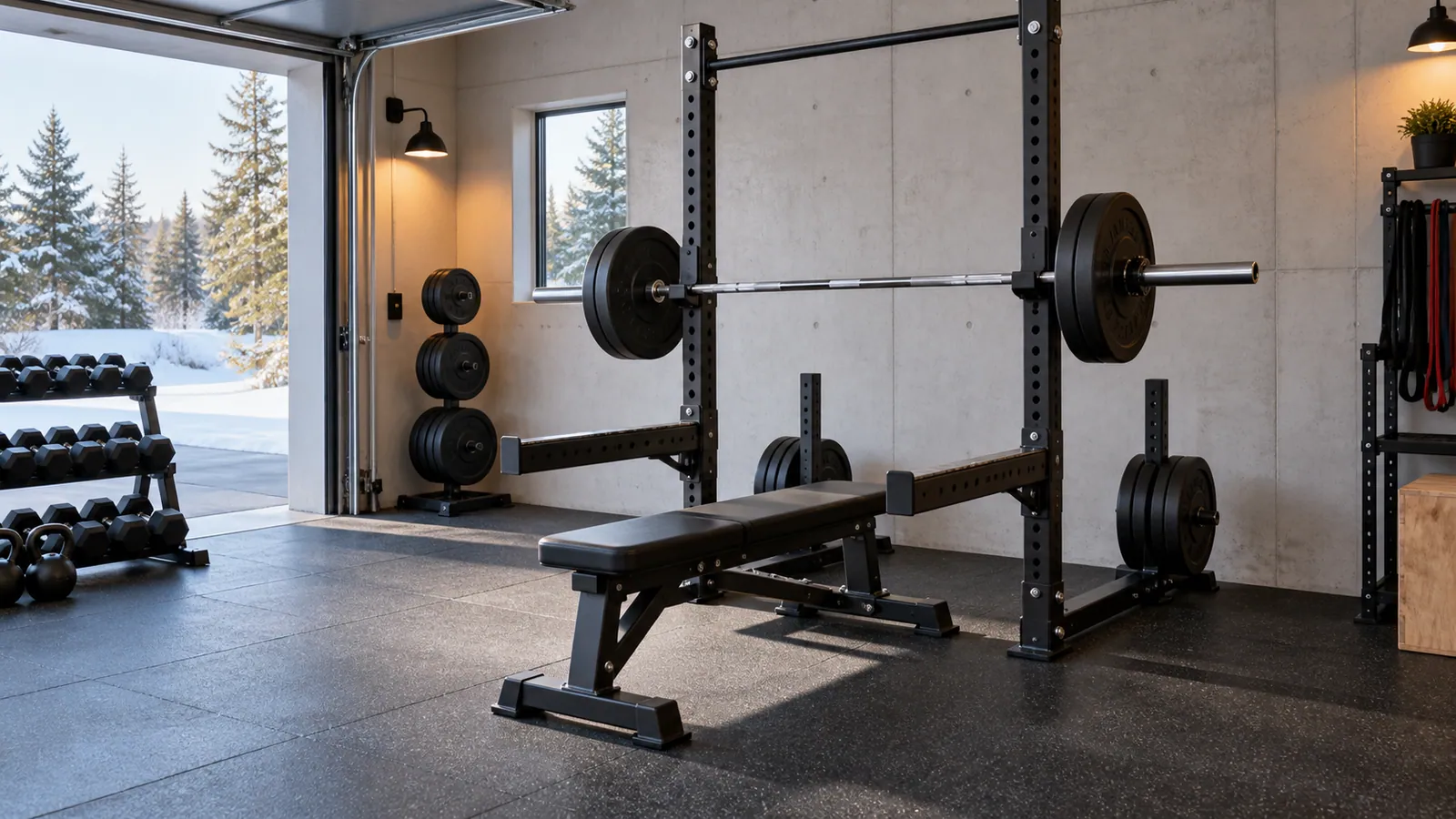
Start with the lifting position, not the post count
A half rack normally places the lifter, bar and spotter arms in front of the main uprights. Its frame may look shallow, yet the live training zone extends forward by the bench, loaded sleeves and the length of the safeties.
A full rack places the priority lifts inside a four-post enclosure. Internal straps or pin-and-pipe safeties are supported at both ends, but the user must move the bar and bench through the uprights and any lower crossmembers.
List where every squat, bench press, overhead press and rack pull will start. The better layout is the one that preserves the required bar path and exit route without moving other equipment before each set.
Compare the catch system and operating space
Do not treat any half rack or full rack as safe by name alone. Use only the manufacturer-approved J-cups, safeties, feet, ballast and anchoring arrangement for the exact frame and the intended loading direction.
Check the full width of a loaded bar, the front reach of spotter arms and the bench approach. Add doors, parked vehicles, wall storage and walking routes because these often erase the apparent space saving.
Plan cable trolleys, Smith rails, plate horns and future attachments before choosing the format. A compact half rack can lose its open access when add-ons occupy the front; a full rack can lose internal room when stacks or storage intrude.
Decide with a full-size floor mock-up
Tape both options on the finished floor, then place the real bench and bar in the outline. Rehearse loading plates, setting safeties and removing the bench while keeping a clear route around the working end of the bar.
Select the half rack when open access is the priority and its approved external safety system fits the room. Select the full rack when enclosed lifting, internal catches and attachment capacity justify the extra operating space. Send the room plan, ceiling height and exercise list for a configuration check.
- Compare multifunctional racks
- R05
- Single vs Dual Weight Stack on an All-in-One Rack: What Changes?
- Check rack depth for your room