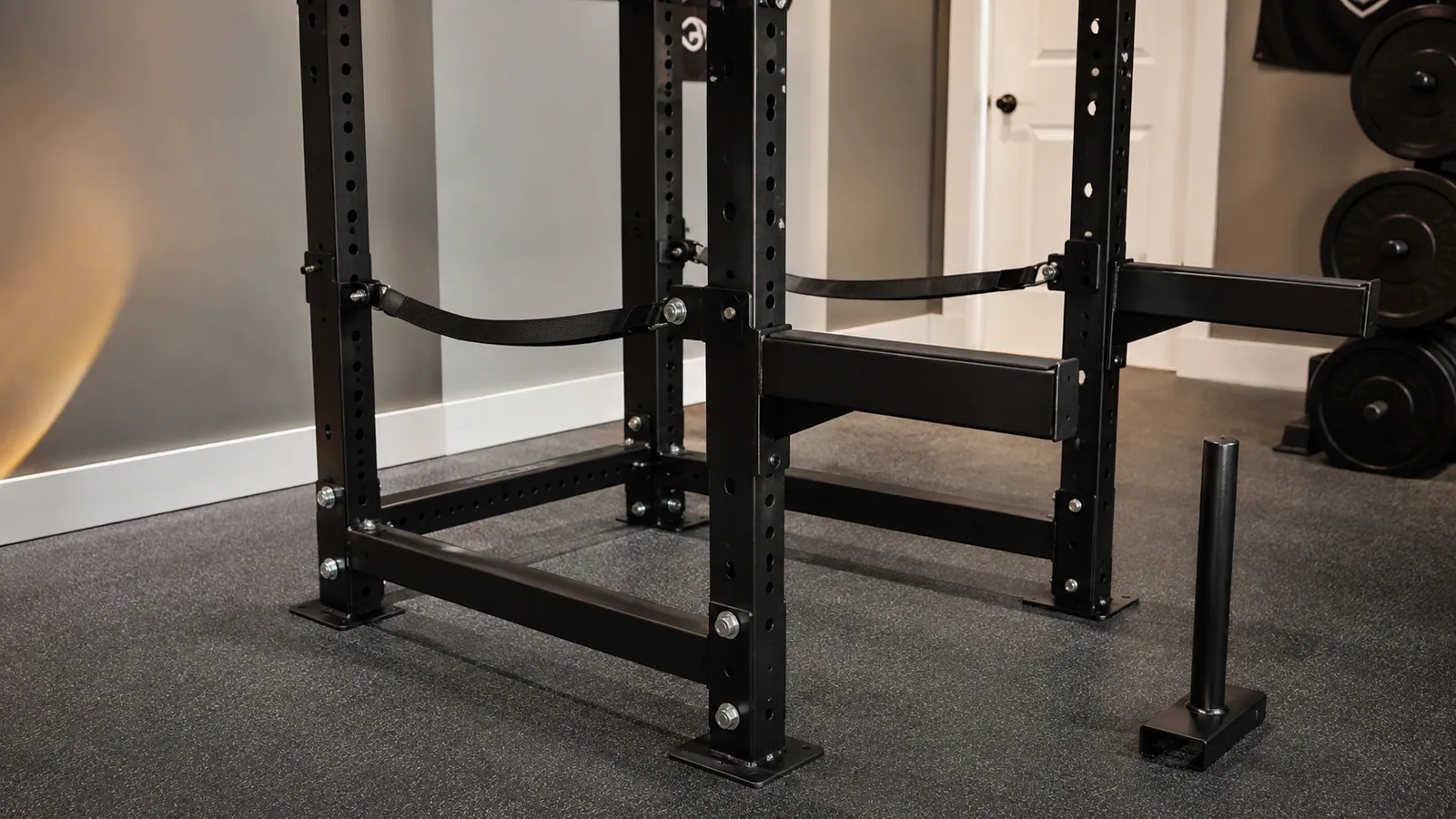
Define the catch before comparing hardware
For every squat, bench and press, mark the lowest normal bar position and a failed-rep position that protects the user.
The safety must cover the complete horizontal path; J-cups are start hooks, not substitute safeties.
Inside systems span two uprights. Front-mounted arms use one upright and extend outside, so rack stability, permitted mounting side and any front-foot or anchoring instruction become part of the decision.
Compare behavior and adjustment
Straps can be mounted at different front and rear heights so a caught bar settles away from the user, but sag and effective height must be tested with an empty bar.
Rigid systems are easier to reference yet can contact the bar more abruptly.
Pin-pipe systems may be slower to move; flip-down or arm systems may be faster but still require both sides at matching settings and every retaining pin fully engaged. Noise or bar protection never overrides the documented load and use limits.
Verify fit and rehearse
Match rack series, upright section, hole diameter and spacing, inside depth, bracket orientation, pin engagement and manufacturer-approved location. A part that slides onto an upright is not proven compatible.
Set each exercise with an empty bar, pause at the bottom, confirm clearance from the body and bench, then practice a controlled handoff to the safeties. Replace damaged webbing, bent parts or missing retainers rather than improvising repairs.
- Compare multifunctional racks
- R04
- What Power Rack Depth Do You Need: 24, 30 or 36+ Inches?
- Compare rack safety options