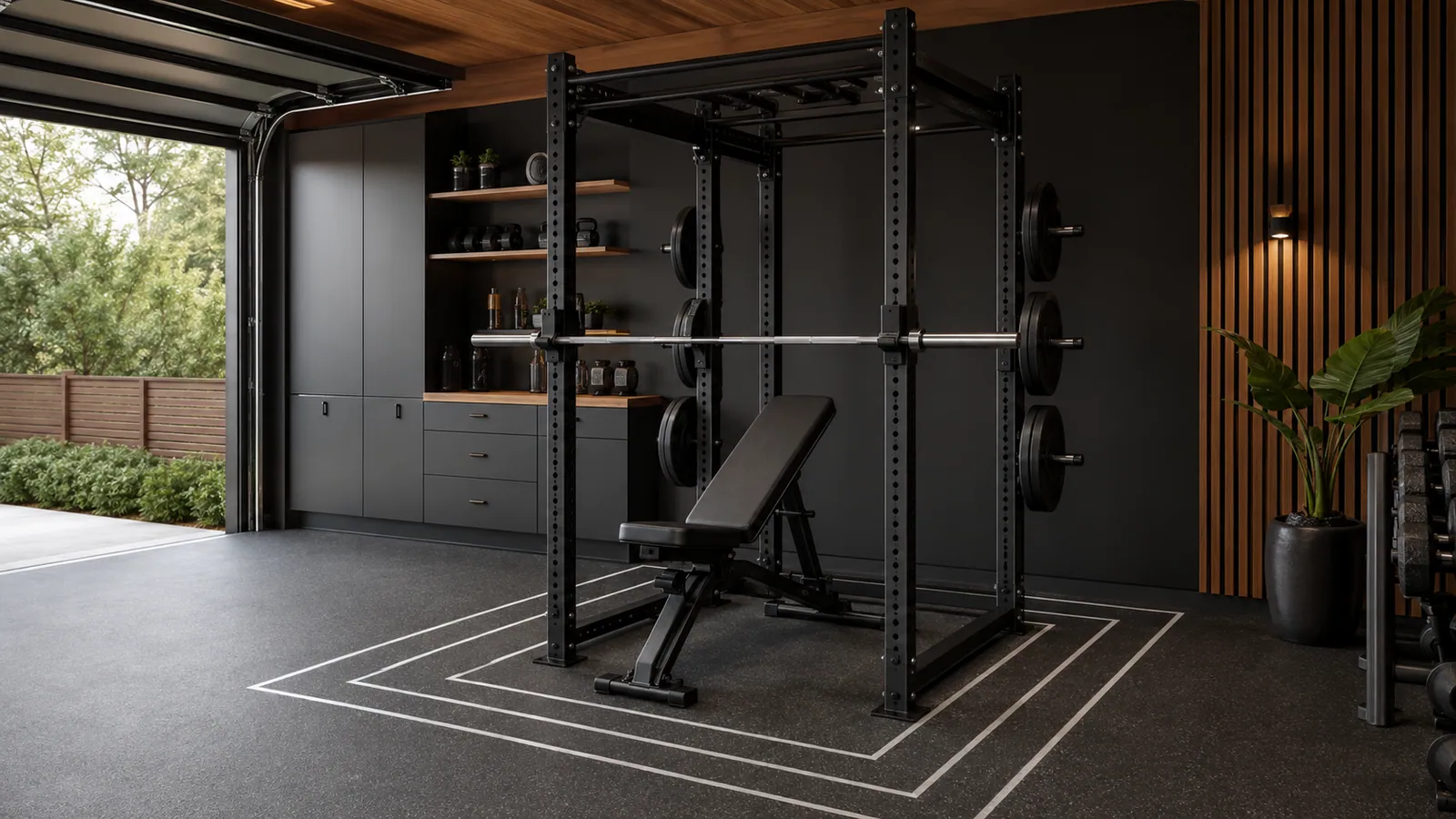
Start with where the bar will move
List which lifts happen inside the uprights and which happen in front.
Squat walkout, bench setup and specialty bars need different fore-aft room; the crossmember length is not the same as usable movement space.
Tape the candidate footprints on the floor. Add upright thickness, rear stabilizer or storage bay, front feet, spotter arms and the loaded bar ends before judging whether the room still works.
Test the complete training sequence
Place the actual bench outline at flat and incline positions, then trace entry, unracking and failed-rep paths.
A depth that feels open for benching may crowd a squat walkout or a cable trolley.
Check whether stored plates, pulley components or a wall sit behind the lifter. Deeper is not automatically safer when attachments consume the interior or prevent correct safety placement.
Approve a configuration, not one dimension
Confirm the exact rack depth, overall external depth, safety length, permitted training side and anchoring or front-foot requirements with the manufacturer. Depth-specific straps and crossmembers are not universal.
Send PBF Fitness the room length, rack orientation, bar length, bench travel, lift list and storage plan. The final choice should preserve a verified catch zone and a clear exit route as well as saving space.
- Compare multifunctional racks
- R04
- Safety Straps vs Pin-Pipe Safeties vs Spotter Arms: Which Fits Your Rack?
- Check rack depth for your room