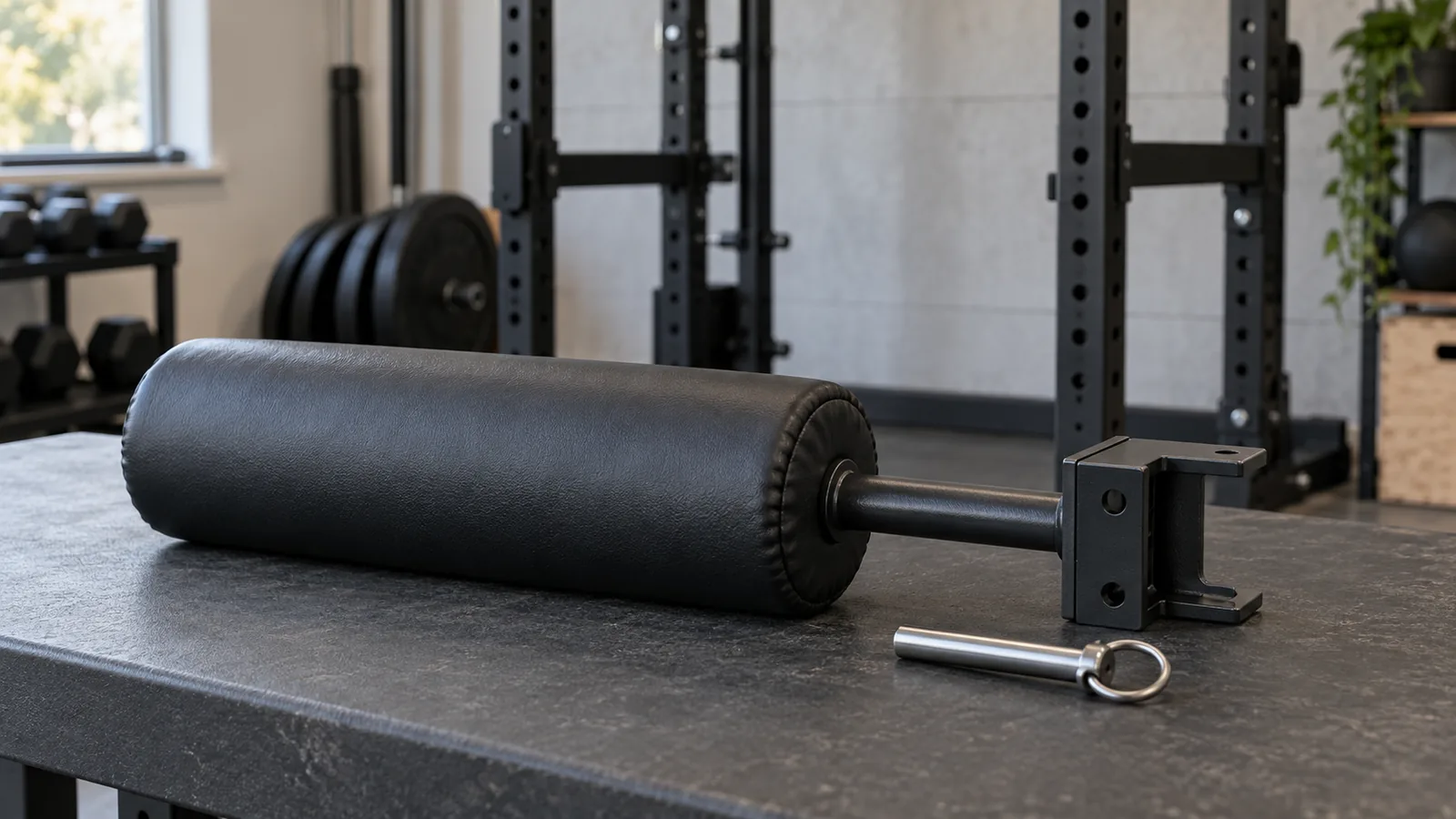
Identify what holds the attachment to the upright
A cylindrical pad describes the contact surface, not the mounting system. Some rack rollers use a bracket and detent pin; others use a threaded shaft and hand-tightened knob. The relevant check is the complete assembly in the exact rack's instructions, including orientation, retaining parts and the intended exercise.
The difference matters during repeated adjustments. Rogue's Monster Single Leg Roller 2.0 has a maker-specific warning that its knob does not lock and needs a check before each use. Its Monster Lite roller uses a different attachment arrangement. Do not copy either routine to another roller merely because the pads look similar.
Separate pad rotation from a loose attachment
A roller may be designed to rotate around its axle while its mount stays secured. Movement of the whole bracket, incomplete retention or a damaged pad needs a different response from normal roller rotation. Ask the supplier to identify the intended movement and the acceptance check for the actual component.
Resolve an unclear mount before choosing a training height. Do not pack a loose interface with tape, drill an extra hole or substitute a storage pin. Send photos of both sides of the upright and every supplied mounting part when the drawing and installed assembly differ.
Try the contact position with the approved setup unloaded
Assess usable pad length, where the rear foot contacts it and whether the available rack holes allow a controlled setup. Check the position with the intended footwear and floor surface. A nominal pad height does not describe its diameter, compression or distance from the upright.
Keep space for the working foot and for placing the rear foot onto and off the pad. If dumbbells are planned, consider their path and where they can be handled without colliding with the frame. A barbell version also needs its own approved rack supports and safety arrangement; the roller does not catch a bar.
Should the roller always sit at bench height?
Use the approved attachment's adjustment range and assess the actual user contact position. A bench's nominal height is not a universal target for a roller with a different pad diameter and mounting offset.
Can a matching pin diameter prove the roller fits?
No. The bracket, shaft engagement, retention, upright face and exercise approval must match the complete rack configuration. Request a confirmed part reference and installation drawing.
Give the supplier a setup to assess
Record the rack series and revision, upright dimensions, hole pattern, proposed mounting side and intended exercise. Include the roller's part reference and a side view of the floor area. Measurements help identify the interface, but do not replace the maker's approval for the installed combination.
Ask PBF Fitness to confirm the complete rear-foot support assembly and the space it needs in your rack layout. Keep the roller question separate from a loaded leg-extension attachment, lat-pulldown restraint or hip-thrust back pad: approval for one task does not automatically cover the others.
- Compare multifunctional racks
- R05
- Can Your Rack Take a Battle-Rope Anchor? Check the Whole Station
- Check a rear-foot roller against my rack