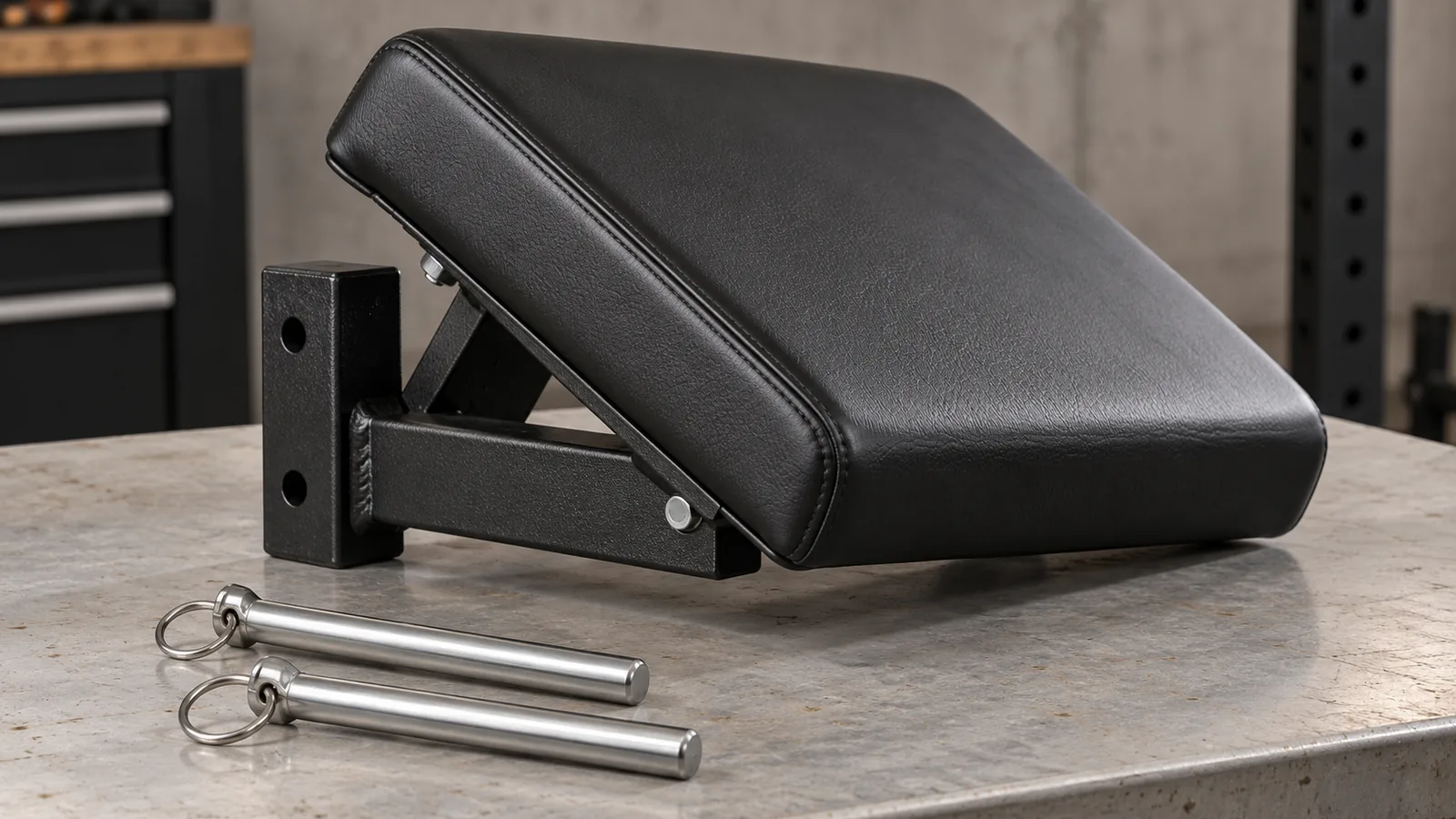
The pad rests on a frame, and the frame rests on the rack
Start with the exact rack series and revision. A preacher attachment may span two uprights or use a different support on one upright. The mounting width, face contact and retention scheme change with that design. Do not reduce a two-upright product to a one-sided installation because its cushion fits inside the rack.
Titan's rack-mounted preacher product identifies the T-3 and X-3 series and excludes racks purchased before October 2021. Its linked manual separates the cushion, its carrier and the connection frame, and shows pins with retaining parts at the rack connection. That is a useful illustration of a complete system, not a fastening recipe for another brand.
Other designs use an adjustable pad and a different upright bracket. SuperStrong describes its own multi-angle preacher attachment with split-pin retention and a stated rack interface. Confirm each product's complete arrangement and instructions. A familiar pin size does not establish that the support bears correctly against your upright or that the chosen adjustment is retained.
Resolve the parts list before the box is opened
A manual drawing is not always a promise of what is supplied in the current sales package. Titan's current product page says pull-pins are not included, while its linked manual illustrates pins and retainers. Ask the supplier which revision and complete parts list apply to the item being ordered. Keep that answer with the delivered instructions.
Separate the frame-to-rack retainers, the pad fasteners and any angle or position lock in the order record. If a required part is missing, obtain the specified component before use. Do not fill a gap in the kit with a bolt, clip or rod chosen only because it passes through the hole.
The pad can hide its own fixing points once the station is assembled. Ask how these connections are inspected and how the attachment is handled during a position change. A worn cover, damaged carrier or loose connection needs the relevant supplier's attention; adding more padding does not repair the underlying support.
Check the start and finish, not only the curl position
Show the actual user position with the selected seat or standing arrangement and the proposed rack location. Confirm that the upper arms contact the intended support surface, access is practical and the elbows and hands have room to move without striking the frame. Do not turn a universal pad-height number into a fit rule for every body and support design.
Include the actual dumbbell or curl bar in the layout discussion. Bar shape, sleeve length and plate diameter affect the space near the uprights and pad. A bar that fits the main lifting J-cups may not suit the separate pickup and return position for this station. Have the supplier identify the approved place for the chosen weight before the loaded movement begins.
The pad is not automatically a bar catch. Check whether a separate support is required and whether it can be reached from the intended position without leaning across an obstruction. Keep the route for loading plates and setting down dumbbells clear as well. The attachment's small storage size does not describe the complete working area.
Can an adjustable chest support double as a preacher pad?
Only when the manufacturer approves that exact component and configuration for preacher use. Similar upholstery or an adjustable angle does not establish the support and retention requirements.
Does a preacher attachment replace the need for a separate bar support?
Check the product's intended pickup and return arrangement. Some configurations require another approved support; the arm pad itself must not be assumed to catch or store a loaded bar.
Keep the conversion and the return to lifting predictable
Plan where the attachment goes when the rack is needed for another activity. Identify who can remove it, the approved handling points and where it is secured during storage. Retainers left on the floor or a pad balanced against an upright create another problem instead of completing the changeover.
Before the rack returns to lifting, check the required structural and safety components for that configuration. Do not leave an attachment in a bar path simply because it is inconvenient to remove. If two people will share the rack, show the whole combined layout and obtain approval for simultaneous use rather than inferring it from spare floor space.
For a PBF Fitness project, send the rack reference, room layout, intended preacher component, preferred user arrangement and weight type. Request a fit review tied to the actual proposal. Catalogue photographs alone do not confirm that a preacher attachment is available for a PBF model or that another manufacturer's mounting system is interchangeable.
- Compare multifunctional racks
- R05
- Rack Climbing Holds: Match the Mounting System, Not Just the Bolt
- Check a preacher station against my rack plan