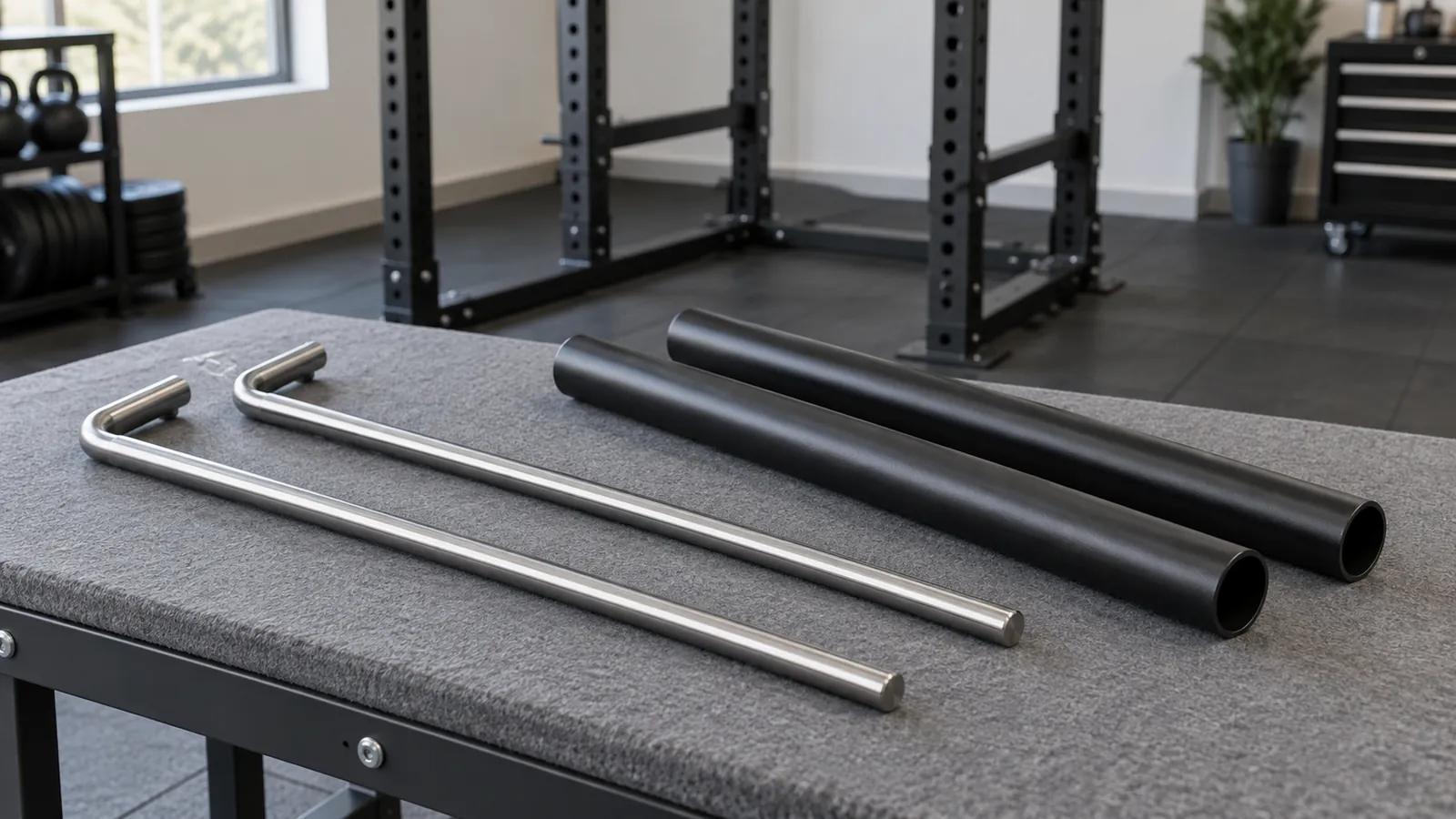
Identify the two parts before checking the installation
The long rod provides the connection through the uprights; the outer pipe surrounds it in the lifting bay. Read the exact rack's diagram rather than treating the pipe as a self-contained safety bar. A system approved with both parts should not be used with one omitted.
Keep the left and right assemblies together with their matching retention parts. Record rack series, depth and component revision when sourcing a replacement. The depth in a catalogue often names the rack configuration; it is not a measurement of the entire rod from tip to bent handle.
A partly inserted rod can hide behind a level pipe
With the rack and bar unloaded under the maker's adjustment procedure, trace the complete path shown in the manual. Check engagement at the near support, through the pipe and at the far support. The outer surface can appear correct while an inner rod has stopped before its intended final position.
Look at the prescribed end position and retaining arrangement. Some systems include a separate locking pin; others use a different designed configuration. Fit exactly the hardware specified for yours. Do not add a generic barbell collar or assume that another brand's retaining clip is required.
Resolve resistance instead of driving the rod through
If a rod binds, stop and check whether the selected holes, matching parts and installed frame are correct. A bent rod, damaged pipe or distorted hole requires the maker's assessment. Hammering, drilling the upright or cutting a rod changes the assembly and does not establish safe engagement.
Do not choose a spare by its diameter alone. Obtain the approved complete rod-and-pipe specification and retention parts for the exact depth. Include photographs of both installed ends and the parts laid out separately so the supplier can distinguish a fit problem from an omitted component.
Check the catch position before adding plates
Verify that both sides provide the prescribed catch position for the intended exercise. Check the actual support surface and the bar's permitted movement with an unloaded bar, following the rack instructions. Matching printed hole numbers are useful references but cannot correct a wrongly assembled safety.
Return the rack to use only after the complete assembly and any other installation requirements are confirmed. An intentional heavy drop is not an inspection method. For a fleet handover, record the approved set and the two-end check; send PBF Fitness the rack identity and full assembly photos when the correct parts remain unresolved.
- Compare multifunctional racks
- R05
- Rack Hip-Thrust Supports: Will the Whole Setup Fit?
- Check my complete pin-and-pipe safety set