Separate the back support from the bar cushion
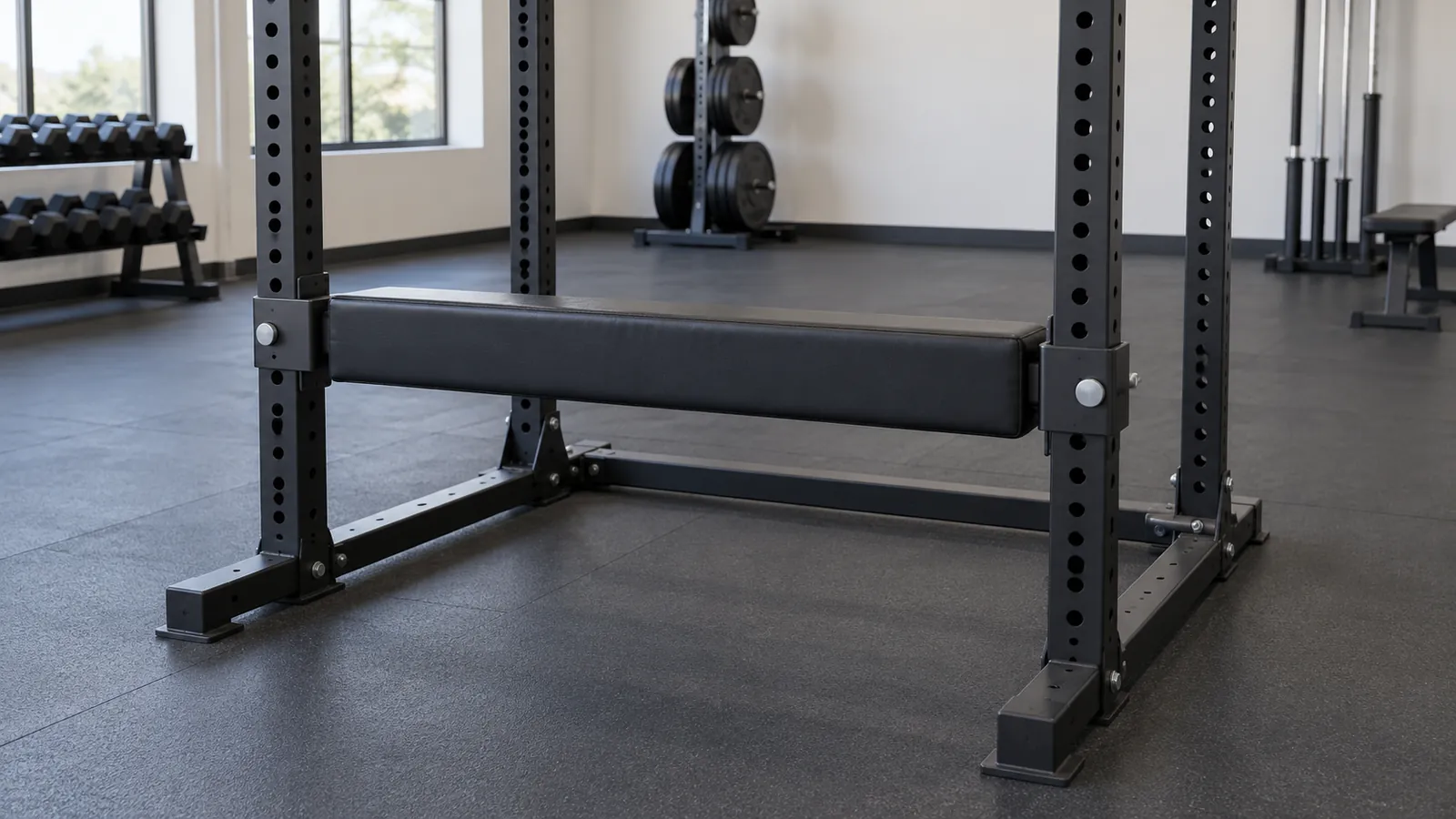
Start by identifying what the quotation includes. A rack-mounted support receives the upper back during the approved movement; a barbell cushion covers the bar at the hips. Neither product name establishes the other function, and a pad used for chest-supported rows is not automatically approved for hip thrusts.
Confirm whether the proposed support spans two uprights or uses another specified mount. Request the complete assembly, including end channels, brackets, pins and any additional restraint. A loose upholstered beam is not enough information to order a working station.
Confirm the exact rack interface
For a support spanning two posts, establish the actual inside spacing at the intended mounting location as well as upright profile, hole arrangement and revision. A shared nominal steel-tube size does not prove the entire span fits. Keep measurements in one unit and submit a clearly marked rack drawing.
Obtain the manufacturer's installation sequence and retention requirements. Positioning the pad at the desired height comes before confirming every prescribed fixing is seated. Do not leave one end unsecured, force a short support across the rack or remove frame members to create space.
Measure the exercise, not only the upholstered beam
The useful contact height depends on the permitted setup and the users. Check the available mounting positions with appropriate instruction and without adding exercise load. A pad that fits the holes can still leave the upper back at an unsuitable position; there is no single height that fits every person.
Include room for the feet, bar, plates and safe entry and exit. Review the complete movement against lower braces, stored plates, cable stations and any parked Smith bar. The space occupied by the pad alone does not describe the working area needed in front of it.
Plan removal and the next rack exercise
Choose an installation and handling procedure that the intended users can follow. Support the unloaded attachment as its instructions require while changing the position or removing it. Consider where the complete unit and its pins will be stored, and whether retrieval interferes with the next station.
Before switching back to barbell training, restore the required rack and safety configuration. Treat an uncertain mount, damaged pad exposing hard surfaces or unresolved interference as an incomplete setup. Ask PBF Fitness to review rack identity, mounting drawing, intended users and room layout together; product-specific approval must come before adding a support to the order.
- Compare multifunctional racks
- R05
- Pin-and-Pipe Rack Safeties: Is the Whole Rod Seated?
- Review my rack and hip-thrust support layout