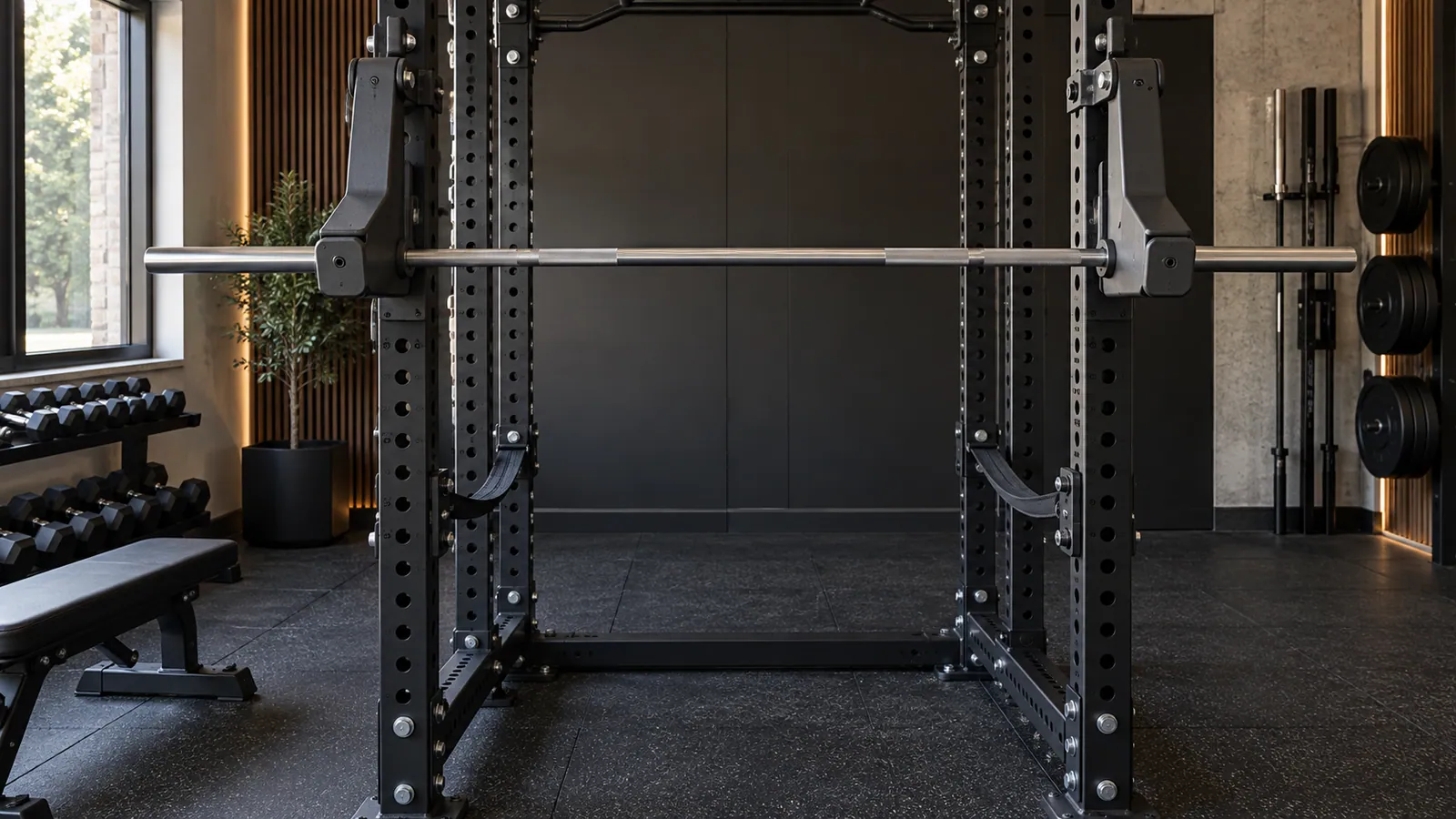
Decide which setup problem you are solving
For squats, confirm whether eliminating the walkout supports the training method or removes a skill the athlete intends to practise. For benching, compare shoulder position during self-unrack.
A second pair of ordinary or roller J-cups may solve frequent height changes with less weight, cost and storage demand. Compare the actual workflow.
Heavy arms can turn every height change into a handling task; include attachment mass and safe grip points in the decision.
Prove the swing and return path
Mount both arms at equal approved positions and test an empty compatible bar. The hooks must clear the lifter after lift-off and return to a predictable re-rack point.
Check specialty-bar shaft shape, knurl position, collar clearance, bench path and safety placement. Never assume a cup that fits the upright proves the moving assembly fits.
Specify compatibility and handling
Verify rack series, upright dimensions, pin geometry, attachment weight, locking mode and manufacturer-rated use. Plan where the arms will stay when another station needs the same holes.
Request a layout for squat and bench positions, including safeties and storage. Share bar types, user heights and whether competition-style walkout practice matters.
A monolift changes the unrack but does not replace correctly set straps, pins or arms for a failed repetition.
- Compare multifunctional racks
- R05
- Functional Trainer Trolley Height: Do the Adjustment Positions Fit Your Exercises?
- Compare rack safety options