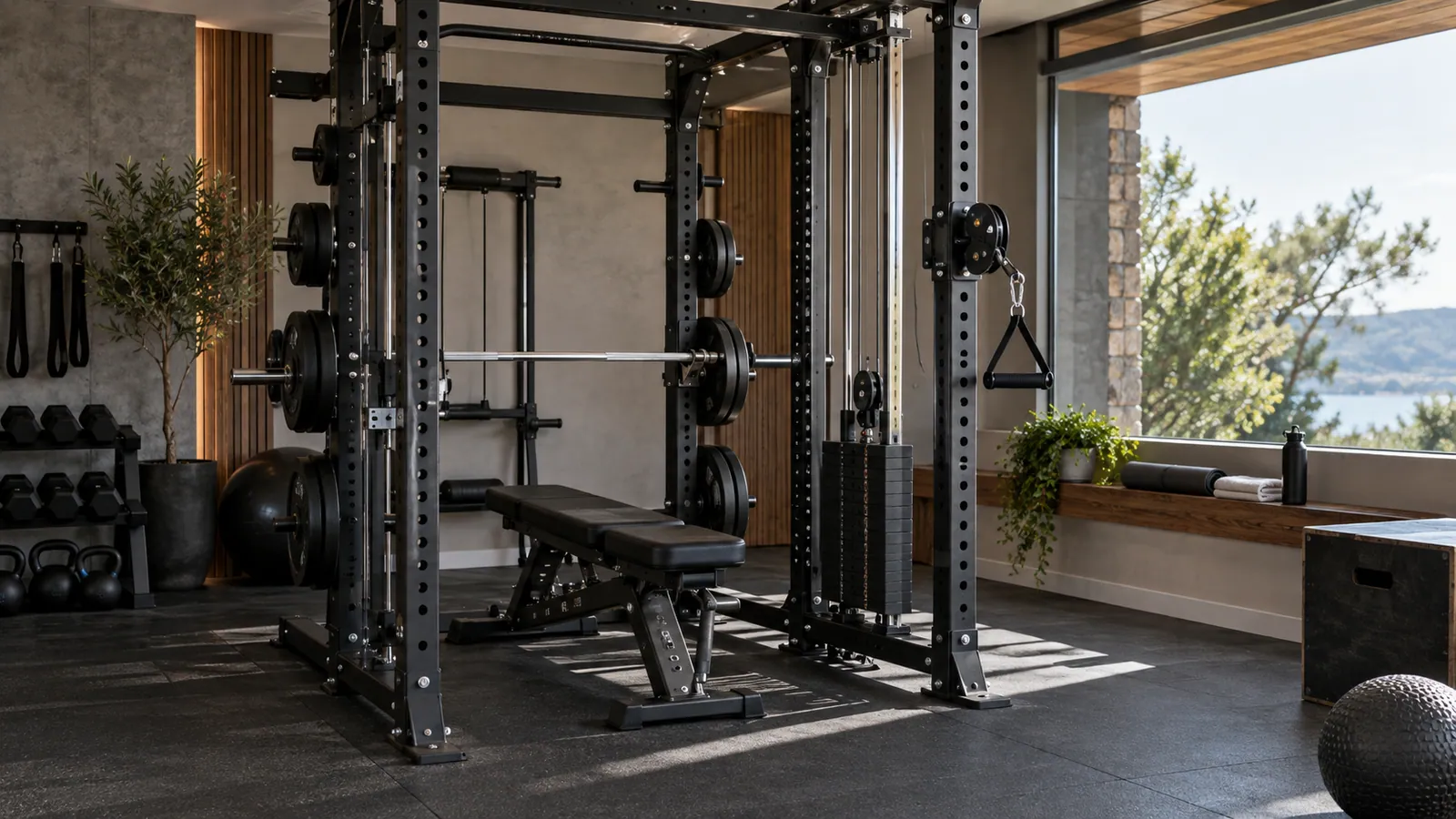
Measure the cable exit, not the frame
Record the centre of the swivel pulley at the lowest and highest fully locked positions. The top crossmember height does not reveal either measurement.
Add the handle, carabiner and strap length. A long connector changes where resistance begins even though the trolley has not moved.
Repeat the measurement on both columns; a mismatch can reveal assembly or adjustment that needs correction before use.
Map people and exercises
Test ankle work, curls, presses, lateral raises and high pulls for the shortest and tallest intended users. Mark the preferred cable height for each movement.
Position spacing matters when one hole pulls too low and the next too high. More holes are valuable only if the trolley locks cleanly and remains easy to reposition.
Inspect the complete adjustment system
Check the pin engagement, carriage play, pulley swivel, cable clearance and numbering while the stack is unloaded. Follow the maker’s maintenance instructions rather than adding an unapproved lubricant.
For procurement, request minimum and maximum cable-exit heights, number and pitch of positions, handle stack-up and the approved rack height. Send user heights, room height and exercise list.
For shared gyms, numbered positions make programmes repeatable only when the numbers correspond on both sides.
- Compare multifunctional racks
- R05
- Rack Monolift Attachment vs J-Cups: Is the Upgrade Worth It?
- Check rack depth for your room