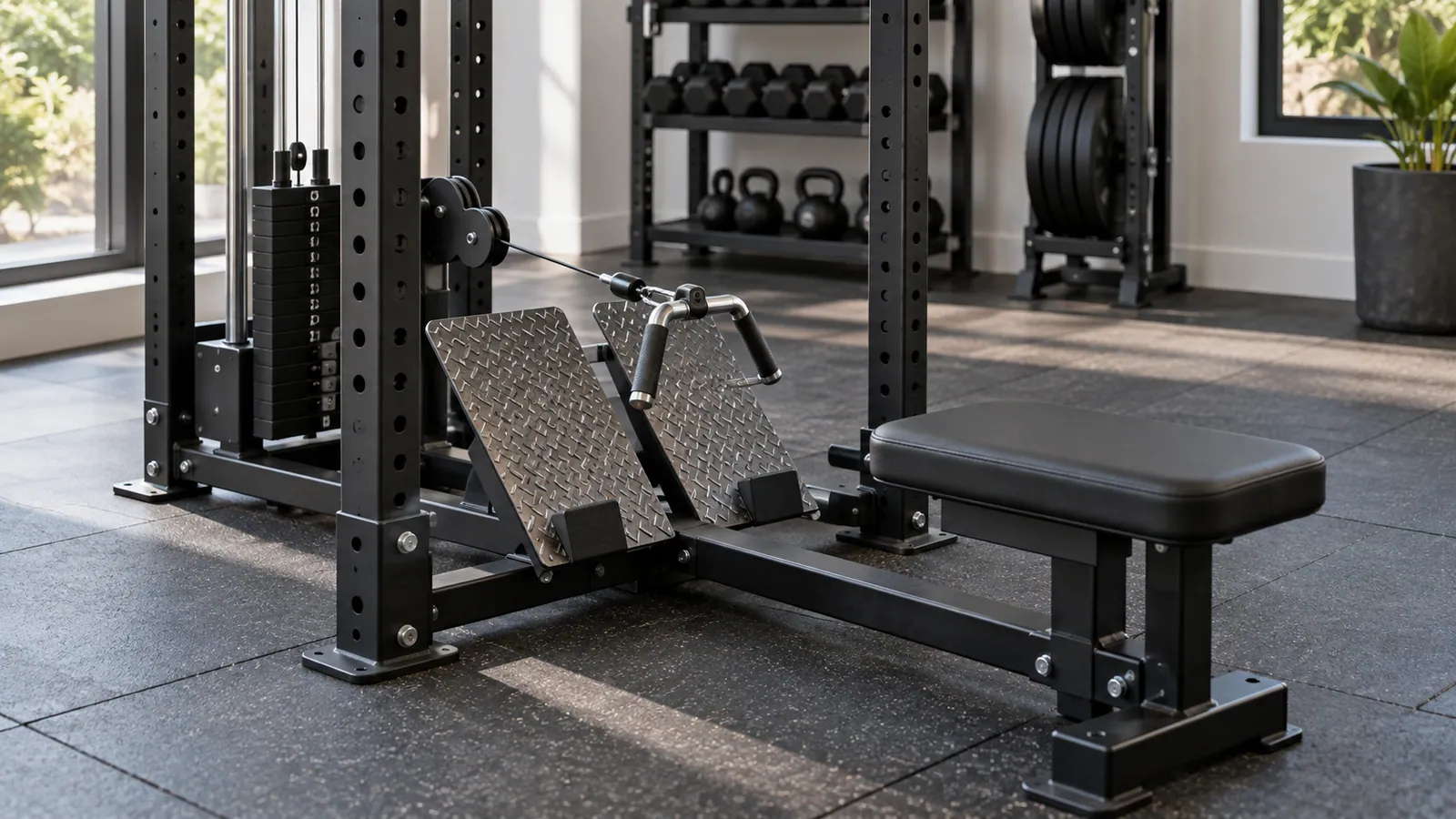
Set the body before judging the plate
Place the intended bench, seat or floor mat first. The user should reach the handle without rounding excessively or starting with locked knees.
Measure from the cable exit to the user’s hip line and to the foot contact surface. A high exit can pull upward; a very low exit can rub the floor or frame.
A removable plate may improve access, but its weight, storage position and locking method belong in the daily workflow.
Follow the cable through the full pull
At the forward position, confirm the carriage or stack is not already at an end stop. At the finish, keep the handle clear of the torso and connector hardware.
Check heel support, shoe width and whether the plate angle stays secure under hard pulls. Smooth tread must not be mistaken for useful bracing.
Plan sharing and removal
Verify the approved mounting holes, pin geometry, cable routing and whether the footplate blocks benching, walkways or another low station.
For a project quote, provide user heights, seat choice, preferred row handles and the required changeover time between rack functions.
Check the tallest and shortest intended users; one fixed seat distance rarely gives both the same start position.
- Compare multifunctional racks
- R05
- Does a Rack-Mounted Smith Bar Block Free-Weight Training?
- Compare rack safety options