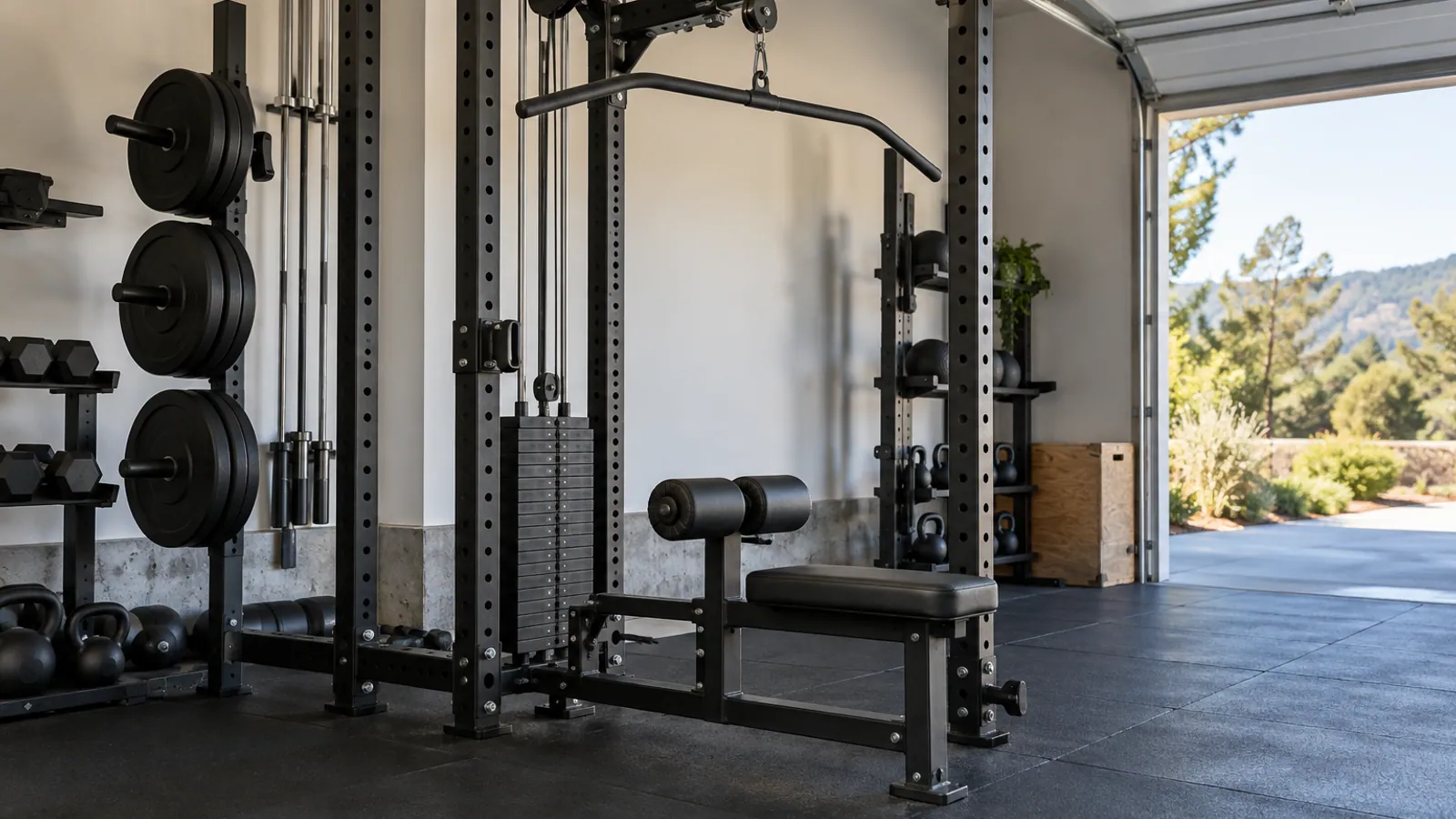
Map the start and finish positions
Record seat height, torso posture, shoulder reach, carabiner length and handle shape for the tallest intended user. Long chains or adapters lower the start and can remove overhead range.
At the bottom, the handle must reach the programmed finish without the carriage contacting its upper or lower limit. Published cable travel and user reach describe different things.
Use the actual handle because a long curved bar and short straight bar hang at different heights from identical clips.
Test the system at training height
A short rack can force a low seat or floor position. That may be acceptable for one athlete, but not for a shared studio where entry, bracing and repeatability matter.
Check thigh restraint placement, knee room and whether the cable falls in front of the chest rather than rubbing the face, head or top crossmember.
Document the carriage position at both limits so another buyer can repeat the fit test rather than relying on a subjective demonstration.
Ask for evidence before modification
Request a dimensioned seated setup and manufacturer-approved cable travel for the exact rack height and module. Try the full movement with the intended bar and connection hardware.
Do not lengthen a load-bearing cable, relocate a pulley or raise a structural member outside the approved design. Share user height range, ceiling height and exercise list to select the correct configuration.
- Compare multifunctional racks
- R05
- Four-Post vs Six-Post Power Rack: Which Layout Fits Your Gym?
- Compare rack safety options