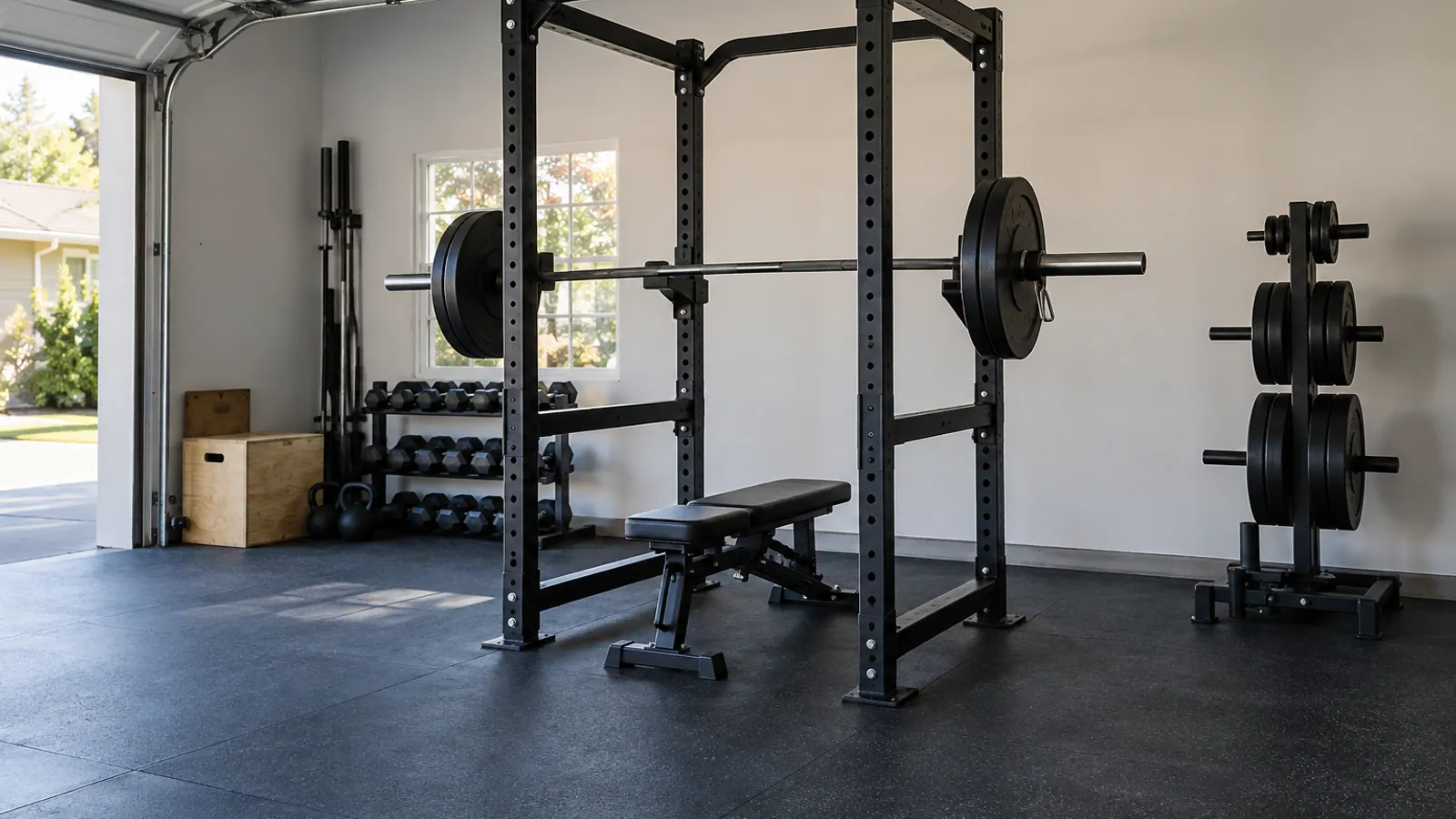
Draw the complete footprint
Mark the outer frame, barbell sleeve clearance, loading stance, door swing and the path to the rack. A nominal rack depth does not include the athlete or the bar.
If a rear cable module is planned, add its projection and service access. Compare this complete envelope with the six-post storage section rather than comparing bare frames.
A six-post layout is not automatically safer; safety depends on the complete approved rack, its fixing and the selected spotter system.
Protect the working bay
Four posts can be enough when plates live on a separate tree and the inside bay remains clear. Rear horns on a short four-post rack may intercept plates on the loaded bar or the bench path.
Six posts can separate storage from lifting. Verify the rear bay actually accepts the desired plates and does not steal needed wall or walking clearance.
Before committing to rear storage, compare the extra depth with a separate plate tree in the same room.
Buy an approved system, not spare uprights
Check the maker’s crossmembers, hole pattern, bracing, anchoring and upgrade list. An extension from another series is not proven compatible because the tube dimensions look similar.
Request a plan showing present and future cable modules, safeties, plate horns and barbell positions. Send room dimensions, ceiling height and training priorities before selecting the layout.
- Compare multifunctional racks
- R05
- Will a Rack Lat Pulldown Give You Full Range of Motion?
- Check rack depth for your room