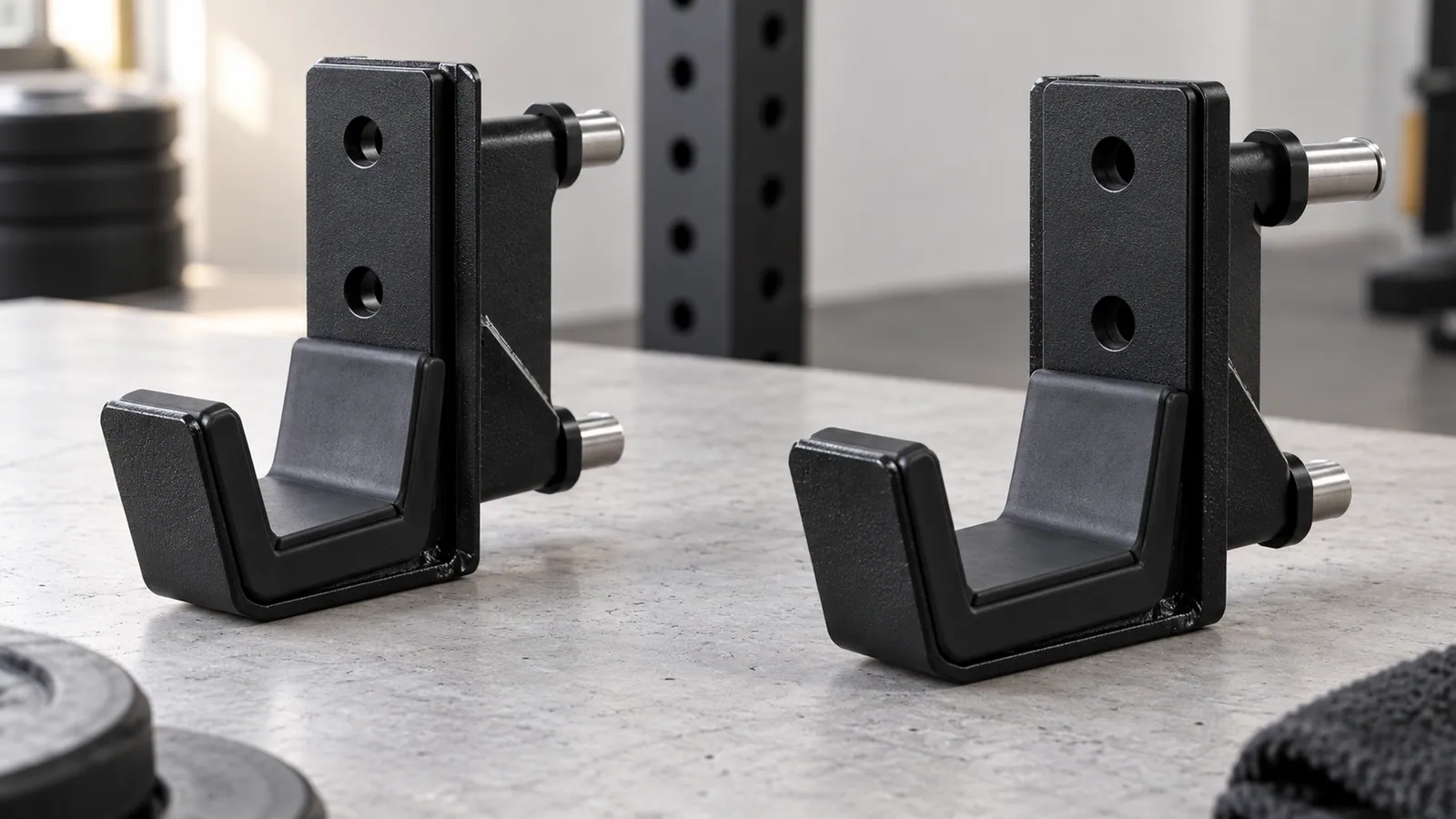
Identify the pair before selecting a hole
Two cups can look alike while belonging to different attachment revisions. Compare their identification, mounting geometry and cradle offset with the rack’s approved parts information. Similar upright dimensions or pin diameters are useful measurements, but they do not identify a matched pair. Keep the cups with their model information when moving equipment between rooms.
Some designs have designated sides. The Rogue RM-3 Fortis instructions, for example, list separate left and right J-cups. Other designs may be interchangeable. Follow the illustration for your own pair rather than assuming that a hook which enters a hole is on the correct side. View the part from the direction used in the manual.
Distinguish engagement from complete seating
A mounting pin entering the upright is only one part of installation. The cup may also need to rotate or settle until its body reaches the illustrated working position, with a prescribed retainer engaged. Do not transfer another rack’s rotation sequence or locking method. Check the entire mount against the exact instructions before placing a bar in it.
Look for a gap, obstruction or unusual angle that prevents the required contact. Inspect the mounting area and the cup for damage, then obtain the manufacturer’s disposition if the cause is unclear. Do not use the bar or added plates to force the cup into position. Filing a pin, adding a shim or bending a bracket changes the interface rather than confirming it.
Compare where the bar actually rests
Matching hole numbers help repeat a known setup with the correct pair. They do not prove equal support height if the cups have different offsets or the rack numbering is not the same on both uprights. Check the actual cradle surfaces and follow the maker’s prescribed setup method. A bar supported at an unexplained angle needs the mismatch resolved.
Use an empty bar to confirm the intended unrack and return before loading, as the applicable instructions allow. Check that the shaft sits securely in both cradles and that collars or sleeves do not crowd the cups. This is a setup check, not a capacity test. A good fit at rest still requires room for the complete movement.
J-cups hold a racked bar; the separate prescribed safety system handles the catch role. Configure that system for the movement according to its own instructions. A correctly seated cup does not remove the need to check the rack’s stability, permitted configuration and independent safeties.
When the setup should pause
Can a mismatched pair be corrected with different hole positions? Do not use height adjustment to conceal different cup versions. Establish the approved pair first. If a correctly identified pair still sits differently, stop and ask the maker to assess the rack and mounts.
Is the liner the only inspection point? No. A sound liner does not prove that the mounting pin, cup body or retainer is sound. Send PBF Fitness the rack identification, photographs of both installed mounts and the intended bar setup. Request the correct pair and installation information before replacement; buying a different cup style does not by itself resolve a seating fault.
- Compare multifunctional racks
- R05
- Two Rack Cables, One Handle: Confirm the Approved Connection
- Review my rack and J-cup pair