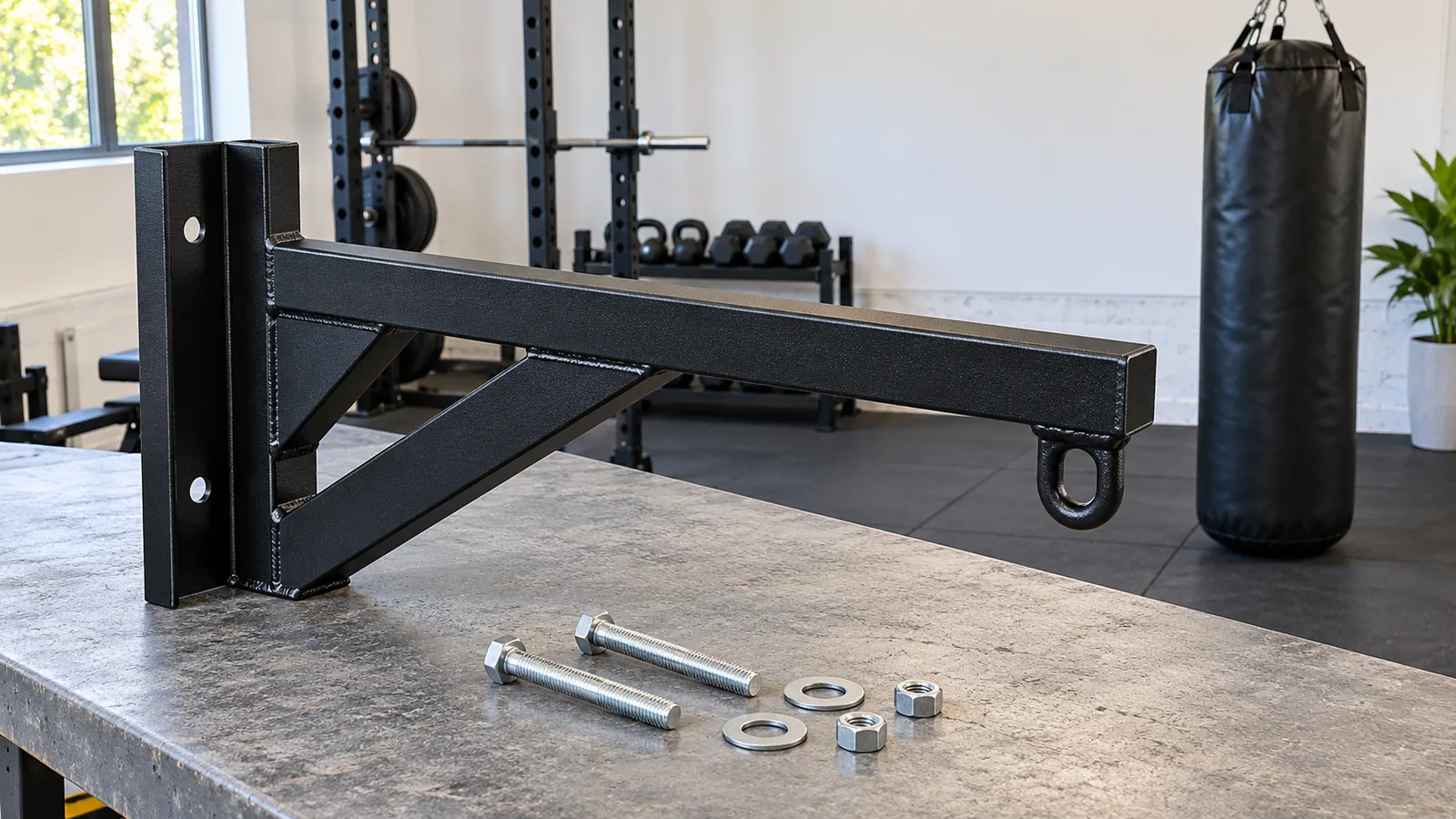
Define the hanging station before choosing an arm
A bag hanger adds more than a small bracket to the rack. The bag sits away from the upright, its suspension occupies height, and its movement can enter space that was previously a walkway or another exercise station. Start the enquiry with a side view and a floor plan of the actual rack rather than a photograph of an empty mounting hole.
Identify the rack model and revision, the proposed hanger reference and the intended bag. Include the bag's filled mass and dimensions, plus the chain, strap, swivel or connector arrangement specified for it. Ask the supplier to confirm the complete combination; approval for a different bag or another rack in the same brand is not a substitute.
Keep the arm, connection and installed rack in one approval
Torque describes its bag mount within its X-SERIES system. That illustrates why a product name containing universal is not a promise of cross-brand compatibility. A complete enquiry must cover the connection to the upright or crossmember, any required bracing, the rack's floor installation and all mounting parts.
Some boom installations impose an anchoring condition before the arm is fitted. The Rogue Shrimp Trawler installation sheet is one such example, although its diagram shows rings and does not independently approve your proposed bag. Follow the instructions for the exact application; neither spare plates on storage horns nor a person hanging from the arm proves an alternative installation acceptable.
Measure from the suspension point to the bag bottom
The top of the rack is not the same as the hanging point. Add the actual arm position, connector, swivel and bag suspension to the drawing, then show the bag body below them. Ask where each quoted height begins and ends. Do not shorten a chain, omit a connector or alter a hanger to make an otherwise unsuitable bag clear the floor.
Sorinex lists a separate heavy-bag hanger with a defined bag-load scope. Read that scope together with its approved configuration, rather than treating one published mass as permission for every setup. Record the particular bag and suspension supplied so a later replacement cannot silently change the installed height or intended use.
Reserve the space that will actually be occupied
A bag that clears the rack when stationary can still approach the frame, plates or a cable station during use. The plan needs the permitted movement area and the person's working position as well as access around the station. Ask the equipment supplier to identify the necessary separation for the proposed application; there is no universal clearance that can be inferred from the arm length alone.
Keep the area available in daily operation. If the bag station and a barbell or cable exercise cannot operate together within the approved arrangement, define the changeover and separate their use. Stop using a hanger with movement at the mount, damaged suspension or uncertain retention and obtain the maker's service direction instead of adding a brace or extra hook.
Can I hang a bag directly from the pull-up bar?
Only if the rack maker expressly approves that exact bar, connection and installed configuration for the proposed bag use. A pull-up load figure alone does not establish this.
Does adding plates to the rack replace the anchoring requirement?
Do not substitute stored plates for an installation condition. Use the anchoring or other configuration explicitly required by the rack and hanger instructions.
Send a layout that can be answered
Share the rack reference, installed floor condition, hanger and bag references, finished-floor-to-hanging-point measurement, full suspension length and nearby obstacles. Ask for a confirmed parts list and an installation drawing for that combination. If a rack-mounted bag station cannot be confirmed, request a purpose-built alternative rather than adapting a storage or pull-up connection.
- Compare multifunctional racks
- R05
- Rack Wrist Rollers: Match the Mount, Strap and Hanging-Load Travel
- Review a bag hanger in my rack layout