Ask where the loaded arm waits
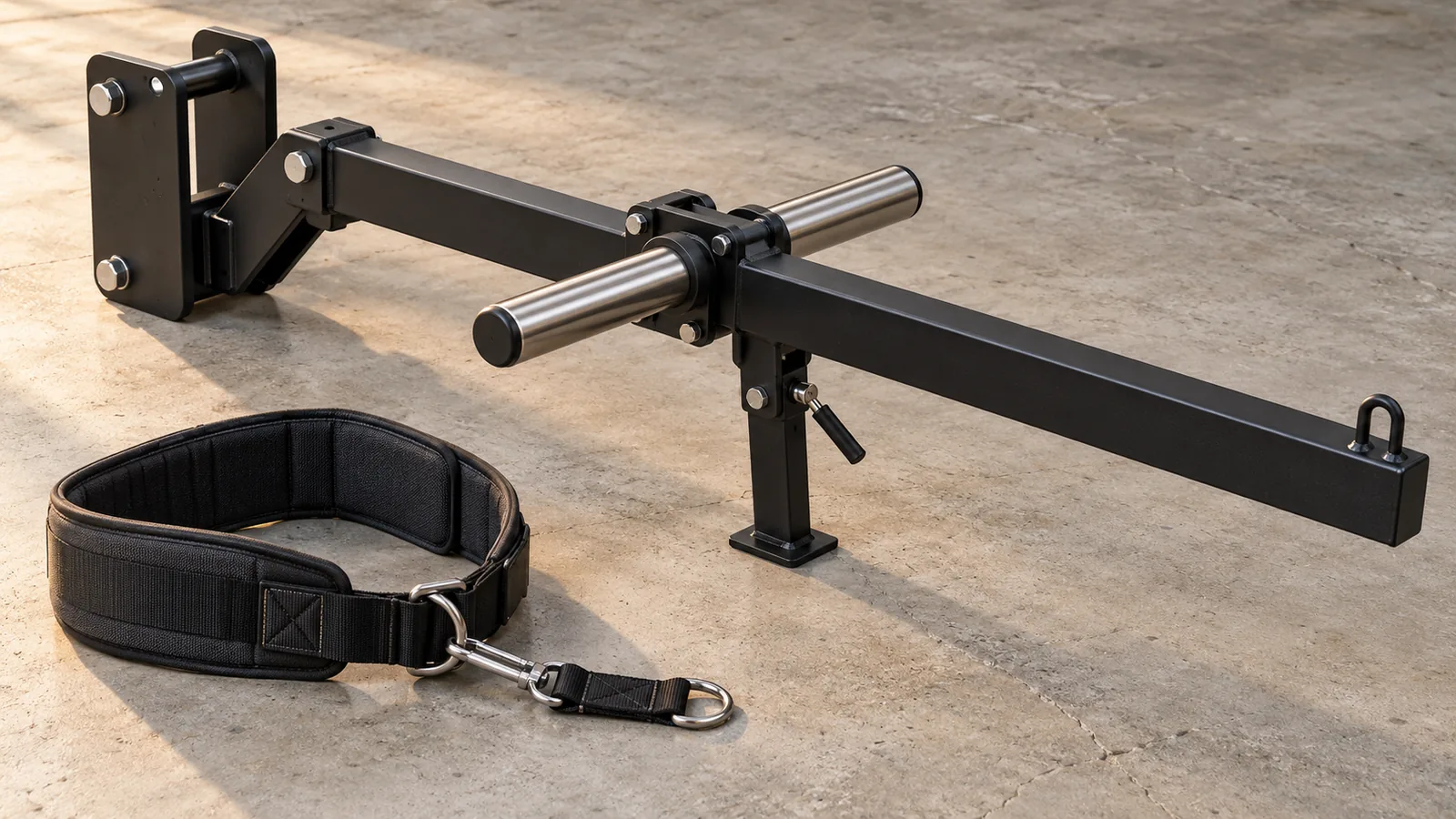
The useful question is not simply whether a lever can lift plates. The user has to reach the belt connection, take control of the load and return it to a supported state. Ask the supplier to demonstrate those transitions with the intended rack configuration. A photograph of the arm resting on the floor does not explain the entry and exit arrangement.
Rival describes a belt-squat lever with a stand that moves clear as the exercise begins, then returns beneath the lever using a handle for dismounting. That is a feature of that particular attachment. Other products can use another support arrangement; do not assume that every item sold as a belt-squat attachment contains this stand or works in the same way.
Separate the rack lock from the moving pivot
The bracket securing an attachment to the upright and the pivot allowing its arm to move have different jobs. Confirm the approved rack series, mounting face, pin size, hole spacing, bracket contact and all retaining parts from the exact instructions. A similar square tube or a pin passing through one hole is not a complete compatibility check.
Keep the specified retainers with the assembly. Rival, for example, lists a detent hitch pin and a lynchpin in its kit. That does not establish the fastening set for a different manufacturer's lever. Do not use a spare barbell collar, an improvised spacer or a replacement pin selected only by diameter to resolve an uncertain connection.
Trace the stand as well as the plates
Draw the pivot, arm end, belt connection, plate sleeves and the outside faces of the actual plates through the intended movement. Include the stand's separate travel and its final supporting position. A stand that clears the floor may still meet a rack foot, a stored plate or another attachment on the way back.
Include room to approach the loading sleeves, fit and remove plates and operate the support handle without reaching through the moving assembly. Keep other users and adjacent cable stations outside that working area. Have the supplier establish the required installation and clearance for the complete rack; an empty rack footprint is not the attachment's operating envelope.
Check the specified supported position before the belt is disconnected or the load is changed. If the support cannot engage fully, the bracket moves or the lever catches another part, stop the station and ask for the manufacturer's remedy. Do not keep a hand or foot in the load path to compensate for a support that fails to seat.
Confirm what connects the belt to the arm
The belt, connector and lever eyelet need to be considered together. Ask which parts are supplied, which are optional and how the manufacturer defines their intended connection and adjustment. Rival offers its belt as an option, while Titanium Strength lists a belt and steel chain with its X-Line attachment. One supplier's included list does not describe another supplier's package.
Request a demonstration of the intended user's starting and return positions using the approved arrangement. Do not extend the connector with an unapproved chain or raise the user on loose plates to solve an awkward setup. A cable belt-squat station has a different load path, and a pair of general jammer arms does not become an approved belt-squat system merely by adding a belt.
Can I use any jammer arm for belt squats?
Only if the manufacturer approves that complete belt-squat configuration, including its support, belt connection and rack installation. General lever-arm compatibility does not establish an entry or dismount arrangement.
Does a parking stand make the attachment ready for any rack?
No. The stand is one part of the system. The rack connection, retainers, installation and full loaded movement still need approval for the exact equipment.
Put the changeover in the rack plan
Record where the arm and belt go when the rack returns to barbell or cable use. A folded position is useful only if it is specified, retained and clear of the next activity. Include plate removal, safe handling and access to any required storage lock in the changeover discussion.
For a PBF Fitness project, send the rack model and revision, the proposed attachment reference, its instructions, actual plate sizes and a drawing of the start, working and supported return positions. Ask for a review of the requested layout and functions. A rack catalogue alone does not confirm that this attachment is offered or that a third-party lever is approved for that frame.
- Compare multifunctional racks
- R05
- Flywheel Trainers on a Rack: Match the Mount, Guard and Belt Space
- Review a belt-squat lever with my rack layout