Map the complete operating envelope
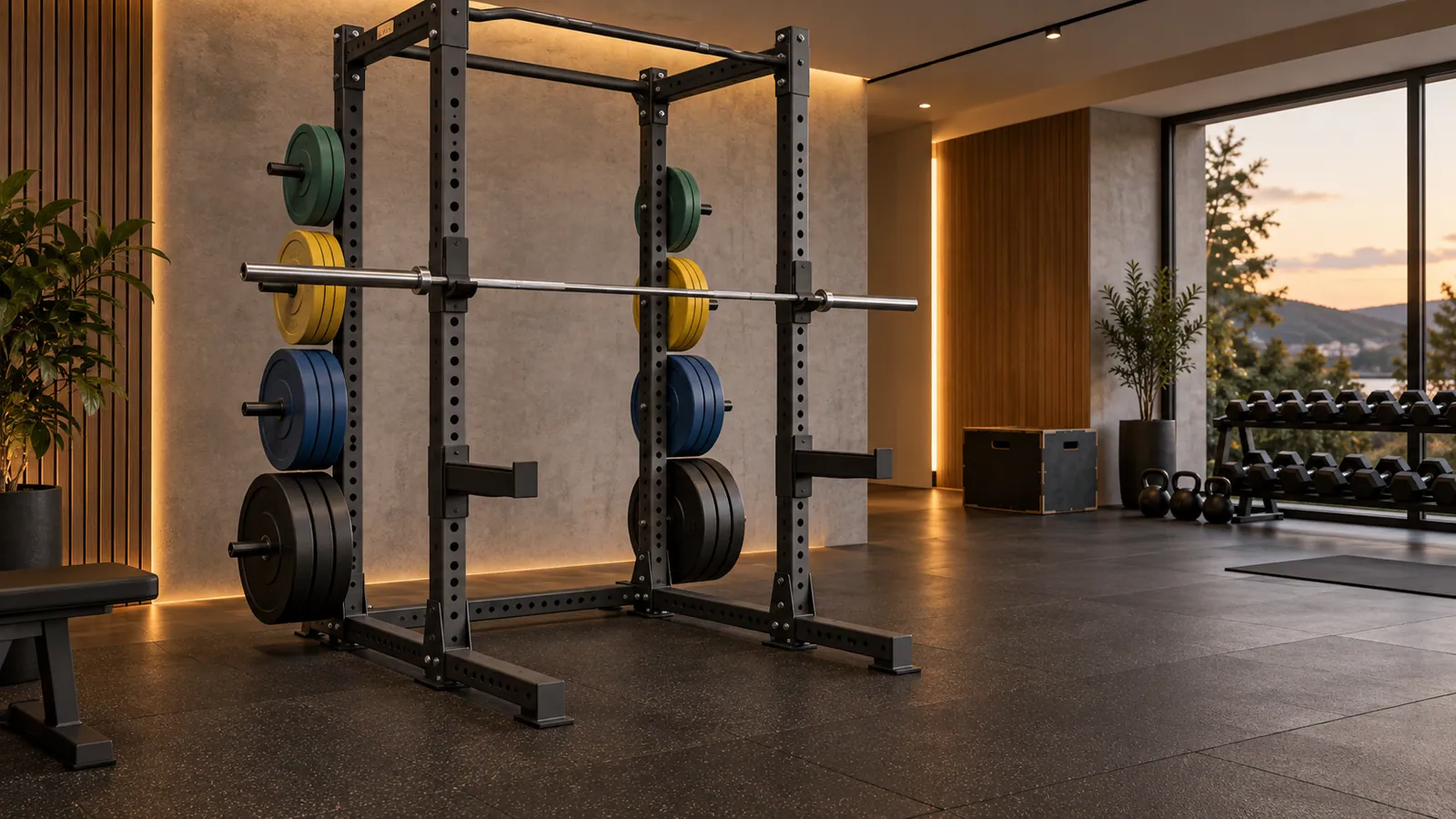
Measure the rack with the largest plates mounted, not with empty horns. Plate diameter and horn projection can add meaningful width or depth and may prevent the rack from sitting as close to a wall as planned.
Rear horns can keep the lifting zone clear and add low mass to the frame. Front or side positions may be faster to reach, but they can conflict with a bar sleeve, spotter arm, bench path or athlete movement.
Balance access against interference
On an all-in-one rack, also cycle the functional-trainer trolley, cables, Smith carriage and any low-row or lat-pulldown attachment. A storage position that works for squats may still obstruct another station.
Use only mounting locations and hardware approved for the rack. Tube size and hole diameter alone do not establish capacity, and a movable utility pin is not automatically a structural storage horn.
Load and unload corresponding horns evenly from left to right. Concentrating plates on one side changes handling and can create an avoidable tipping or twisting condition.
Approve the final loaded layout
Stored plates may improve the feel of a light rack, but they do not replace floor anchors, stabilizers or other securing methods required by the manufacturer.
Keep frequently used plates between knee and chest height when the approved layout allows it, while reserving lower positions for heavier plates and leaving a clear hand path.
Before ordering, draw the frame, wall, doors, bench, bar sleeves and loaded plate circles to scale. Confirm capacity, clearance and anchoring with the exact rack and storage kit.
- Compare multifunctional racks
- R05
- Functional Trainer Cable Inspection: When to Adjust, Stop or Replace
- Compare rack safety options