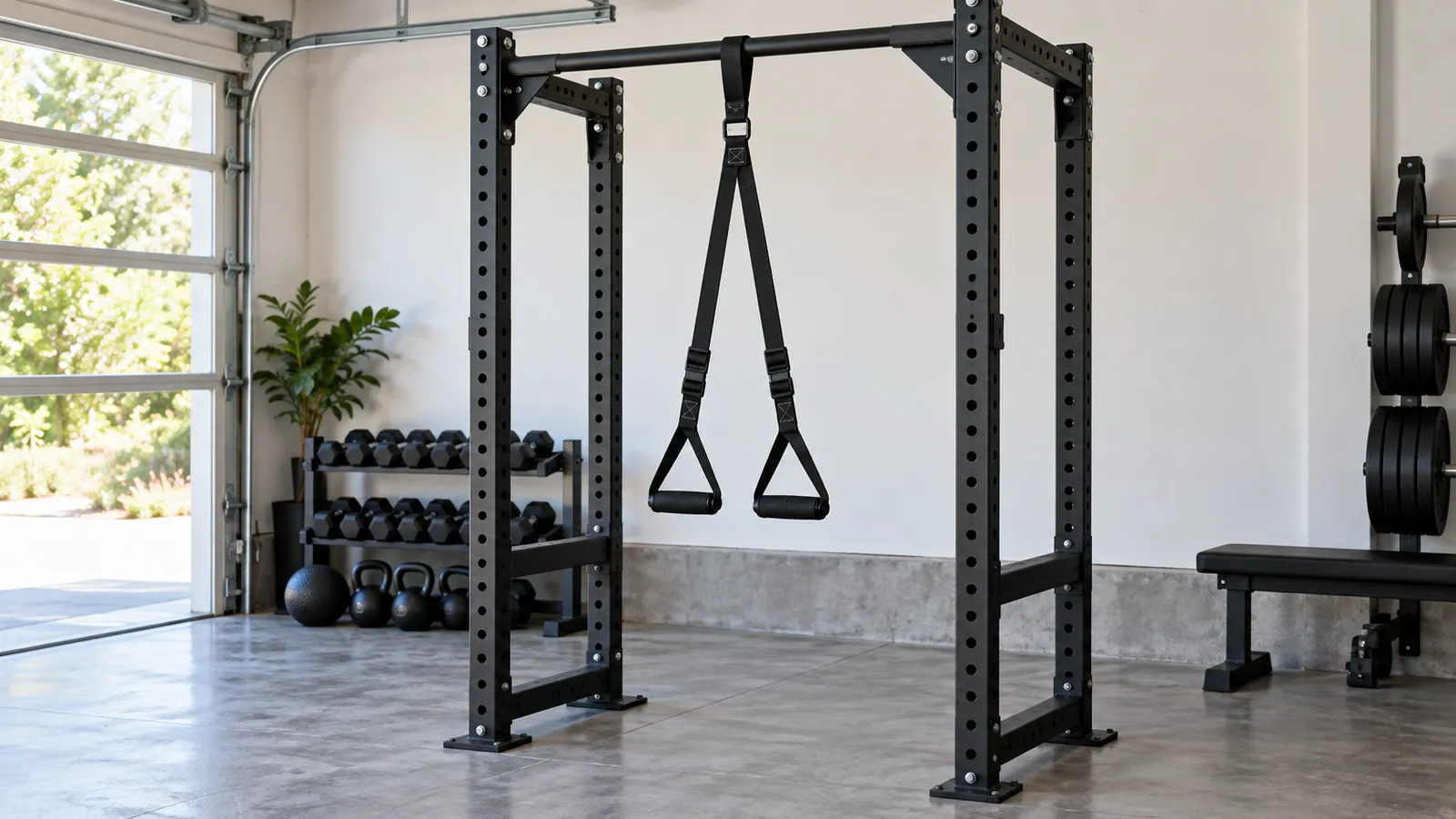
Ask which member is intended to carry the exercise
The approval question has two parts: where the strap may attach and how the installed rack must be supported. A fixed crossmember, rotating grip, Smith bar, plate-storage horn and accessory hanger serve different purposes. Do not treat a convenient high point as an exercise anchor without the relevant manufacturer’s permission.
Body position changes the direction of pull. An approved vertical pull-up load does not automatically cover every outward or sideways suspension exercise. Check the permitted exercises, user limits and frame installation for the proposed configuration. Adding stored plates is not a substitute for required anchoring or an unapproved loading direction.
A dedicated anchor may be the appropriate component: gym80, for example, offers a separate suspension-trainer anchor. That product establishes its own intended function, not compatibility with a PBF rack. Request the matching part and installation instructions rather than ordering a bracket solely because its hole appears to fit.
Match the textile connection to the actual surface
Use the suspension trainer’s specified anchoring system and connection route. TRX distinguishes its textile suspension anchor from a door anchor and identifies a particular loop for the trainer’s carabiner. These are product-specific instructions, not an invitation to clip any metal hook directly around a rack member or to substitute a lifting sling.
Inspect the contact surface for rough welds, sharp edges and anything that can abrade the webbing. Follow the strap maker’s method for preventing unwanted movement; do not create a sliding, sawing action over the support. Damaged straps, insecure hardware or a moving support require stopping use. A pre-use check follows approval and correct installation; it cannot certify an otherwise unsuitable rack.
Plan the user’s space and the change of station
Draw the intended body positions and handle paths around the anchor. Include feet, leaning distance and any floor exercise. The clear area may extend outside the rack’s base, so a frame footprint or pull-up headroom measurement alone cannot settle the layout. Use the trainer’s specified working envelope and check the actual room.
Keep webbing and users away from moving cables, trolley adjustment, the Smith bar, loaded sleeves and other people’s access. Review how straps will be removed or stored before returning to cable or barbell work. A hook suitable for storing an unloaded handle still needs separate approval if someone proposes to exercise from it.
Send PBF Fitness the rack configuration, proposed attachment point, suspension-trainer model and a room sketch showing the intended pulls. Ask for the approved member and mounting conditions before confirming the layout. If the offered rack has no approved suspension point, plan a suitable separate anchor or a different configuration; sharing one frame is useful only when both manufacturers’ requirements can be met.
- Compare multifunctional racks
- R05
- Cable Pulley Trolley Won’t Lock: Which Pin Should You Check?
- Review a proposed suspension anchor