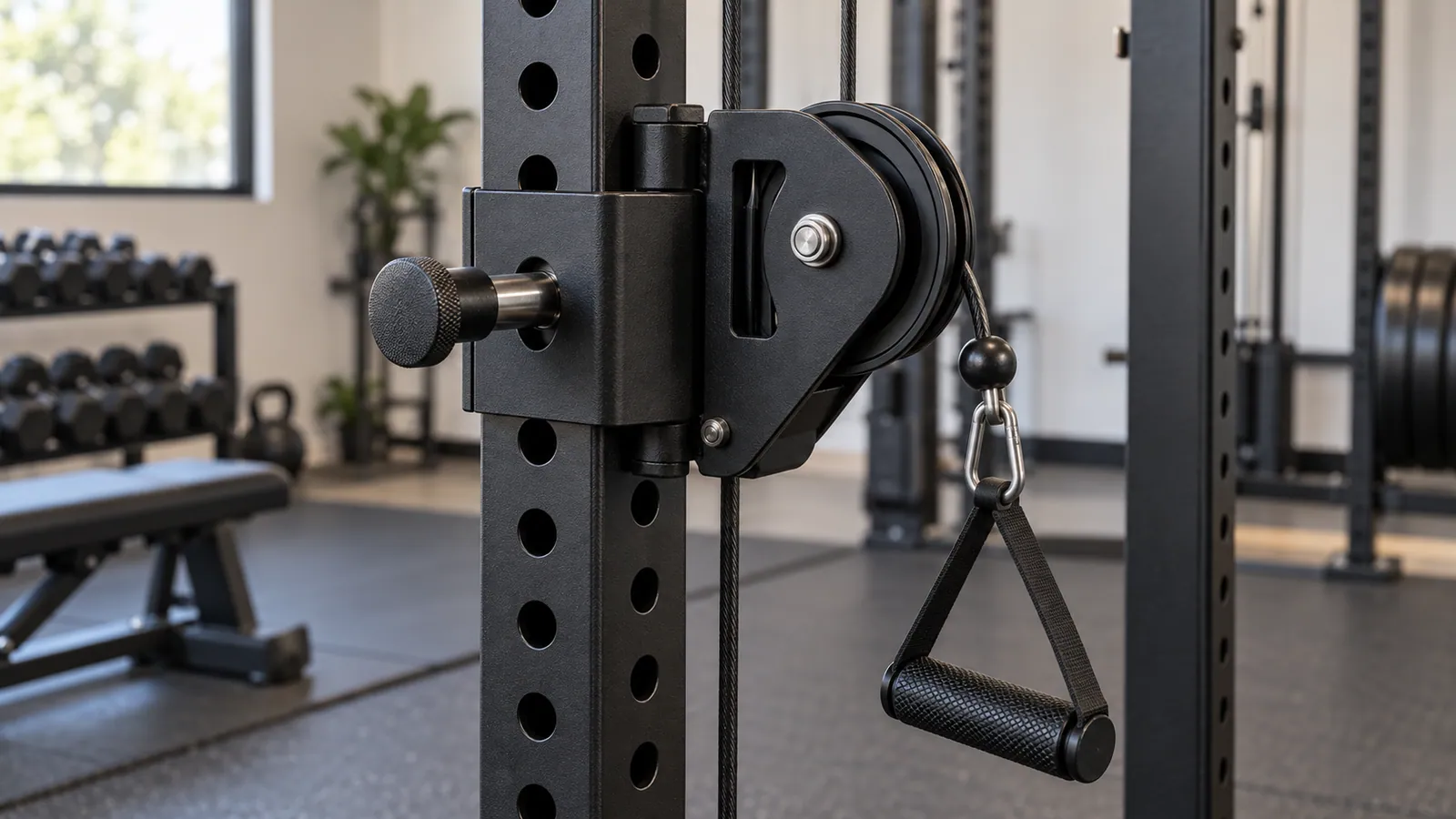
Identify the control before diagnosing the fault
Locate the control on the movable pulley carriage, then locate the separate selector at the stack. A selector problem concerns which plates are lifted. A height-latch problem concerns whether the outlet assembly stays at its chosen position. Record which component actually moves rather than reporting that the machine’s pin is loose.
Mechanisms differ. The current Inspire FTX manual uses a height-adjustment handle and lock switch; REP describes an Athena pop-pin with an additional safety pin. Those examples show why a generic pin instruction can miss a required control. Identify your own model and revision before attempting its normal adjustment.
Finish the height change before taking resistance
Let the selected exercise load return to its supported rest position and remove user-applied pull. Reposition only as the manufacturer permits, supporting the carriage at the intended grip and keeping fingers away from the sliding interface. Do not release a height lock while another person is pulling a handle or while plates remain suspended.
Align the carriage with an approved position, let its primary control fully engage and complete any separate retention step required by that design. Check the specified engagement indicator and secure condition before exercise. Life Fitness’s Axiom manual explicitly requires full pull-pin engagement after a height change; it does not give permission to transfer its latch or adjustment method to another rack.
A spring return is a signal, not the whole check
The knob may return before the locking element seats correctly, and a carriage can feel stationary for reasons unrelated to its lock. A missing secondary retainer is another distinct problem. Follow the maker’s confirmation method rather than proving the assembly with an improvised heavy pull, an extra stack plate or a hard shake.
If the control sticks, fails to seat, releases unexpectedly or the carriage slips, isolate the station and request service. Do not hammer the knob, enlarge a hole, fit a weight-selector pin in the height mechanism or loosen rollers as a trial repair. Manufacturer service bulletins specify particular assemblies and settings; visible similarity does not establish that those settings apply.
Send evidence that identifies the affected assembly
Provide the model, serial or order reference, carriage photographs and the position at which the problem appears. Describe the observed sequence: control released, carriage moved, control returned, then failed to retain. Keep the machine out of operation while collecting external photographs; do not reenact slipping under load for a video.
For a new rack quotation, request the height-lock type, any secondary retention, approved hand position, engagement check and supply of the correct service parts. Share whether users frequently change cable height. PBF Fitness can review those questions against the offered configuration; the deciding evidence is a documented locking procedure for that configuration, not a claim that every trolley works the same way.
- Compare multifunctional racks
- R05
- Can You Anchor a Suspension Trainer to Your Power Rack?
- Request the carriage locking details