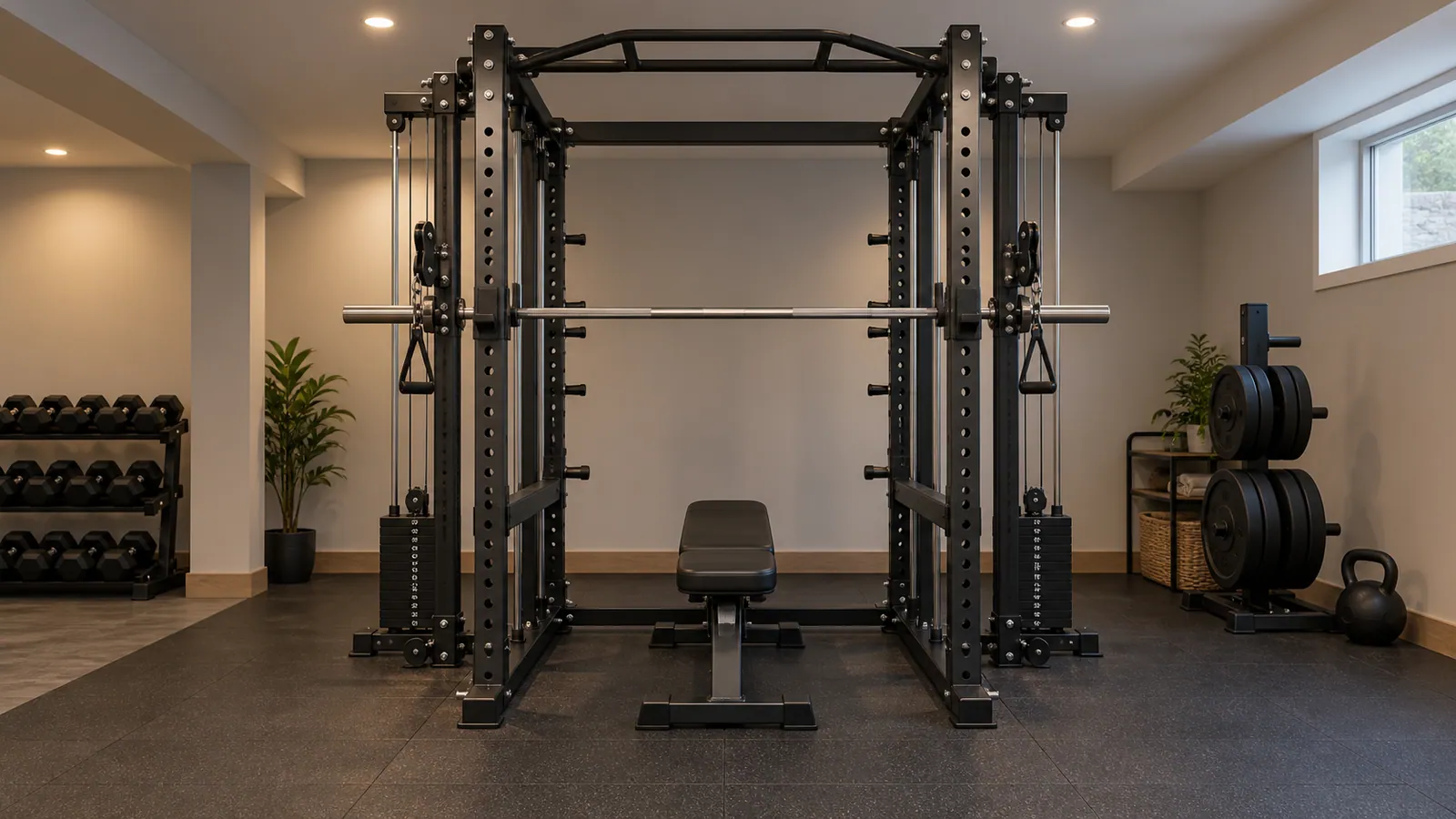
Measure the movement, not the frame
Record ceiling height at the actual rack position and the installed height of each grip; a multi-grip handle may sit above or below the top crossmember.
Measure the tallest user from a hands-on-bar hang through the intended top position. Strict, chest-to-bar and kipping movements require different envelopes.
Map every overhead obstruction
Mark doors, tracks, lights, ducts, beams and sloped sections on a plan, including the area behind the bar during a dynamic repetition.
Pulleys, guide rods and storage horns can rise above the frame, so use the manufacturer drawing for the selected configuration.
Choose the rack and bar as one system
A lower rack may reduce hanging-leg clearance, while a higher rack can make pull-ups unusable. Compare both limits before choosing.
Relocate or invert the bar only when that orientation is approved. Send room height, obstacles, user height and pull-up style for review.
Check standing reach as well: headroom can be adequate while the grip still requires a safe step.
Approve the installation drawing with finished-floor thickness included.
- Compare multifunctional racks
- R05
- Where Should Weight Plate Storage Go on an All-in-One Rack?
- Check rack depth for your room