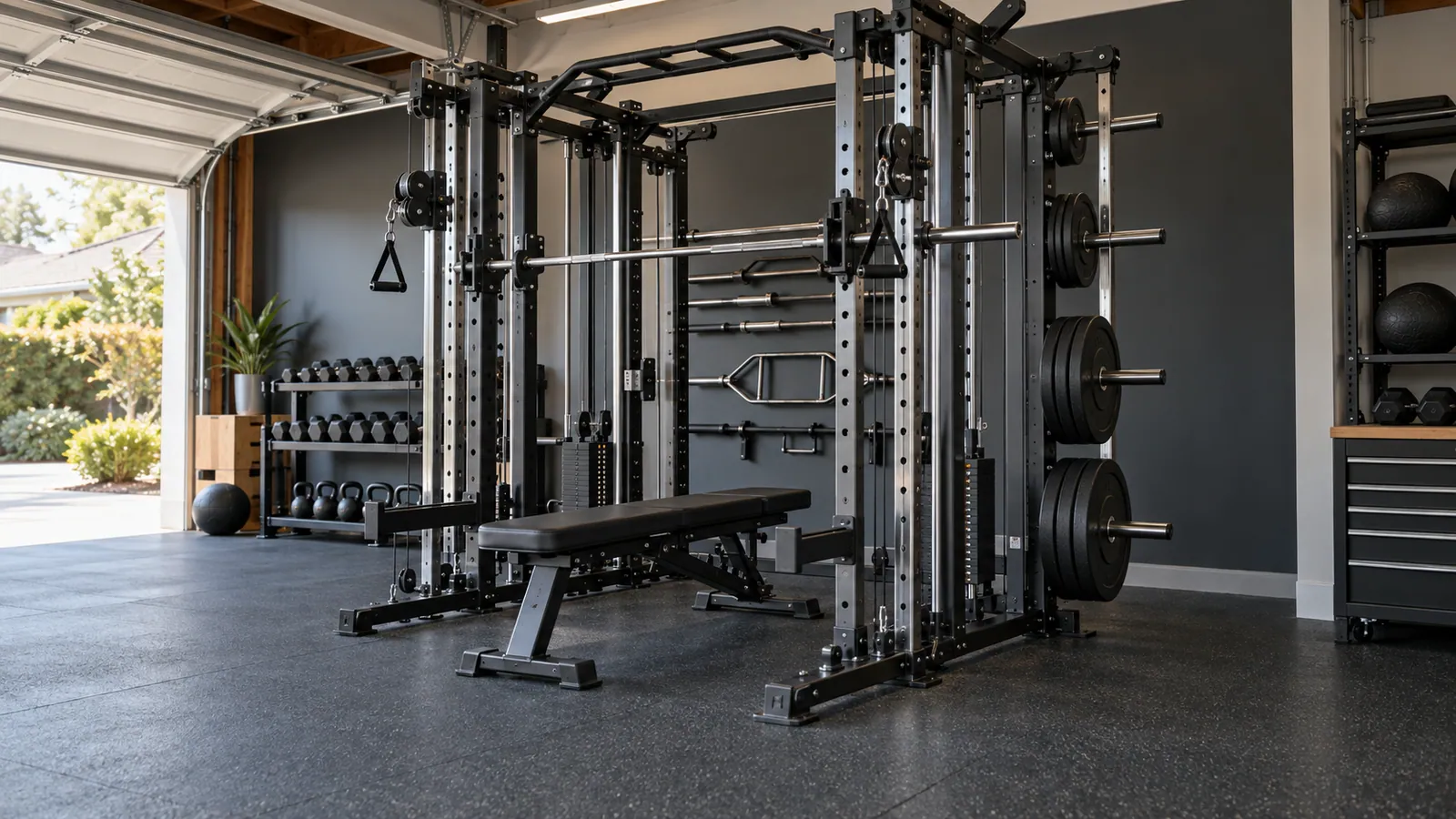
Draw plate envelopes before mounting horns
A loaded plate creates a circular envelope around its horn and needs hand space. Draw both at scale for every proposed height.
Keep this separate from bore compatibility: a plate that fits can still collide with a Smith sleeve, bar, safety or low cable.
Protect every training station
Run the Smith carriage, J-cups, safeties and both cable trolleys through all priority positions. Stored plates must not enter those paths.
On four-post racks, side horns can consume working holes and narrow the bench route. Rear uprights isolate storage but add footprint.
Test loading access and future changes
Leave enough wall clearance to load without twisting the wrist, and keep frequent plates at a comfortable height where permitted.
Mock up the complete rack with cardboard plate circles. Provide plate diameters, room plan, exercises and loading side for layout verification.
Load the largest plate on every proposed horn during the mock-up, not only a small change plate.
Keep alternative rack holes free for future attachments and maintenance access.
- Compare multifunctional racks
- R05
- How Much Clearance Do You Need Above a Power Rack Pull-Up Bar?
- Compare rack safety options