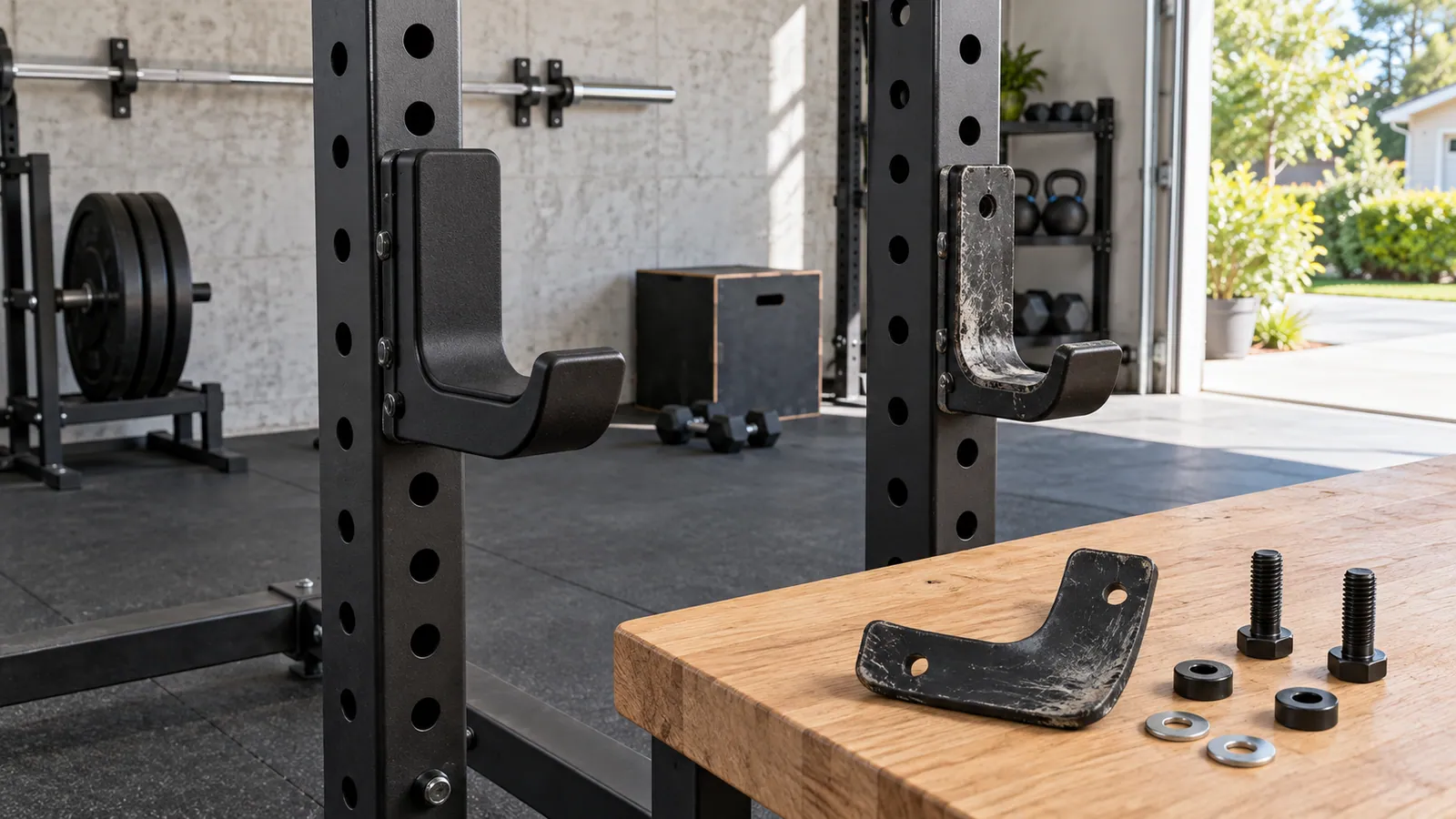
Read the wear pattern
Unload and remove both J-cups, then inspect the horizontal cradle, front lip, rear face, fasteners and locking pin under good light.
Polished contact marks are expected, but exposed steel, a raised edge or a loose screw can cut a bar coating and change how the shaft settles.
Compare left and right cups. Uneven wear often points to different heights, an out-of-square rack, repeated side loading or a bar being dragged across one cup.
Decide whether to repair or replace
A replaceable liner is useful only when the manufacturer supplies the correct material, thickness and fixing method. Do not improvise a thicker pad that reduces cup depth.
Replace the complete J-cup if its steel body is distorted, its weld is suspect, the pin is damaged or the cup rocks on the upright.
After service, reinstall both cups at matching numbered holes and confirm each latch is fully engaged before placing an unloaded bar.
Protect the bar and verify the pair
Roll and center the empty bar gently. Confirm that the shaft rests on protected surfaces and cannot touch an exposed bolt head or steel edge.
For procurement, ask whether cradle and back liners are replaceable, how parts are identified and which rack series the cup is approved for.
- Compare multifunctional racks
- R05
- Power Rack Band Pegs: Safe Setup, Anchoring and Compatibility
- Check rack depth for your room