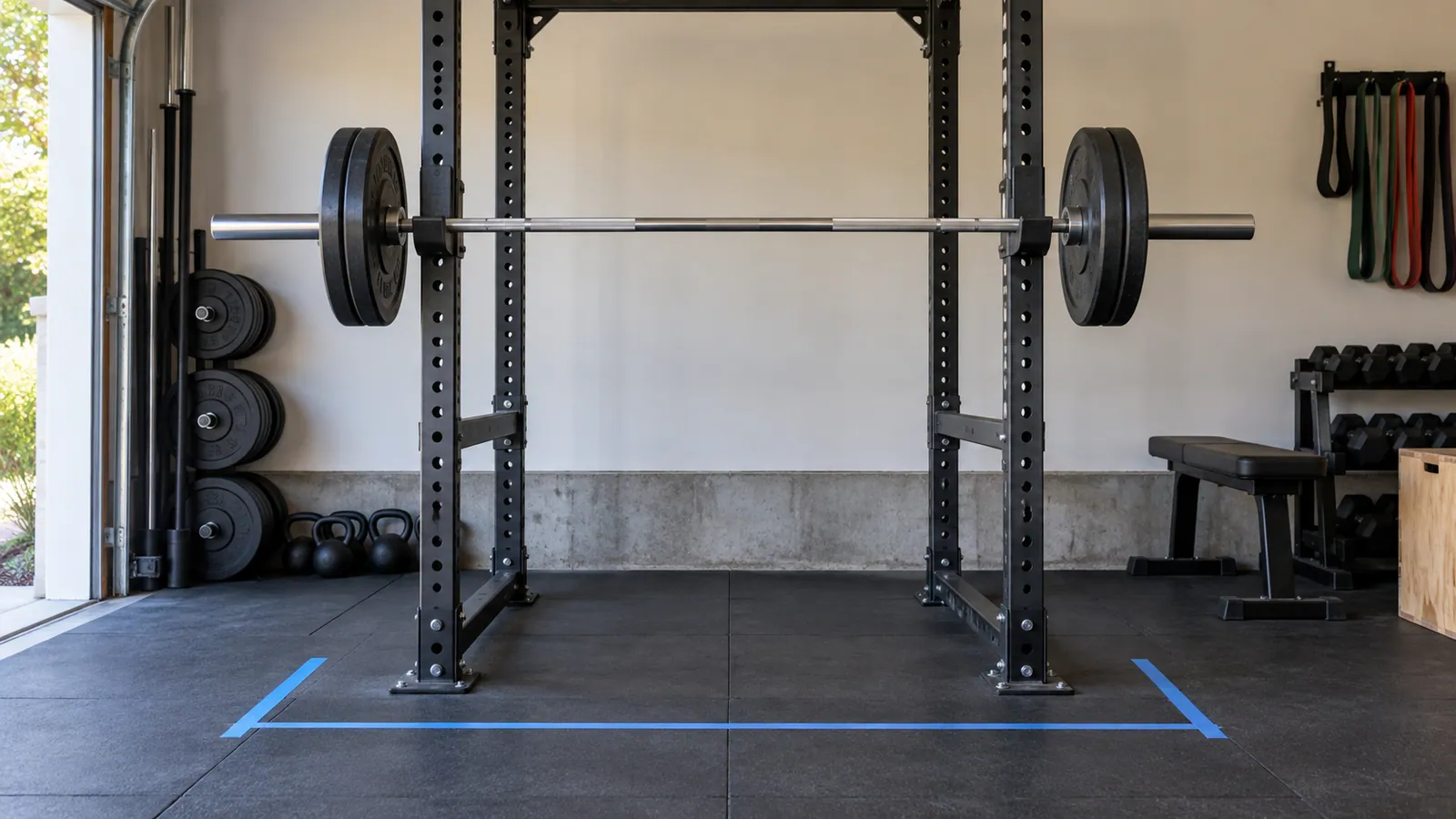
Four dimensions form one interface
Record the clear span between uprights, the outer span across the uprights and the widest faces of the installed J-cups. J-cup wraparound brackets can use more of the bar’s rackable area than the steel posts alone.
Measure the chosen bar from the inside face of one sleeve collar to the other. A standard straight bar, safety-squat bar and multi-grip bar may have different rackable sections even when their overall lengths look similar.
Leave deliberate side margin rather than accepting a near-zero fit. Manufacturing tolerance, protective liners and bar movement during a heavy walkout can consume a small paper clearance.
Test re-racking, not just static fit
Use an empty bar to rehearse the full squat and bench sequence. Check hand and elbow clearance, the walkout, uneven contact with a J-cup and whether the collars or cambered sections can strike the rack.
Compare standard, sandwich and roller J-cups only when the rack maker approves them. A narrower cradle can recover clearance, but it cannot repair an incompatible bar shaft or unsafe mounting interface.
Safeties, cable trolleys, plate horns and stored attachments can reduce the usable working width. Evaluate the busiest configuration, not an empty showroom frame.
Add the room around the bar
Overall bar length determines the room required for loading plates and fitting collars. Add access for the user’s hands and plate diameter on both sides, while keeping walls, vehicles and storage outside the loading lane.
Ask the supplier for a dimensioned front elevation showing uprights, J-cups and the recommended bar interface. Approve the rack and bar as a system, then repeat the fit check for every specialty bar in the project.
- Compare multifunctional racks
- R05
- 80 vs 90 Inch Power Rack: Which Height Fits Your Ceiling?
- Compare rack safety options