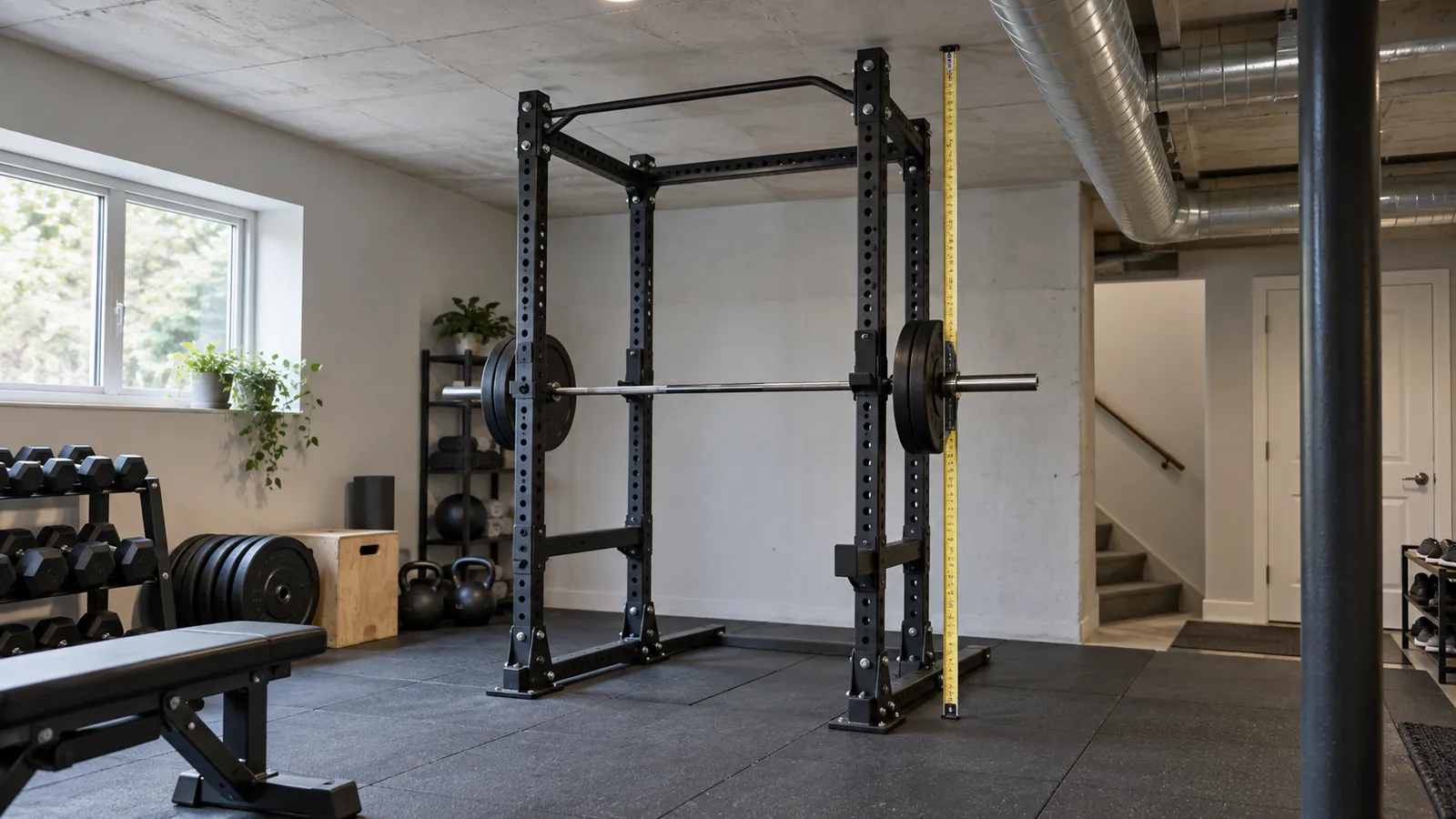
Start with the real ceiling, not the room label
Measure vertically at all four upright positions after flooring or a lifting platform is installed. A ceiling that reads 96 inches at one wall may be lower beneath a beam, door track or sloped slab.
Check how the rack is assembled. A frame that is shorter than the ceiling may still need overhead tool access, room to insert top bolts or diagonal clearance if an assembled side must be raised.
Mark lights, sprinklers, fans and garage-door hardware on the plan. None should sit inside the path of the bar, pull-up movement, cable or technician.
What ten extra inches change in training
A taller rack can place the pull-up bar and high cable outlet higher, give tall users more body clearance and create more vertical positions for attachments. Those benefits disappear if the user cannot raise the chin above the bar.
For standing overhead press, compare the athlete’s lockout height with the room and top crossmembers. Rack height alone does not prove the lift fits; plates and the natural bar path need their own overhead envelope.
On an all-in-one system, confirm the usable trolley range, top pulley projection, lat-bar starting height and cable travel for the selected upright height. Do not assume the short and tall variants share identical performance.
Approve the complete rack configuration
Request the assembled height for the exact pull-up bar, logo crossmember, cable kit, shrouds and storage configuration. Top pulleys or brackets can extend above the nominal uprights.
Before ordering, tape the four posts on the floor and mark the proposed top line on the wall. Review pull-ups, cable work, assembly access and future add-ons together; then approve the height that works without site modification.
- Compare multifunctional racks
- R05
- Power Rack Inside Width vs Outside Width: Will Your Bar Re-Rack Cleanly?
- Check rack depth for your room