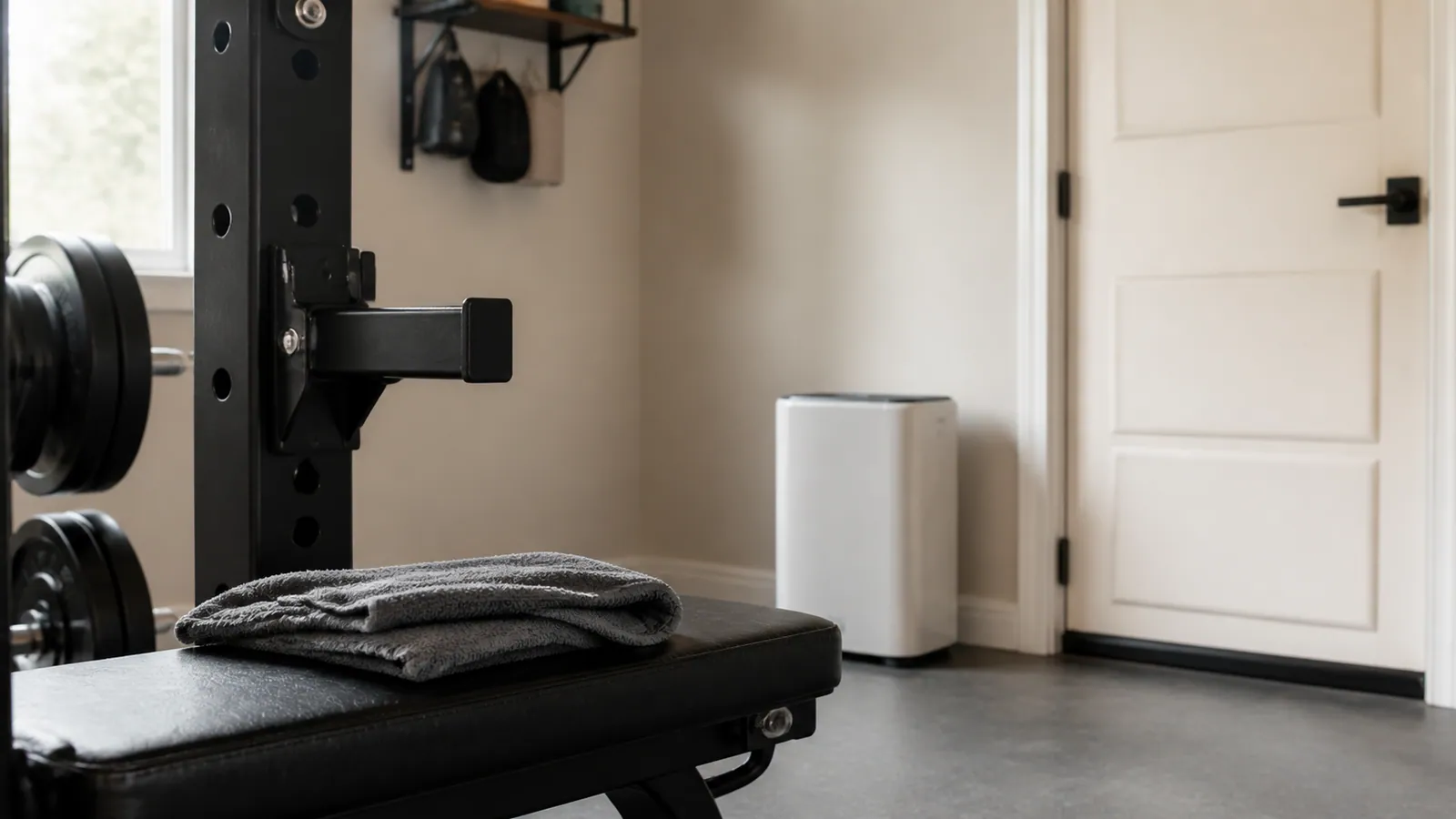
A roof is not the same as a controlled indoor room
Inspect the garage at the times it is most likely to be damp: after rain, after a wet car is parked inside and when warm humid air reaches cold surfaces. A room that looks dry at lunchtime can behave differently overnight. Record where moisture appears before deciding where the rack should stand.
A leak, water tracked across the floor and condensation need different remedies. Sealing a roof leak does not remove moisture carried in on a vehicle. Running a dehumidifier does not repair water ingress. Address the source, then check whether the change actually keeps equipment and its surrounding floor dry.
What to observe before delivery
Use a temperature and humidity logger to understand the room's daily pattern, and inspect cold metal and wall surfaces for visible droplets. The readings support a site decision; they do not create a universal warranty limit. Ask the equipment supplier to assess the recorded conditions against the proposed model's environmental instructions.
- Mark leaks, damp wall edges and recurring wet patches on the room plan.
- Keep the training zone clear of vehicle wash water and chemical storage.
- Confirm safe electrical arrangements before installing moisture-control appliances.
- Leave enough access to inspect the rear of the machine after installation.
Build a cleaning routine around materials
After training, remove sweat from touchpoints and exposed frame surfaces using the cleaning method approved for that equipment. Apply cleaner to a cloth when directed; avoid flooding cable exits, bearings, adjustment holes or upholstery seams. Finish with the drying step required by the care instructions.
Do not assume one oil is suitable for everything shiny. Guide rods, sealed bearings, coated cables, grips and bench upholstery are different surfaces. A lubricant intended for one mechanism can attract contamination or damage another material. Ask for a component-specific care list instead of improvising an all-purpose spray routine.
| Observation | Next action |
|---|---|
| Droplets on cold metal | Investigate condensation and environmental control |
| Sweat left on grips or frame | Clean promptly with the approved method and dry |
| Damaged cable coating or broken strands | Stop using the affected equipment and request service |
| Corrosion around a structural connection | Obtain a competent inspection before returning to use |
Cosmetic marks and structural damage are different decisions
Photograph a new rust mark before treating it and note its location. Light surface discoloration on a removable accessory is not the same issue as deep pitting, a cracked weld or a compromised fastener. Do not grind, repaint or tighten away evidence of a possible structural problem while continuing to train.
For a damaged cable, keep users off the machine until the correct replacement and inspection are complete. Never cover broken strands with tape. Where corrosion affects a load-bearing part, the remedy must be determined from its condition and the manufacturer's service requirements, not from the success of a cosmetic cleaning product.
A purchase brief for a garage, not a showroom
Send PBF Fitness photos of the proposed installation area, room dimensions, seasonal moisture observations and intended use. Ask whether the selected configuration is approved for that setting and request cleaning, inspection and spare-part instructions with the quotation. If the room remains persistently damp, move the equipment to a suitable location before committing to the installation.
- Compare cable trainer configurations
- R04
- Rack anchoring before installation
- Review the installation environment