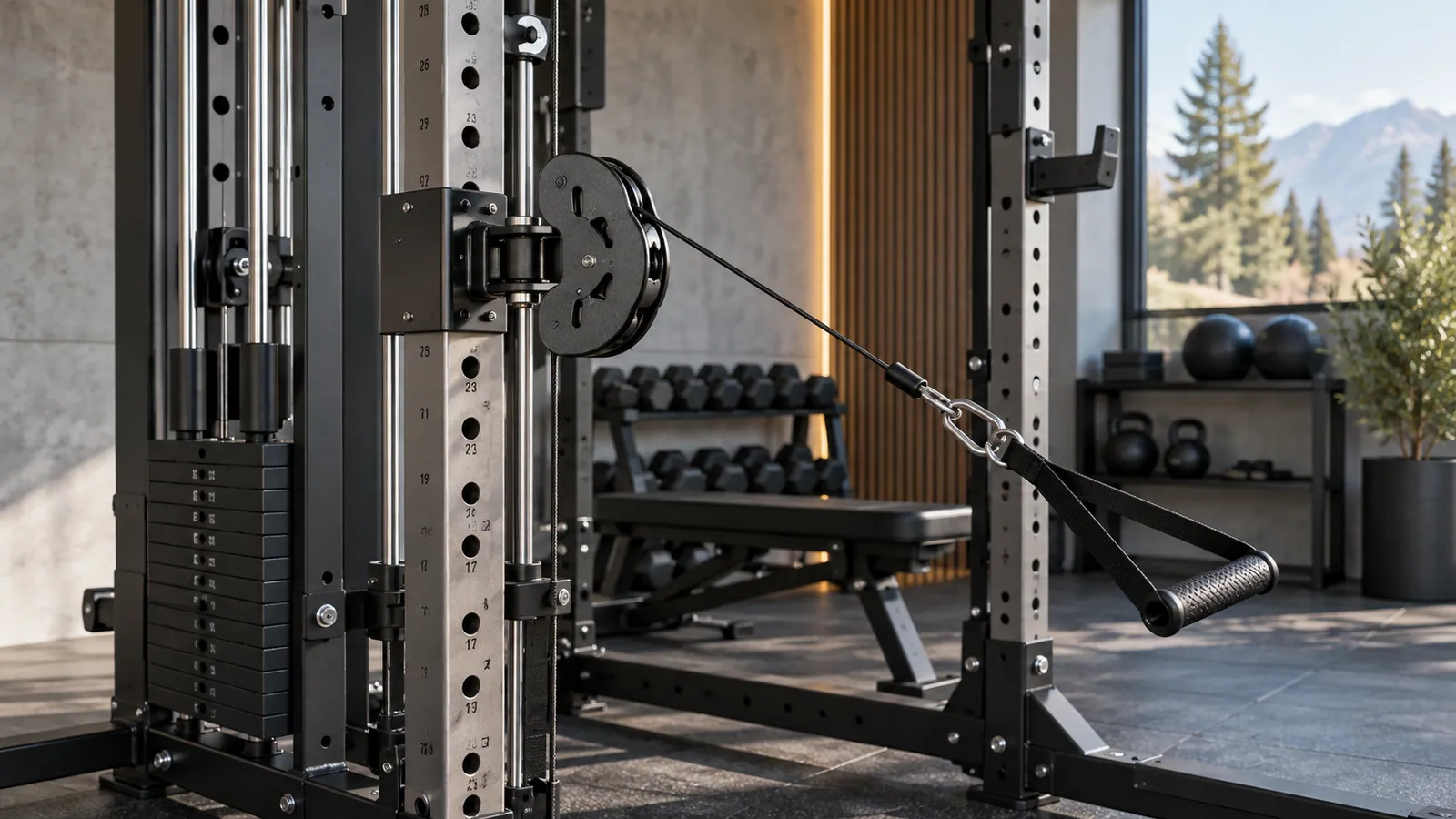
Inspect the first cable turn
Confirm the advertised swivel range and whether a shroud, upright, pin or neighboring attachment limits it in practice.
The first pulley should face the pull without forcing the cable against a flange or guard.
Check the outlet at the highest, lowest and most frequently used trolley positions.
Test real exercise arcs
Run presses, flyes, chops and lateral movements with an empty stack before adding resistance.
Watch the cable at the start, midpoint and finish; a good line should not saw across the pulley edge.
For bilateral work, verify both sides can mirror the angle without the handles or cables crossing.
Specify serviceable geometry
Ask for usable swivel range, trolley offset, cable travel and replacement access for the exact rack height.
Stop and inspect any repeated rubbing, unusual noise, coating damage or trolley side load before continuing.
- Compare multifunctional racks
- R05
- Power Rack Footprint vs Working Space: What Must You Measure?
- Compare rack safety options