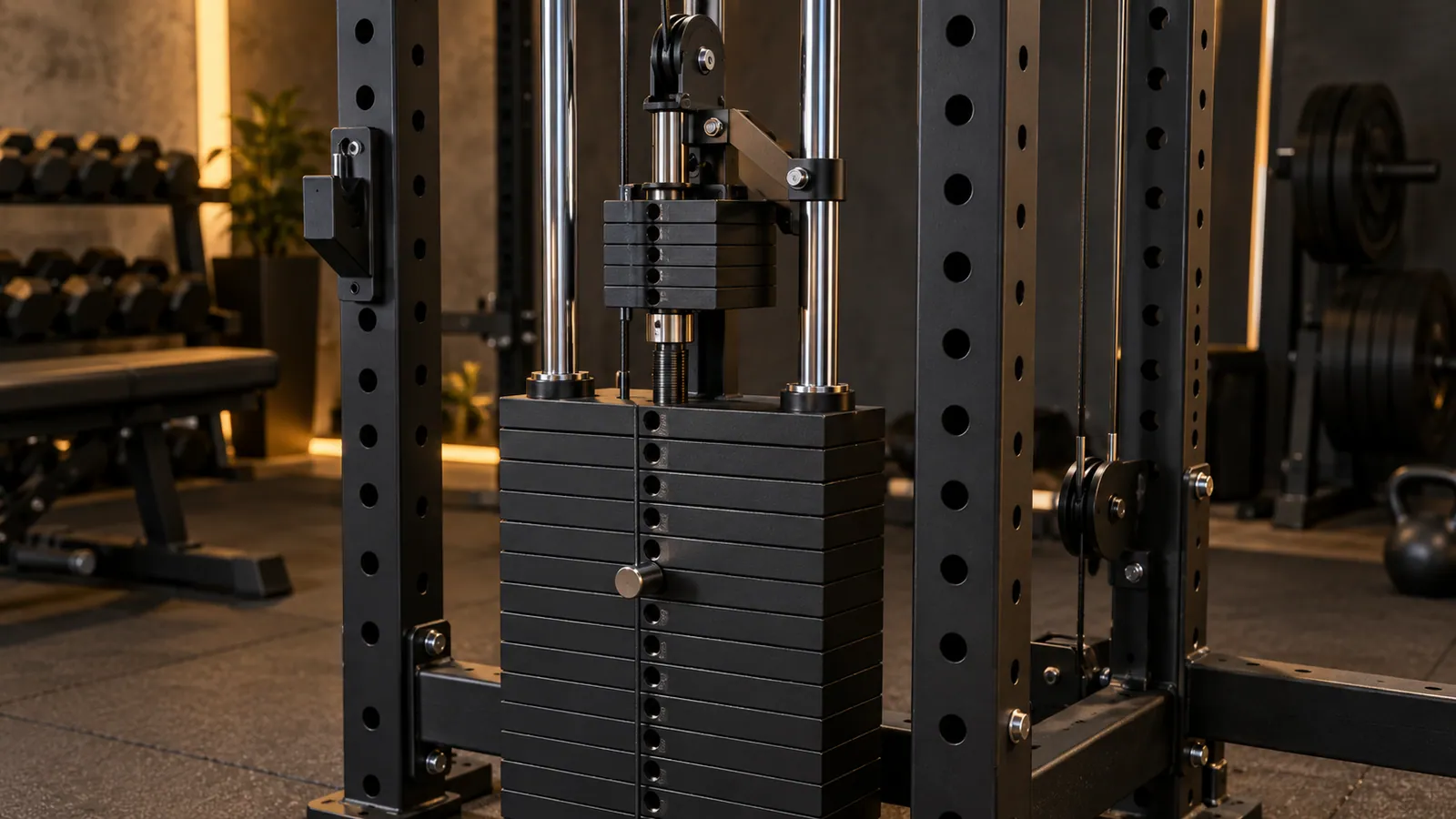
Start with the gap in your exercises
Identify whether the problem is a large jump between two settings or reaching the stack’s upper limit. A small isolation movement may need finer steps while a row needs greater capacity; one accessory does not automatically solve both.
Ask the supplier to show the available settings at the outlet you use, including the smallest approved addition. Record whether the display describes stack mass or resistance at that outlet rather than treating every printed number as interchangeable.
Look for a designed mounting mechanism
An integrated micro-weight, a dedicated top-plate add-on and a full stack upgrade are different assemblies. REP’s current Ares 2.0 documentation illustrates a built-in micro-adjustment arrangement; it does not establish which option a PBF rack accepts.
For a separate add-on, obtain the exact model and revision match, mounting location, retention method and permitted quantity. Similar guide-rod spacing or an attractive product photograph is insufficient evidence.
Do not hang a weight plate from the ordinary selector pin or rest an unsecured object on moving plates. Those improvisations alter the arrangement without confirming pin engagement, retention or clearance.
Order and hand over the whole change
A stack upgrade can involve more than additional plates. Ask whether the approved kit changes guides, the selector assembly, cable setup, guards or labels, and who is authorized to install it. Adding capacity does not approve exceeding any other station limit.
Follow the model’s resting-stack adjustment procedure. Keep hands out of plate gaps; have an authorized installer confirm full movement, clearance and retention after any installation. A snag or contact with a guard needs correction before training.
Send PBF Fitness the rack model, stack photographs and the exercise settings you find too coarse. Request an approved option with its parts list, operating instructions and effect on the available increments before adding it to an order.
- Compare multifunctional racks
- R05
- Replacing Power Rack Bolts: Match the Joint, Not Just the Diameter
- Check incremental-weight options for your rack