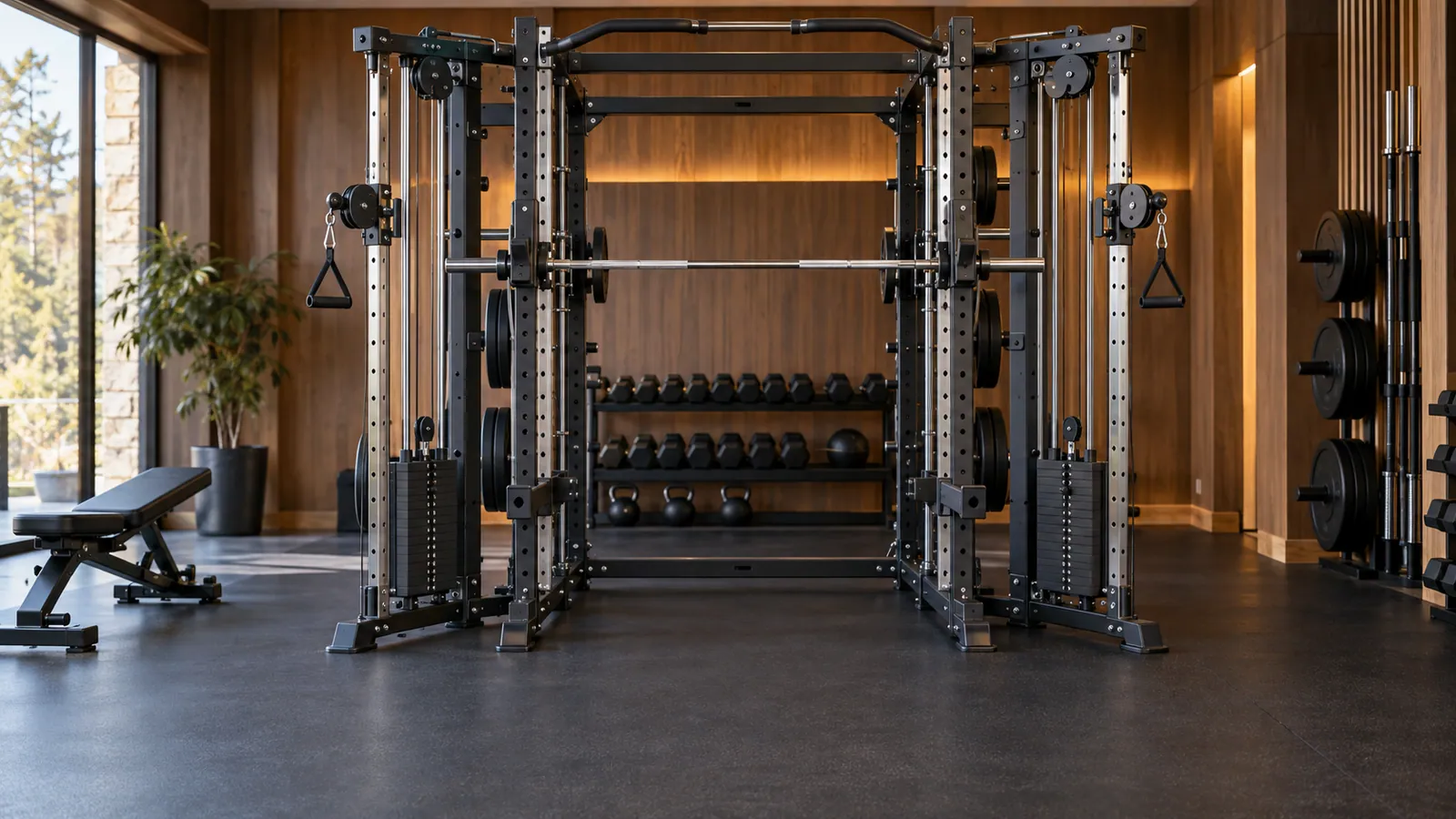
Measure the working span, not cabinet width
Overall machine width can include shrouds, plate storage or feet. Request the distance between cable exits and identify whether the trolleys rotate, because those values govern the working pull angles.
A compact spacing can suit rows, presses, raises, curls and anti-rotation work. A wider spread can create a broader crossover path, but it also needs more wall and side clearance.
Match spacing to real movement paths
Test the intended chest fly, reverse fly and two-arm press with the user standing at realistic distances. The cable should stay clear of the frame and should not rub a trolley or upright.
For unilateral work, column width may matter less than smooth swivel action and a useful standing zone. For paired handles, both exits must deliver balanced travel without the cables reaching their ends.
Check trolley range and cable travel together
Count height positions, then verify the highest and lowest usable outlet points. A long list of holes does not help if the trolley cannot reach a tall pressdown or a low curl position.
Usable cable travel and resistance ratio must be read together. A long nominal cable does not guarantee that two handles can complete the planned movement under the selected loading arrangement.
Draw the operating area around the rack
On an all-in-one rack, check conflicts with J-cups, safeties, plate storage, the Smith bar and bench route. Leave room for users to cross the centre without stepping over loose attachments.
Provide wall width, ceiling height, user reach, priority exercises and whether a bench or rack is shared. The layout can then balance a compact footprint with a credible cable working zone.
- Compare multifunctional racks
- R05
- Angled vs Vertical Smith Machine: Which Bar Path Fits Your Training?
- Compare rack safety options