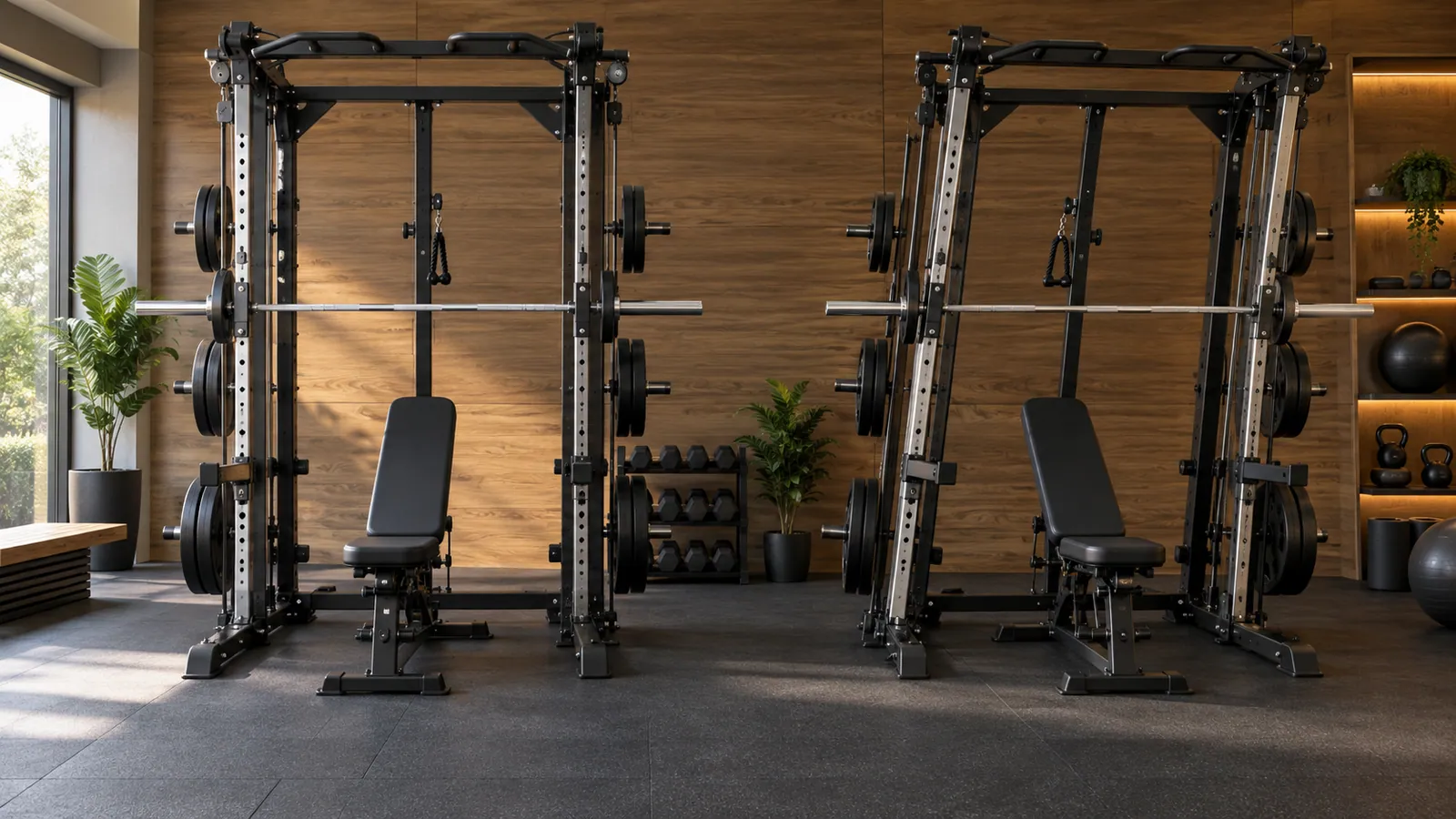
Read the rail drawing before judging feel
“Angled” is not a complete specification. Ask for the rail direction, actual incline, usable bar height and a side-view drawing; do not infer them from a perspective product photo.
A vertical track keeps the bar over one floor line. An angled track moves the bar horizontally during travel, so the user’s facing direction changes how that path relates to the body.
Test each exercise from the correct side
For squats, presses, rows and split squats, begin with the unloaded bar and a conservative range. Position feet or bench to follow the machine path without forcing joints into an uncomfortable line.
There is no single facing rule for every exercise or every machine. Confirm that the user can rotate the bar into the hooks and reach the catches from the intended start and finish positions.
Check bench, hooks and safety travel
Move the exact bench through flat and incline settings. Check pad centre, rear-foot clearance, unrack height and whether the bar remains above the intended pressing zone.
Set mechanical stops before loading and confirm that they protect the lowest planned position. Rail direction does not replace correct stops, controlled technique or the manufacturer’s instructions.
Specify the whole Smith station
Room depth must cover the frame plus bench movement, plate loading and user access. An angled assembly may also change the upper and lower envelope even when the base footprint looks similar.
Send the room plan, user range, exercise list and model drawing. We can map the bar path, bench route and safety positions before the final all-in-one Smith configuration is approved.
- Compare multifunctional racks
- R05
- How Wide Should Functional Trainer Cable Columns Be?
- Check rack depth for your room