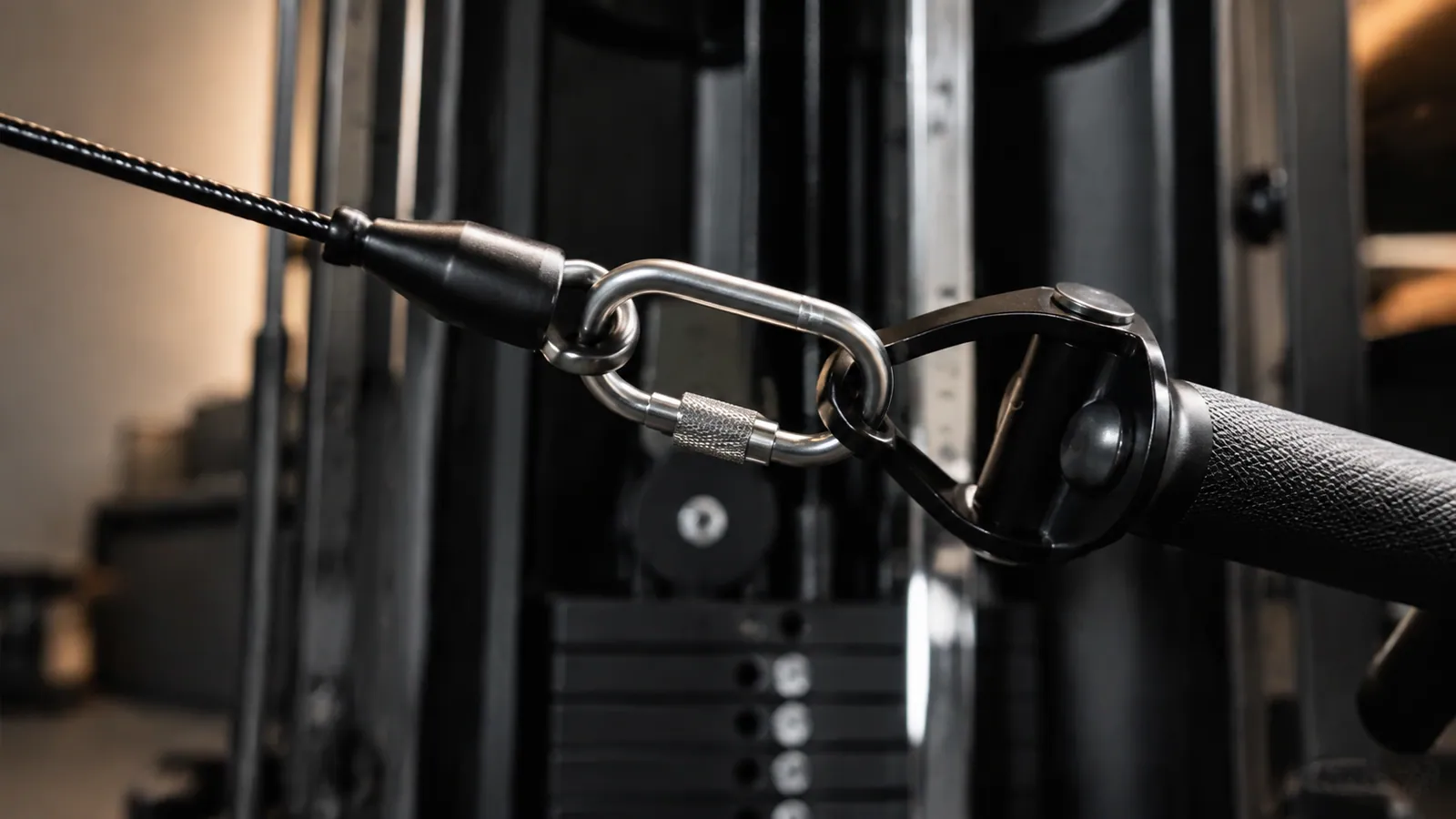
A clip-on connection has four separate fit tests
First check that the carabiner body and gate can enter the handle eye or D-ring. Then close and load the gate in its intended direction. A connector that catches on a thick eye, rests on the gate or sits cross-loaded has not passed merely because it can be forced through.
Next inspect the cable-end eye, thimble, stop ball and any swivel. The supplied connector may be part of that interface. Replacing it with a smaller hardware-store clip can change alignment, introduce sharp contact or remove a documented load rating.
| Interface check | What to verify |
|---|---|
| Gate opening | Clears the thickest attachment eye without forcing |
| Closed position | Gate returns and closes with no fabric or metal trapped |
| Bearing direction | Load sits on the connector body, not across the gate |
| Rotation | Handle can align without twisting the cable |
Hanging length changes the usable exercise
Add the lengths of the cable termination, connector, swivel and attachment above the grip. That stack-up reduces how high the hands can start on a lat pulldown and how close a low-row handle can return to the pulley. A long chain used as an adapter may solve connection reach while consuming valuable cable travel.
Test the intended high, mid and low trolley positions with the machine unloaded. Confirm that the attachment cannot strike the pulley housing, guide rods, floor or frame before the exercise reaches its required end position.
Rotation is a compatibility feature, not decoration
A rotating handle, swivel tab or second correctly specified connector can let the grip align with the pull. Without that freedom, a rigid bar may lever against the carabiner and a rope may wind the cable. More joints, however, add length and more points to inspect.
Support a heavy attachment while changing the selector or plates. Some cable stations have enough unloaded resistance to hold a light handle but not a large steel bar; a falling attachment can damage the floor or pull the cable abruptly.
Build an approved attachment register
For each handle, record its model, eye dimensions, mass, intended exercises, connector used and any manufacturer limitation. Keep the original machine connector available. Inspect welded eyes, webbing, stitching, coating and moving joints, and remove any item with deformation, cracking, sharp wear or an unreadable rating.
Do not treat climbing, marine or general-purpose markings as automatic approval for gym-machine use. Ask the equipment and attachment suppliers to confirm the complete interface and load case in writing.
Send the interface, not just a handle photo
When asking PBF Fitness about an attachment, provide the exact station model, clear photos of the cable end and supplied connector, the attachment eye dimensions, attachment weight and intended movement. We can then identify whether the question concerns physical fit, usable travel, rotation or the approved load path.
Buy the attachment only after all four conditions are resolved: it connects without forcing, closes and bears correctly, preserves useful travel, and is approved for the proposed use. A handle can look compatible in a product photo and still fail one of those tests.
- Compare multifunctional racks
- R05
- Will a Home Gym Rack Fit Through Your Door, Stairs and Final Turn?
- Verify the cable interface with us