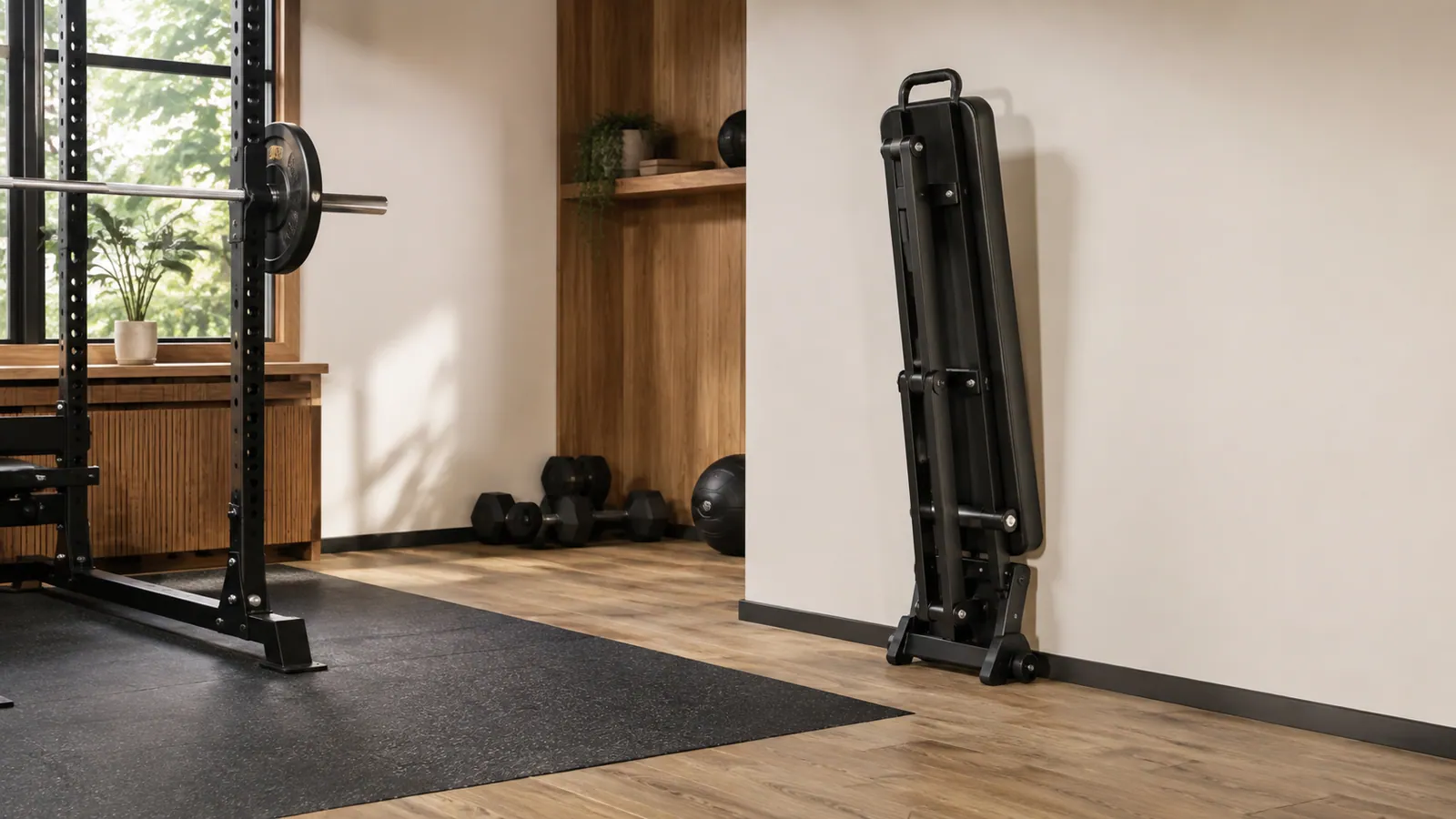
Start with model-specific permission
Read the current manual and product page for the exact bench generation. Similar-looking models may have different feet, handles, pad clearances or optional brackets, so approval does not transfer between them.
If a dedicated kit is required, confirm its part number and whether other accessories change compatibility. Do not improvise a wall hook or balance the bench on upholstery.
Inspect what touches the floor or wall
Designed storage feet or a bracket should receive the bench without crushing vinyl, loading an adjustment handle or resting on a wheel that can roll. Check that all fasteners are present and tight.
Remove loose attachments as instructed and verify that the back pad and seat remain captured. Measure the full stored envelope, including projections that could strike a wall, rack or ceiling.
Plan the storage zone around real hazards
Choose a level area outside walkways, door swings and emergency access. Children, pets and accidental contact create tipping risk even when the bench feels stable during a brief hand test.
Leave enough floor space to rotate the bench down without hitting a rack upright or trapping hands. A small stored footprint is useful only when deployment remains controlled.
Test a controlled daily routine
Practice the movement unloaded: use the intended handle, keep a balanced stance, lower slowly and check every lock before training. Stop if the path requires twisting or lifting beyond the user’s control.
Before ordering, provide the room plan and the exact bench model. Confirm approved storage hardware, stored dimensions and operating clearance in writing, then include them in the installation drawing.
- Compare multifunctional racks
- B03
- Ladder vs Pop-Pin Adjustable Bench: Which Mechanism Fits Your Training?
- Compare rack safety options