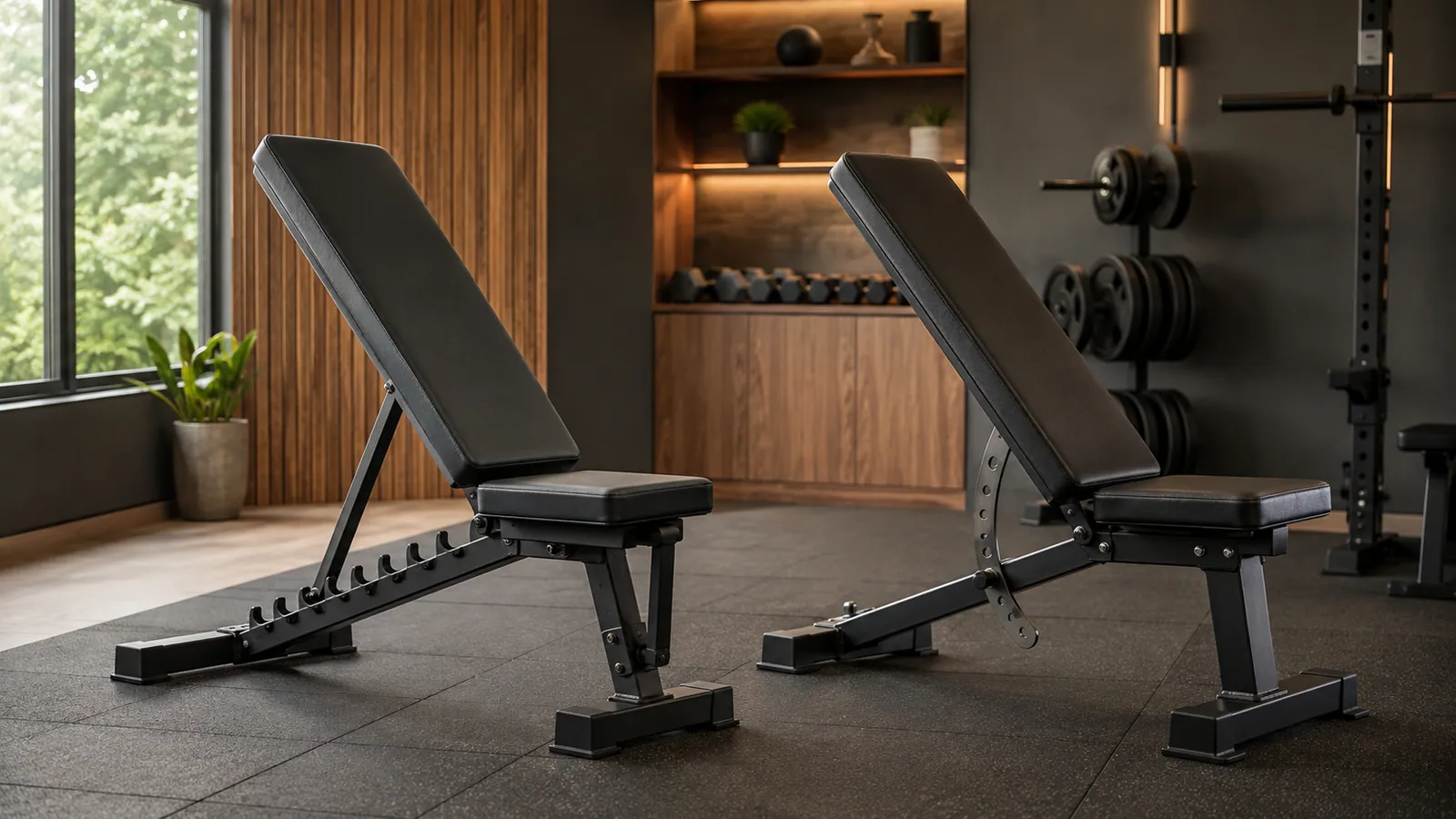
See how each lock carries the setting
A ladder system rests a support arm in a selected cradle. The contact should sit fully inside the notch, with no debris, bent edges or partial engagement before the user lies down.
A pop-pin system indexes a moving member through a hole or plate. Confirm that the pin returns fully after every change and never infer engagement only from the displayed angle.
Match the mechanism to the training flow
Ladder changes can be quick when several athletes rotate through incline work. A pin can make a chosen index easy to repeat, but access and hand clearance vary by frame.
Test back and seat adjustments separately because many benches use different mechanisms for each. Run the intended exercise sequence rather than counting positions on a specification sheet.
Inspect wear instead of trusting the label
Check pivots, fasteners, bushings, notches, pin tips and return springs during routine inspection. Side play, slow pin return or a damaged contact surface requires service before loaded use.
Keep hands clear of pinch zones, make adjustments without a person or weight on the pad, and follow the exact model manual. Lubrication and replacement rules are model-specific.
Approve the whole bench, not one feature
Also compare flat height, pad geometry, footprint, wheels, handle and approved storage method. A convenient lock cannot compensate for an unstable frame or poor body position.
For a project quote, send room dimensions, ceiling height, user profile and exercise plan. We can then compare the appropriate bench configuration without assigning unsupported capabilities to a model.
- Compare multifunctional racks
- B03
- Can You Store an Adjustable Bench Upright? Verify These Points First
- Check rack depth for your room