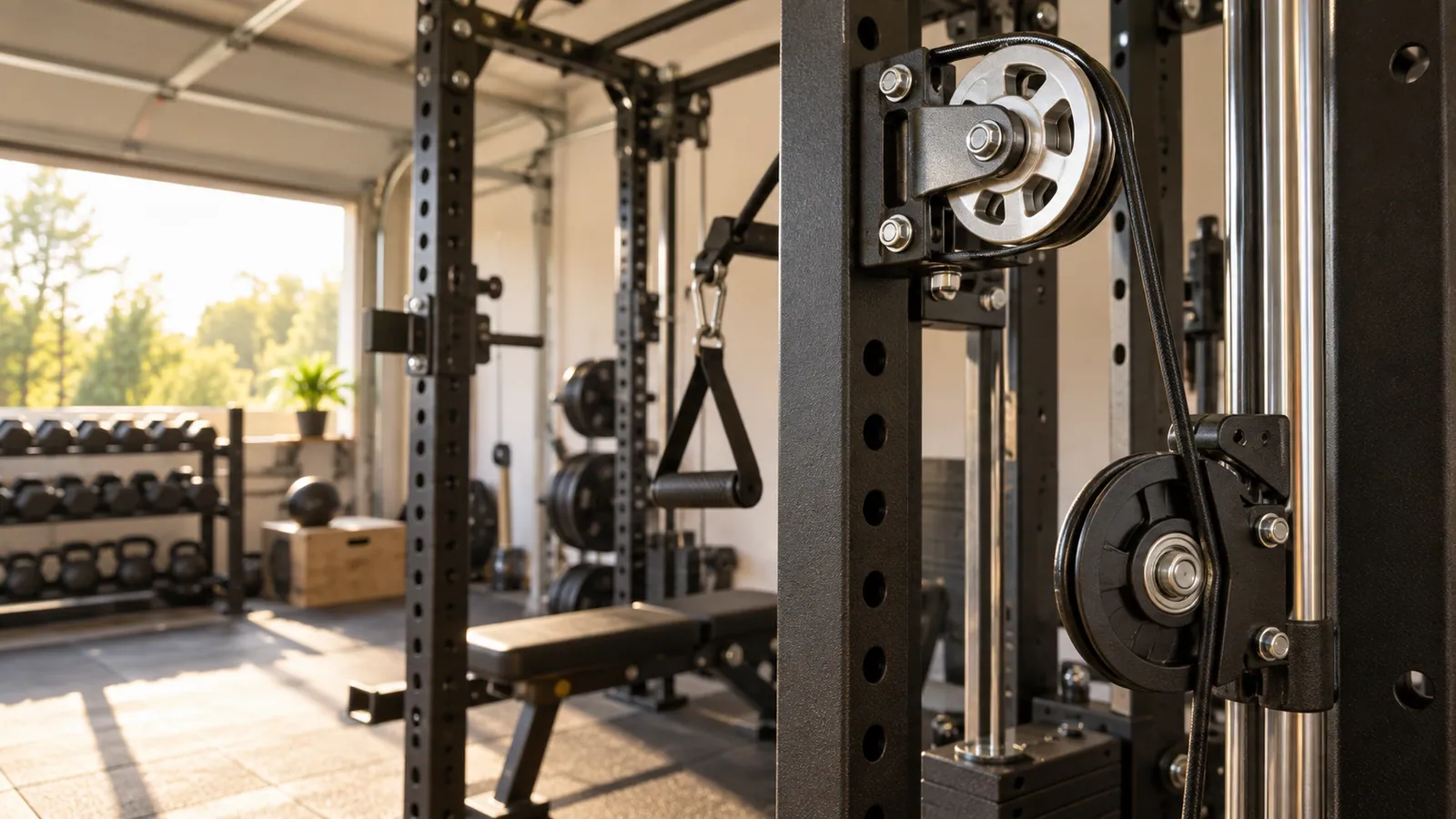
Treat wheel and cable as one system
Functional trainers use many direction changes, so one poorly aligned wheel or rough bearing can affect the handle more than the material of every other pulley.
Count and inspect the complete route before assigning a cause.
Inspect the details that control motion
Commercial examples exist with fiberglass-reinforced nylon wheels and sealed precision bearings, while other systems specify aluminum wheels with sealed bearings.
Both show why material alone is an incomplete quality signal.
Check pulley diameter, groove radius and depth against the installed cable. The cable must sit centrally without rubbing the flange, bottoming in the groove or changing the designed cable path.
Approve replacement compatibility
Spin each wheel without load, then pull slowly and quickly through the full trolley range. Listen at each bracket and watch for side contact, axle play, uneven rotation or a cable that walks across the groove.
An aftermarket wheel also has to match bearing bore, bolt diameter, hub width, spacers and bracket clearance. A wheel that physically fits can still pinch the bearing or move the cable off-line when tightened.
Choose the documented assembly that gives smooth travel, controlled noise and compatible cable contact. Do not replace every pulley until the manufacturer confirms the specification and warranty effect. Send pulley measurements, cable diameter and exercise priorities for review.
- Compare multifunctional racks
- R05
- Smith Machine Linear Bearings vs Bushings or Rollers: What Makes the Bar Smooth?
- Compare rack safety options