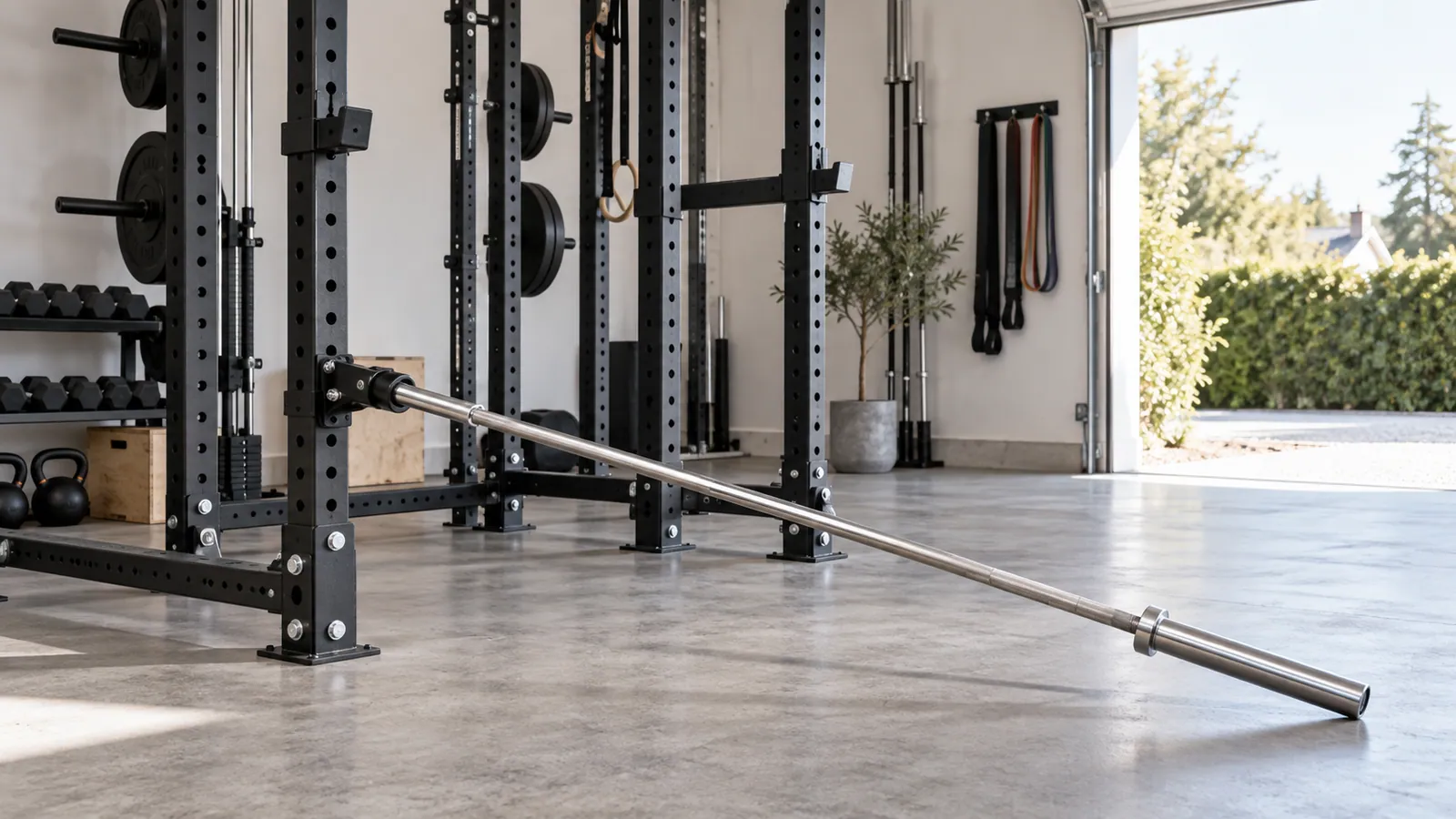
Match the attachment before choosing a hole
Start with the exact rack and landmine instructions.
A compatible label should cover upright or crossmember size, hole diameter, mounting direction, hardware and any location restrictions.
A low mounting point usually preserves familiar rows and presses, but height is only one variable.
Trace the complete barbell sweep
The pivot body, sleeve and retaining hardware must seat without twisting, crushing a cable cover or sharing a hole needed by another structural part.
Insert an unloaded bar and move it slowly through the highest, lowest and widest positions planned. Check the shaft, plates and handle against uprights, safeties, Smith rails, weight horns, walls, doors and the user walkway.
Mark the arc on the floor before loading. Rows need room behind the plates, rotational work needs lateral space, and some chest-supported setups require the pivot to sit far enough behind the pad for the load to align under the lifter.
Approve use and storage as one layout
Decide where the empty sleeve and bar will rest between sets. A folding or magnetic storage position is useful only when it cannot swing into a footpath or interfere with cable trolleys and plate storage.
Test the approved position with an empty bar and then a light load while watching rack movement. Keep the mount only when the connection, sweep, storage and stability all work together; send rack dimensions, hole size and planned exercises for a compatibility review.
- Compare multifunctional racks
- R05
- Is a Rack-Mounted Functional Trainer Too Narrow for Cable Flyes?
- Check rack depth for your room