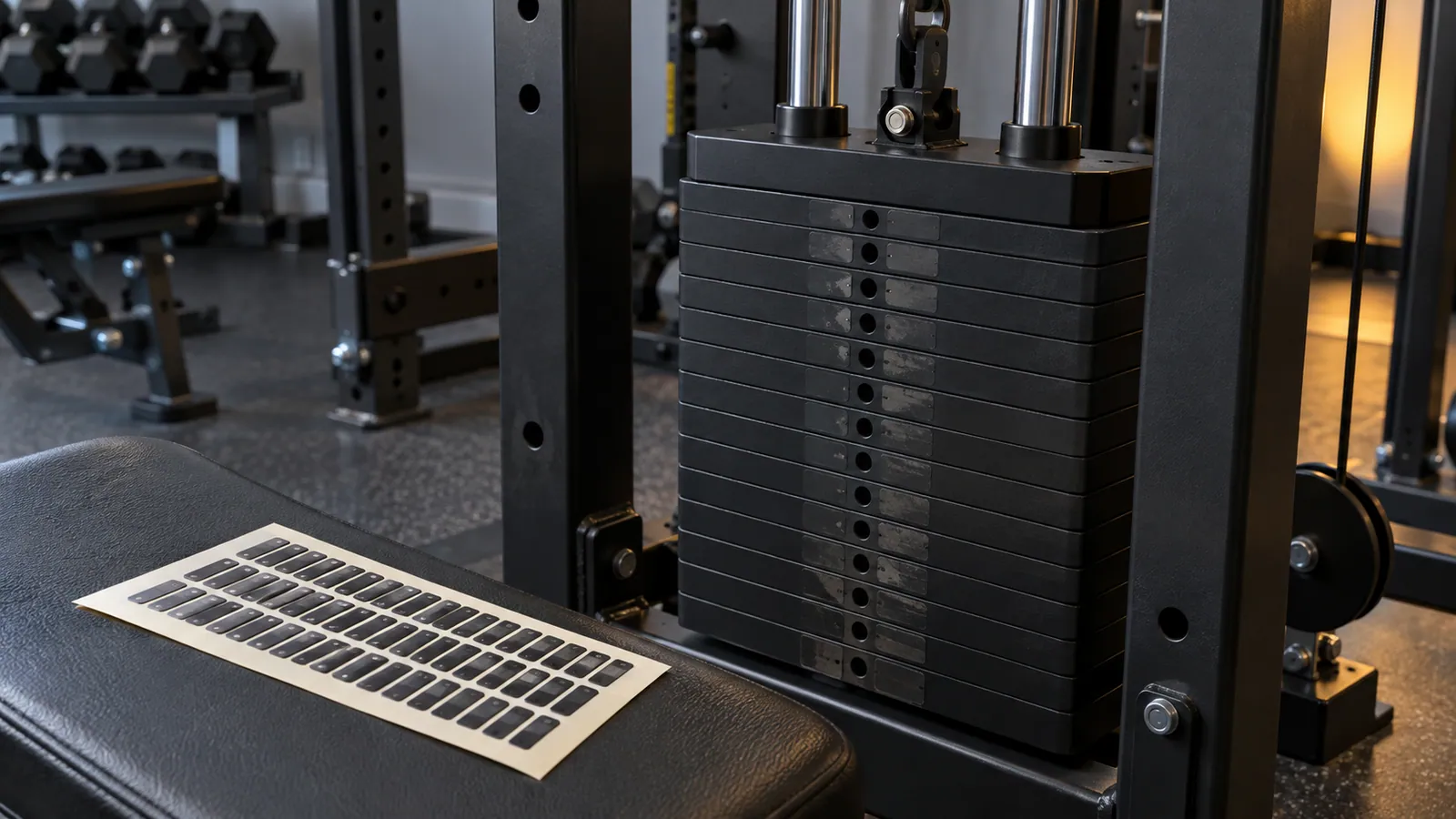
Identify the equipment before the numbers
Record the station model, revision, serial information and any completed stack upgrade. Photograph the entire stack and surviving labels rather than only a damaged sticker. Similar-looking plate faces do not establish identical top-plate weight, increments or label parts.
State which outlet the user reads the scale for. A rack can serve several cable movements from a shared weight source. Rogue’s FM-6, for example, specifies different ratios for its functional trainer and lat/low-row outlets. That example does not define another rack’s markings.
Find out what the factory scale means
Ask whether the replacement sheet states cumulative physical stack mass or the manufacturer’s effective resistance for a named configuration. REP describes Ares 2.0 labels as showing how the stacks feel. An effective scale should not be divided again simply because a buyer recognizes a pulley ratio.
Changing pounds into kilograms only changes units. It does not identify an outlet or establish the scale’s meaning. Avoid generating numbers from maximum advertised capacity divided by plate count: the headplate, increments and factory interpretation must come from the actual equipment documentation.
Restore the whole required sequence
Obtain the label part and installation instructions together. The original Ares upgrade manual calls for labels on both complete stacks, even though its illustration shows only the added plates. Read the instruction as well as the drawing; do not infer that the rest of that configuration remains unchanged.
Keep the station in the manufacturer’s prescribed service condition. Use its approved surface preparation and positioning, with any required curing time. Do not apply a generic solvent recommendation or put fingers between plates. Guards and service access must follow the equipment’s own instructions.
Align each label with its intended selector position and keep holes and moving clearances unobstructed. Check the first and last positions and the entire progression against the correct diagram. Do not conceal a missing position or mixed unit system by fitting a larger sticker over several plates.
Close the repair with a documented match
Confirm the installed sheet’s part identity and interpretation before returning the scale to users. A numerical label replacement does not increase allowable load or approve a stack upgrade. A correct looking sequence also does not resolve a selector, cable or guide-rod fault.
Give PBF Fitness the rack version, installed stack, outlet, surviving label photos and preferred units. Request the correct label set, explanation of the marked resistance and installation method. If the original scale cannot be identified, resolve it with the manufacturer rather than making a plausible replacement chart.
- Compare multifunctional racks
- R05
- Rack Resistance Bands: Inspect the Material Before Replacing
- Request the correct stack labels and instructions