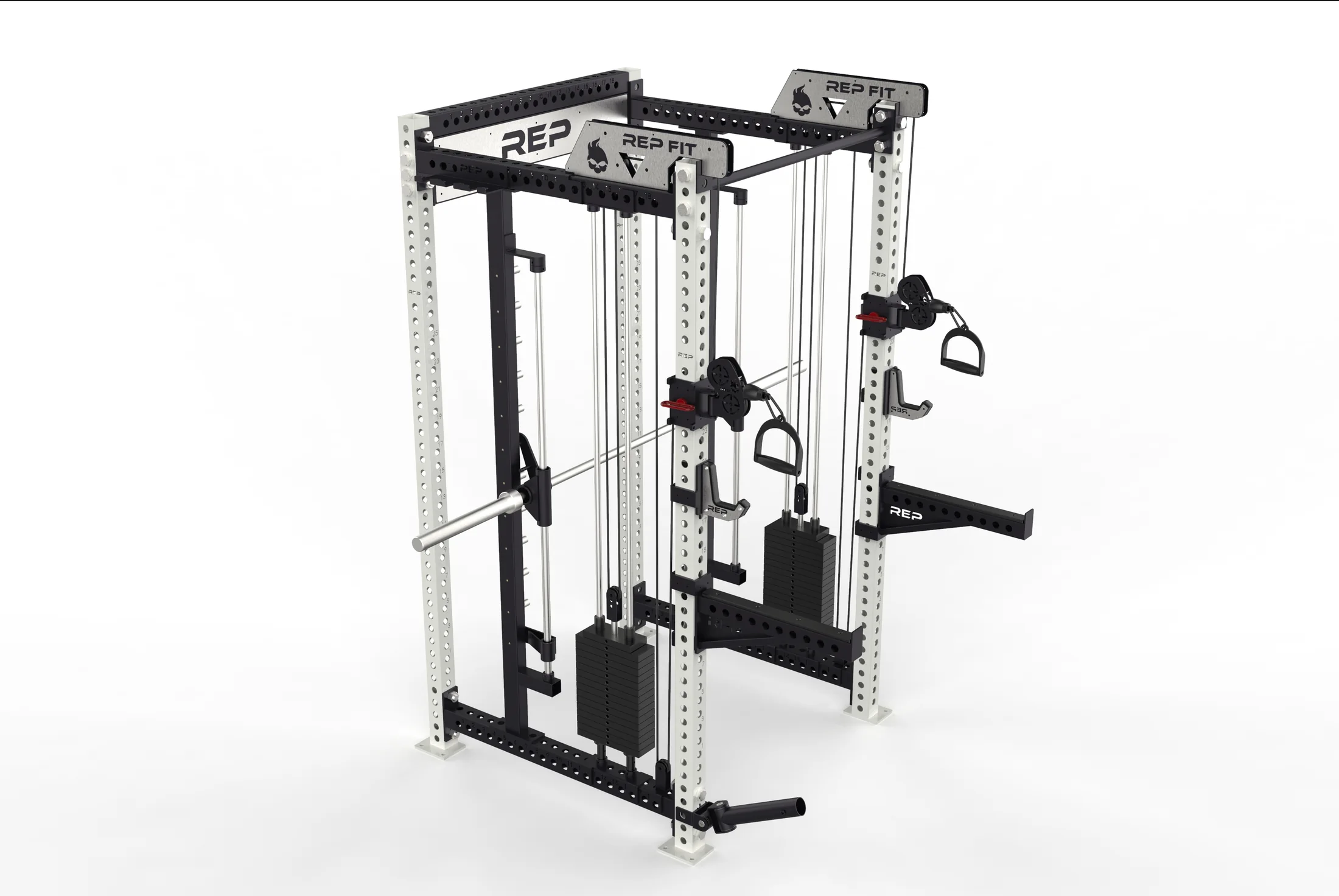
A multifunctional rack becomes commercially useful when its functions, footprint and service needs match a defined customer group. Use this sequence to turn a broad catalog into a short, defensible model list.
| Buyer profile | Priority | Starting format |
|---|---|---|
| Home-gym customer | Training variety in one footprint | Smith and cable combination |
| Personal-training studio | Fast adjustment and open access | Functional trainer or open rack |
| Equipment distributor | Clear price and feature ladder | Good / better / best model range |
| Hotel or corporate gym | Accessible use and tidy layout | Compact guided and cable system |
1. Write the buyer brief before opening the catalog
Record the user type, available floor area, ceiling height, expected training modes and target selling position. A distributor may need a product ladder, while a private gym may need one highly coordinated system.
- Buyer and application
- Usable room and exercise clearance
- Essential training modes
- Target finish and selling position
2. Separate essential functions from optional attachments
Confirm whether the project requires a guided Smith bar, free-weight J-cup positions, independent cable arms, pulldown work, pull-up grips, plate storage or bench compatibility. Optional attachments should not hide a missing core function.
3. Check the working footprint
Machine dimensions do not include every movement. Add space for bar sleeves, plate loading, cable travel, bench movement and a clear route around the station. Wall-mounted formats also need a suitable fixing surface and installation access.
4. Compare the ownership and service burden
More functions introduce more adjustment points, cables, pulleys and attachments. Confirm the parts list, wear-part list and after-sales documentation before choosing a complex flagship system.
5. Build a two- or three-model shortlist
Compare the shortlist on the same fields: functions, dimensions, net weight, frame specification, included attachments, finish, packing and order quantity. This makes quotations easier to compare and reduces configuration errors.