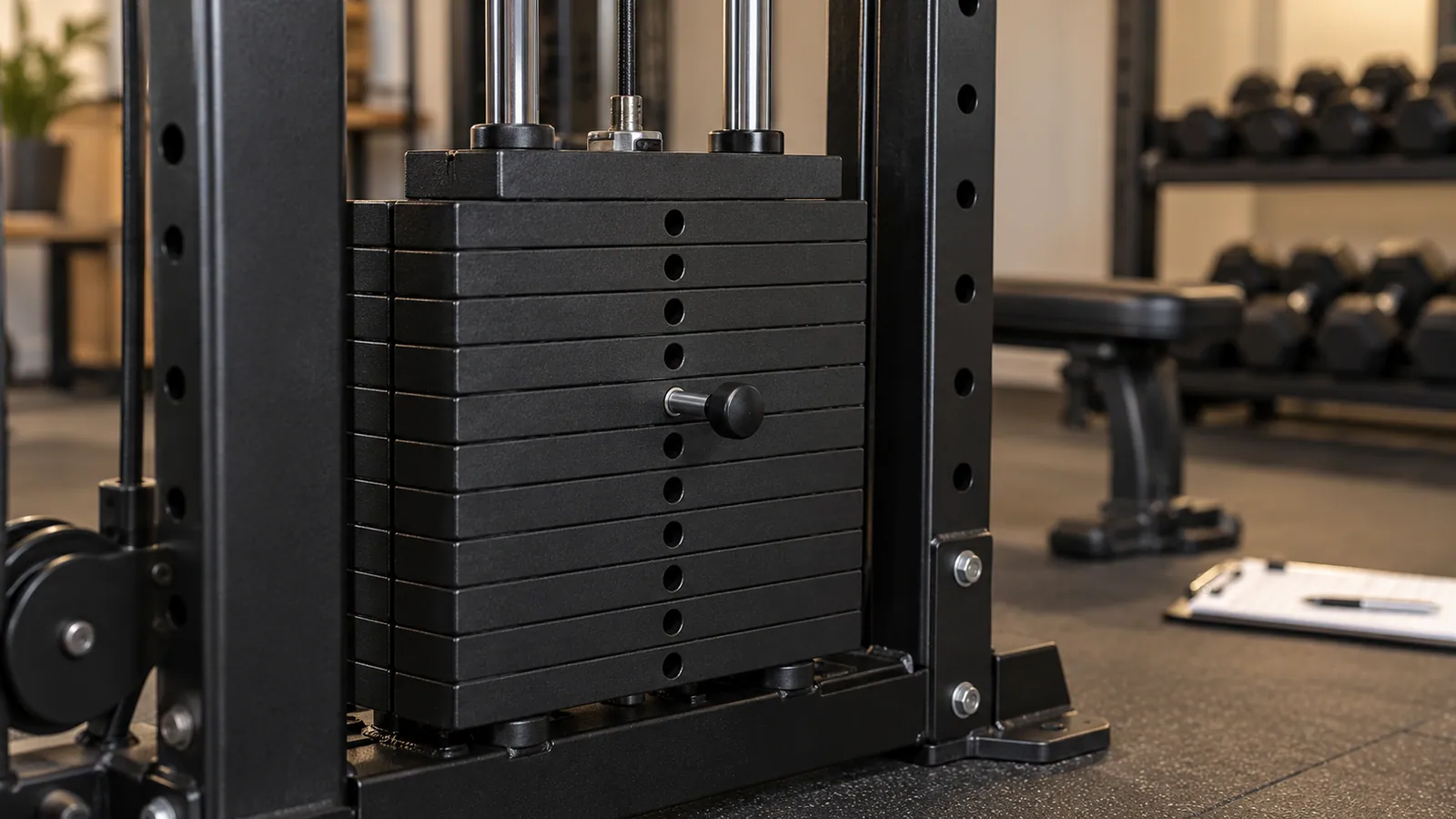
Make the stack safe before looking for the cause
Return the handle slowly to its rest position. All plates must settle before you change resistance; another person holding cable tension can keep the selector rod above its normal position.
Keep fingers out of plate gaps. If the stack hangs above the bottom stops, the check ends there: isolate the station and arrange service rather than pushing the weights down.
Distinguish the weight selector from the trolley-height lock. They secure different parts, and a correctly locked pulley carriage does not prove that the selected plates are engaged.
Record whether one hole or every hole is affected
With the machine at rest, look for a bent pin, damaged tip, trapped dirt or a broken retention component. A magnetic handle touching the plate is not proof that the shaft reaches its intended seating depth.
If the supplied pin enters some plates but not one particular plate, record that position. If it misses every hole, note whether the upper plate remains lifted. These observations help a technician; neither pattern establishes a diagnosis by itself.
Use the exact approved replacement. Matching diameter alone does not establish shaft length, retention design or compatibility with the selector rod. A hardware-store bolt is not a service substitute.
Approve the station again, not just the spare part
Cable length, selector-rod position and guide-rod alignment interact. Do not change tension, loosen guides or remove guards without the model’s service instructions and a qualified person. A load test cannot make an incompletely seated pin acceptable.
For a rack purchase or service request, supply the model, serial number, original pin photograph and affected plate positions. Ask for the part reference and the return-to-service inspection, including seating at every selection and the prescribed controlled movement check.
- Compare multifunctional racks
- R05
- Power Rack Assembly: When Should You Tighten the Bolts?
- Request the correct selector-pin service information